Grass identification

SkyHog

Touchdown! Greaser!
Joined
Feb 23, 2005
Messages
18,510
Location
Middle of nowhere Texas
Display Name
Everything Offends Me
Home Airfield
KLUD
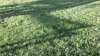
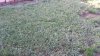
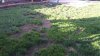
My backyard has a Frankenstein of two grass types, and I want to fix that. Below are some photos of the grass types, one is very full with smaller blades and the other looks more like thick, dull colored grass.

I want to go with the smaller blades. Any ideas what kind of grass this is? I live in Monument, CO (north of Colorado Springs, south of Denver) if it helps.
 

Attachments

  • 20140601_191504_Buttonwood Ct.jpg
    20140601_191504_Buttonwood Ct.jpg
    7.6 MB · Views: 104
  • 20140601_191526_Buttonwood Ct.jpg
    20140601_191526_Buttonwood Ct.jpg
    4.2 MB · Views: 82
  • 20140601_191542_Jackson Creek Pkwy.jpg
    20140601_191542_Jackson Creek Pkwy.jpg
    5.5 MB · Views: 60
It's Colorado...plant some grass that you can make money off of. :-)

Someone with a better eye for grass than I may be able to tell you something based on those photos but I can't. :(
 
It is almost impossible to tell from those pictures. The second one is pretty blurry, certainly you could have given us a better chance. Take a close up of both types. The third picture looks like crabgrass. The bluer clumps.
 
My sister has all kind of weeds growing in her backyard. Her philosophy is, "If it's green, it's grass," and she lets it grow.

Guess you're pickier than she is. :-)
 
I'm no expert - just guessing here. First is maybe Fescue, second is some sort of Buffalo grass. Both are common here and favored for low water requirement. I dislike the Buffalo grass, it smells "funny" when cutting it but it does the best I've seen with little water. The drought tolerant Fescues seem to be popular.

An alternative to Round-up (forget burning - don't even use the "f" word in that part of the state) is to rent a sod cutter and peel off the stuff you don't want before tilling in potting soil and re-seeding.

It does smell funny when I cut it - like a mix between ****, skunk, and marijuana. I bet its buffalo grass. I'm trying to get rid of it in favor of the other stuff, which after googling, does in fact look a lot like fescue.

By George, I think you solved it for me! Thanks!!
 
Yup, it's grass.

(Sorry, couldn't resist)

I live in the country and my yard is huge so just as long as something grows and there's more grass than weeds I'm pretty happy
 
Call your county extension agent. Let him know you think you have a combination of fescue and buffalo grass and you want to convert to all fescue. They'll be able to give you the best advice for your location. You might be able to verticut and overseed and let the fescue choke out the other stuff and avoid going the Roundup route.
 
Or you could plug it with Zoysia. And in about 30 years you'll have the nicest lawn around. :D Zoysia is neat stuff. It's slow to grow, but will choke out just about anything in it's path, no need for chemicals, just patience. And it gets thick, and soft, kinda like a double padded top of the line cut-pile carpet. But it goes dormant in winter. (turns brown)
 
Or you could plug it with Zoysia. And in about 30 years you'll have the nicest lawn around. :D Zoysia is neat stuff. It's slow to grow, but will choke out just about anything in it's path, no need for chemicals, just patience. And it gets thick, and soft, kinda like a double padded top of the line cut-pile carpet. But it goes dormant in winter. (turns brown)

Slow-growing grass, huh? Maybe I should try that here. I can reduce the mowing to weekly then. No one will see it under the snow in the winter, anyway.

Right now, I have a combination of crab grass, some other kind of grass, and weeds. Suits me fine except that it grows too quickly.

-Rich
 
Or you could plug it with Zoysia. And in about 30 years you'll have the nicest lawn around. :D Zoysia is neat stuff. It's slow to grow, but will choke out just about anything in it's path, no need for chemicals, just patience. And it gets thick, and soft, kinda like a double padded top of the line cut-pile carpet. But it goes dormant in winter. (turns brown)

Zoysia grass is the last to turn green.
 
Zoysia grass is the last to turn green.

Yeah, and I don't think it'll even survive in Colorado or upstate NY.

Nick, do you have an irrigation system?

Around here, if one doesn't have an irrigation system, then they will spend all their time in the yard and still have marginal success at best. Just waste their time and money at worst.
 
I would first decide if you just want to fill in bad areas...or if you want to start fresh and do the whole lawn.
If the former, make sure you select the right seed/sod otherwise you will get a patchwork quilt again. If the latter, then you can choose from a range of grasses.

Fescue and Buffalo Grass are at extremes as far as lushness, water needs, how long it stays green in the fall. Nick is at 7000' and 23" of rain/year. Any irrigation?

I think of Buffalo grass as a wild pasture grass that has been domesticated..but not really successfully. I mean it is tough and can withstand neglect but it's ugly most of the year. Granted, 'most of the year' might mean under a white blanket, where you are.
In general the Buffalo I've seen has been coarse and nasty to walk across.

Kentucky Blue, Fescue and St Augustine need a lot more water than others, but stay green longer and are a lot more appealing to me.

I have a very lush Fescue in a dry part of Texas at 5000' in direct sun, it gets 30mins of spray irrigation per day (3gpm full circles of 25' radius).
I have another lawn of Bermuda and it gets the same care but struggles with the weeds. The Fescue seems to compete better with the other grasses and weeds but needs more water. I have had green fescue at Christmas time here, a warm fall and I kept the water on. I have not fertilized in years. Probably need to herbicide the Bermuda but hate to start that.

You can 'till and seed', but it will take a lot longer and more work than if you'd roundup then seed. (I do not have the same fears as others about the potential ills of glyphosate; seems like people have done their darndest to prove that it's killing us all, for decades but without success. Maybe they just have that fashionable angry-ness we have at large companies these days, I don't know. I think that is all going to turn out just like the Vaccine:Autism fiasco.)

Here's some other reading:
http://csuturf.colostate.edu/Pages/newlawn.htm
This place claims a Kentucky Blue which doesn't suck so much water:
http://www.nicksgardencenter.com/lawns/plant-faq-s/what-type-of-grass-is-best-for-colorado.html
http://www.gardencentersofcolorado.org/pdfs/care_sheets/Selecting_the_Right_Grass.pdf

Note:
"buffalograss, may not perform well as a turf above 6,500 feet."
http://www.colostate.edu/Depts/CoopExt/4DMG/Lawns/turfchoi.htm
 
Yeah, and I don't think it'll even survive in Colorado or upstate NY.

Nick, do you have an irrigation system?

Around here, if one doesn't have an irrigation system, then they will spend all their time in the yard and still have marginal success at best. Just waste their time and money at worst.

By irrigation system, do you mean "In Ground Sprinklers?" Because yes, I do.

I had them in NM too. Was really weird at first when I moved to NC - I was like "Really, I have to hand water the whole acre?" And everyone looked at me like I was dumb.

Turns out, I was.
 
I would first decide if you just want to fill in bad areas...or if you want to start fresh and do the whole lawn.
If the former, make sure you select the right seed/sod otherwise you will get a patchwork quilt again. If the latter, then you can choose from a range of grasses.

Fescue and Buffalo Grass are at extremes as far as lushness, water needs, how long it stays green in the fall. Nick is at 7000' and 23" of rain/year. Any irrigation?

I think of Buffalo grass as a wild pasture grass that has been domesticated..but not really successfully. I mean it is tough and can withstand neglect but it's ugly most of the year. Granted, 'most of the year' might mean under a white blanket, where you are.
In general the Buffalo I've seen has been coarse and nasty to walk across.

Kentucky Blue, Fescue and St Augustine need a lot more water than others, but stay green longer and are a lot more appealing to me.

I have a very lush Fescue in a dry part of Texas at 5000' in direct sun, it gets 30mins of spray irrigation per day (3gpm full circles of 25' radius).
I have another lawn of Bermuda and it gets the same care but struggles with the weeds. The Fescue seems to compete better with the other grasses and weeds but needs more water. I have had green fescue at Christmas time here, a warm fall and I kept the water on. I have not fertilized in years. Probably need to herbicide the Bermuda but hate to start that.

You can 'till and seed', but it will take a lot longer and more work than if you'd roundup then seed. (I do not have the same fears as others about the potential ills of glyphosate; seems like people have done their darndest to prove that it's killing us all, for decades but without success. Maybe they just have that fashionable angry-ness we have at large companies these days, I don't know. I think that is all going to turn out just like the Vaccine:Autism fiasco.)

Here's some other reading:
http://csuturf.colostate.edu/Pages/newlawn.htm
This place claims a Kentucky Blue which doesn't suck so much water:
http://www.nicksgardencenter.com/lawns/plant-faq-s/what-type-of-grass-is-best-for-colorado.html
http://www.gardencentersofcolorado.org/pdfs/care_sheets/Selecting_the_Right_Grass.pdf

Note:
"buffalograss, may not perform well as a turf above 6,500 feet."
http://www.colostate.edu/Depts/CoopExt/4DMG/Lawns/turfchoi.htm

I've found that for the nicer grass (the stuff I want to keep and think is fescue), I need about 15 minutes of watering every other day to keep it nice and green. For the other stuff, the really rough stuff that is ugly but thrives, I can go weeks without watering, and it lives just fine. When I don't cut it, it looks like a bunch of clumps of really tall, thick reeds, but when I cut it the same length as the other grass, you can see a difference, but its not really obvious just how ugly it really is.

Did I mention the smell when I cut it though? Whoooooeee.
 
Nick, have you asked your neighbors whose lawn you might admire what works for them? I think type of vegetation which works well in any given place is pretty regional. If you try something else you will struggle with it.

I knew from the start when I moved out here that I would not try to have a real "lawn". After the house was built I seeded the dug up area with "field grass". I had to water occasionally for a few years to get it going but I don't water any more. Of course it gets brown in the late summer unless we have a wet summer like last year and it is not great to walk around barefoot. The rest of my property is completely natural and I don't mow it until at least the middle of summer because I like the wildflowers. Others around here mow earlier than I do.
 
My folks live up in Woodland Park. For them, if it has roots and stops erosion, it's a lawn.
 
By irrigation system, do you mean "In Ground Sprinklers?" Because yes, I do.

I had them in NM too. Was really weird at first when I moved to NC - I was like "Really, I have to hand water the whole acre?" And everyone looked at me like I was dumb.

Turns out, I was.

Yup, that's what I meant, makes a huge difference for the survivability of fresh lawns, whether seed or sod.
 
Nick, have you asked your neighbors whose lawn you might admire what works for them? I think type of vegetation which works well in any given place is pretty regional. If you try something else you will struggle with it.

I knew from the start when I moved out here that I would not try to have a real "lawn". After the house was built I seeded the dug up area with "field grass". I had to water occasionally for a few years to get it going but I don't water any more. Of course it gets brown in the late summer unless we have a wet summer like last year and it is not great to walk around barefoot. The rest of my property is completely natural and I don't mow it until at least the middle of summer because I like the wildflowers. Others around here mow earlier than I do.

I asked around, and everyone pretty much says the same thing: "I dunno, it was here when I moved in."

We all have lawns in this neighborhood, which is nice. My goal is to have the nicest on the block, so I'm trying to replace the nasty stuff with the good stuff. My direct neighbor has the best lawn so far, so my imperfections look more pronounced :)
 
If your goal is to have best yeas on lock just spray all your neighbors yards with round up. No your lawn will look good.
 
Welcome to living in a high arid desert. If you're looking to have a nicer lawn than the neighbors, do what the commercial buildings do... Kentucky Bluegrass sod, and rip it up and replace it every few years when it craps out.

I'm not kidding. Watch the municipal buildings and such places for a few years and you'll see them do it. And in between they'll water the bejeezus out if it. My neighbor who was a grass lawn fanatic basically did this for the 12 years I was in Centennial. He'd cut out bad patches and replace them with squares of new sod.

First time you have $5000 worth of newish bluegrass go dead under watering restrictions (have you seen a year with those yet?) and a $100/mo water bill, in a drought year, you'll forget all about keeping up with the Joneses.

If you want something that'll actually survive here, with natural water, it'll be prairie grasses.

If you really want to know what you have, CSU will happily identify grasses (and weeds). They have a procedure on their webpage.

Another important thing here is to have your soil tested for Ph level and adjust additives, appropriately. Lots of neighborhoods the builders didn't scrape off the clay/bentonite from anywhere except digging out the foundation to prevent heaving damage and there's about an inch of something resembling bad topsoil and then a rock hard clay that won't let water permeate. But it will slowly soak up water and bulge and expand, cracking foundations and breaking sewer pipes at joints. Lovely stuff.

If your County has a Conservation society or district, they often will have the best local advice. Out here, ours sells a nice prairie grass seed mix and trees that are dought-tolerant.
 
The next time on the gold course, find the superintendent of maintenance and talk with him/her. He/she will tell you how to take care of your yard in your area. Show him/her those pics and he/she will tell you what you have and how to deal with it.

If you do not golf, go to the maintenance builder at your local gold course and talk with the superintendent. No one knows the grass in your area like this person and he will not be trying to sell you product A or B but will give you good advice.

Tony
 
Welcome to living in a high arid desert. If you're looking to have a nicer lawn than the neighbors, do what the commercial buildings do... Kentucky Bluegrass sod, and rip it up and replace it every few years when it craps out.

I'm not kidding. Watch the municipal buildings and such places for a few years and you'll see them do it. And in between they'll water the bejeezus out if it. My neighbor who was a grass lawn fanatic basically did this for the 12 years I was in Centennial. He'd cut out bad patches and replace them with squares of new sod.

First time you have $5000 worth of newish bluegrass go dead under watering restrictions (have you seen a year with those yet?) and a $100/mo water bill, in a drought year, you'll forget all about keeping up with the Joneses.

If you want something that'll actually survive here, with natural water, it'll be prairie grasses.

If you really want to know what you have, CSU will happily identify grasses (and weeds). They have a procedure on their webpage.

Another important thing here is to have your soil tested for Ph level and adjust additives, appropriately. Lots of neighborhoods the builders didn't scrape off the clay/bentonite from anywhere except digging out the foundation to prevent heaving damage and there's about an inch of something resembling bad topsoil and then a rock hard clay that won't let water permeate. But it will slowly soak up water and bulge and expand, cracking foundations and breaking sewer pipes at joints. Lovely stuff.

If your County has a Conservation society or district, they often will have the best local advice. Out here, ours sells a nice prairie grass seed mix and trees that are dought-tolerant.

Lots of wisdom from local knowledge shared there...
 
Living at close to 10,000 elevation I never did see anyone rip up lawns and replace them. Our biggest hurdle was removing 5' of snow before it melted.

Tony
 
Living at close to 10,000 elevation I never did see anyone rip up lawns and replace them. Our biggest hurdle was removing 5' of snow before it melted.

Tony


Why remove it? Waters the lawn. ???
 
Welcome to living in a high arid desert. If you're looking to have a nicer lawn than the neighbors, do what the commercial buildings do... Kentucky Bluegrass sod, and rip it up and replace it every few years when it craps out.

I'm not kidding. Watch the municipal buildings and such places for a few years and you'll see them do it. And in between they'll water the bejeezus out if it. My neighbor who was a grass lawn fanatic basically did this for the 12 years I was in Centennial. He'd cut out bad patches and replace them with squares of new sod.

First time you have $5000 worth of newish bluegrass go dead under watering restrictions (have you seen a year with those yet?) and a $100/mo water bill, in a drought year, you'll forget all about keeping up with the Joneses.

If you want something that'll actually survive here, with natural water, it'll be prairie grasses.

If you really want to know what you have, CSU will happily identify grasses (and weeds). They have a procedure on their webpage.

Another important thing here is to have your soil tested for Ph level and adjust additives, appropriately. Lots of neighborhoods the builders didn't scrape off the clay/bentonite from anywhere except digging out the foundation to prevent heaving damage and there's about an inch of something resembling bad topsoil and then a rock hard clay that won't let water permeate. But it will slowly soak up water and bulge and expand, cracking foundations and breaking sewer pipes at joints. Lovely stuff.

If your County has a Conservation society or district, they often will have the best local advice. Out here, ours sells a nice prairie grass seed mix and trees that are dought-tolerant.

You just described Albuquerque (where I lived for the better part of my life growing up and in my early 20s), but you described it as a doomsday scenario, which I think is a bit of overkill.

Obviously, I have a lawn now, so grass grows here. Also, my entire neighborhood and our town buildings all have lawns, so that means that grass grows here also. None of my neighbors have replaced their grass every year (in fact, most of them are still rocking the same grass that was installed when the house was built in the late 90s).

My house is at approximately 7,000ft elevation, and we have watering restrictions (and according to my neighbors, we have had them for the better part of 10 years now), where we can only water 3 times a week, period, and grass still grows.

I'm gonna guess that you either have had poor luck with grass in the past, or you live on the east side of Denver, because I have seen some gorgeous lawns in Southern and Western Denver also. If it helps, I live fairly close to the mountains, and down here, we have a lot of green grass everywhere (its actually not far off from the looks of North Carolina, believe it or not, with a few 15,000ft peaks nearby).

No snarkiness intended with this post, but what you have described seems to be about the exact opposite of what I've observed. If I could grow grass in Albuquerque (think higher elevation than Denver, with temperatures about 20 degrees hotter on average and much less natural growth, and a hard layer of "caliche" about 1" down in everyone's yards that practically requires a jackhammer to break), than I would guess its possible here too :)
 
You just described Albuquerque (where I lived for the better part of my life growing up and in my early 20s), but you described it as a doomsday scenario, which I think is a bit of overkill.


Obviously, I have a lawn now, so grass grows here. Also, my entire neighborhood and our town buildings all have lawns, so that means that grass grows here also. None of my neighbors have replaced their grass every year (in fact, most of them are still rocking the same grass that was installed when the house was built in the late 90s).


My house is at approximately 7,000ft elevation, and we have watering restrictions (and according to my neighbors, we have had them for the better part of 10 years now), where we can only water 3 times a week, period, and grass still grows.


I'm gonna guess that you either have had poor luck with grass in the past, or you live on the east side of Denver, because I have seen some gorgeous lawns in Southern and Western Denver also. If it helps, I live fairly close to the mountains, and down here, we have a lot of green grass everywhere (its actually not far off from the looks of North Carolina, believe it or not, with a few 15,000ft peaks nearby).


No snarkiness intended with this post, but what you have described seems to be about the exact opposite of what I've observed. If I could grow grass in Albuquerque (think higher elevation than Denver, with temperatures about 20 degrees hotter on average and much less natural growth, and a hard layer of "caliche" about 1" down in everyone's yards that practically requires a jackhammer to break), than I would guess its possible here too :)


I didn't say one year. Please read.
 
In Florida we call UF and ask to speak with their landscaping experts, who seem to know everything their is to know about unidentified growing things that we find. I'd imagine your's has such a thing, also.
 
I'm gonna guess that you either have had poor luck with grass in the past, or you live on the east side of Denver, because I have seen some gorgeous lawns in Southern and Western Denver also.

Hey Nick.

I live in Thornton. I pretty much get what Nate was saying and don't think he was off. You've got to be careful with the grass you compare to as it is the case that municipalities (parks), school districts, and certain neighborhoods can somehow be exempt of watering restrictions. Don't try to grow that kind of grass. Like Nate said, it isn't unusual to see a park/ball field/fancy corporate center stripped and resodded in new bluegrass. The golf course guys do know a lot about grass and will probably steer you clear of the grass they are using.

In general, bluegrass is awesome. I have a few patches in my front yard that I love to walk on in the spring but I know they will be brown in August when we are deep into watering restrictions.

Find a good fescue. Over seed and be patient. Cutting and sodding isn't worth the effort. Be patient. Don't over water so that the root system will get some depth. Set your mower at it's highest setting.

Oh yeah, the county extension office and CSU can give you the lowdown and sometimes free seed.
 
Back
Top