excess fuel in oil analysis?

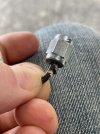
Is that a steel line with aluminum flare sleeve and nut? That fitting does not look familiar.
What kind of fittings are supposed to be used on the primer side?
Copper is no good where there is vibration, it cracks and fails.
If not copper, what kind of tubing should be used?
 
Stainless is very good, brass is OK.

Check the fuel lines, possibly aluminum is used for most of them.
 
If it's a Cessna, it originally came with Everdur priming lines. Everdur is a copper-coated steel line. Use a magnet to see what it is. Straight copper is not good. Never seen 1/8" aluminum tubing.
 
...that maybe the auto gas has some lower boiling components that are hanging around longer than if you were using 100LL.
I'm not understanding this statement. I thought higher boiling components would hang around longer?
 
What kind of fittings are supposed to be used on the primer side?
Spruce suggests 61SM-02, which is a brass SAE 1/8" compression fitting. Ida thunk a brass fitting on the aluminum primer body would be no bueno.
 
Spruce suggests 61SM-02, which is a brass SAE 1/8" compression fitting. Ida thunk a brass fitting on the aluminum primer body would be no bueno.
The primer body has a flare fitting machined right onto it. It is supposed to have a AN flare nut and sleeve for attaching the tubing. It's not a compression fitting at all.
 
It wasn't magnetic. TIL copper is harder than aluminum. I'm guessing the bend radius was too tight and it eventually broke the sleeve. My IA will put a new fitting on.
fitting.jpg

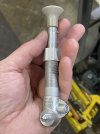
Meanwhile, I pulled out the primer itself. It's a Kohler. Not an appreciable amount of varnish or debris inside. Check valves looked good; one spring a little longer than the other, though. Blasted it out with mineral spirits and compressed air.
kohler.jpg

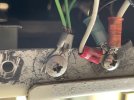
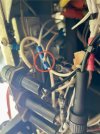
The green wires were loose in whatever "crimp" that was. Looks like a hardware store screw as well; it wouldn't budge. That will get removed and recrimped properly.
crimp.jpg
 
Last edited:
For extra fuel to be flowing into the engine, the spring-loaded needle valve that shuts off the outlet inside the primer cylinder would have to be defective. Broken spring, maybe, or some debris jammed into the needle's seat.
Is the needle seat supposed to have an o-ring?
 
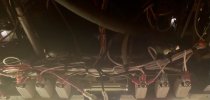
You and me both. That was supposed to be addressed at annual...:mad2: I really need to get my A&P so I can do exotic repairs like crimping wires.
According to the FAA, a visit from the Hangar Fairy would surely mean immediate death to anyone who flew it subsequently.
 
Made up a new line in aluminum, fuel lube on all threads, easy peasy.
 
It occurred to me that aluminum may not be as forgiving of clumsy mechanics and/or owners.
 
Well, that makes me feel better about the crap electrical work in the homebuilt I bought (I've replaced the worst of it).
 
You and me both. That was supposed to be addressed at annual...:mad2: I really need to get my A&P so I can do exotic repairs like crimping wires.
Thankfully, the primer is not spraying gas on the wiring and/or pilot. Why aren't primers on the engine side of the firewall and cable actuated like everything else?
Because I love the smell of gas in the cockpit in the morning.
 
Latest oil analysis reports no fuel dilution in oil. Woohoo!
 
Back
Top