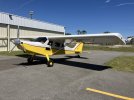
CompAir 6 Double-Fatal in Lexington, Kentucky, 6/20/26

Kenny Phillips

Final Approach
Joined
Jul 29, 2018
Messages
6,572
Display Name
Kenny Phillips
N82BT, an E/AB CompAir CA6-WB
Apparent distress signals (Mayday, or transponder, not specified.)
Doesn't look like a controlled interface with the ground.
 
Yikes. I was wondering why that couldn't be successfully landed darned near anywhere.
Yes. Disturbing to say the least. Looks like normal climb. Some trouble occurred, perhaps structural issue?? Then rapid descent. Wing departure/data stopped. Best guess. Investigator analysis hopefully will determine cause.
 
For what it's worth, the accident did not happen in Lexington, Ky, but one county over in Nicholasville, Ky. Crashed into a horse farm just a short distance from where I was eating breakfast that morning. Heard the sirens and emergency vehicles, but didn't know at the time what happened.
 
It almost looks like later in the video the wings come floating down after the initial fuselage.
 
It almost looks like later in the video the wings come floating down after the initial fuselage.
In the more wide-angle shot you can see at least one wing on the right side of the screen sort of spiraling down as the plane drops in the center
 
This is very sad and frustrating. Sad for the deaths, and frustrating that with all of today's technology, plane builders are making the same mistakes from 100 years ago. We should be able to do better.
 
Since this model is a home-built, and I don't know much about them, I'm wondering if the pilot was the builder? Did the pilot buy the plane from the builder? What's the inspection regimen for home-built? This looks like the same kind of accident that around the ERAU Arrow down and triggered all the wing-spar inspection ADs. Is there a regular regimen of inspection for the wing spar attachments of planes like this?
 
I don't know much about those airplanes, but I looked one over in a shop where it was going together. I saw some stuff that I, as an aircraft mechanic, considered sketchy. The wing spars, for instance, appeared to be nothing more than 3/4" plywood, and certainly not aircraft-grade plywood at that. Maybe that's what the plans called for, or maybe that's what someone substituted, but there it was. Wooden wing spars need to be made of nothing but the best lumber that meets the specifications as called out in FAA AC 43.13. Built-up spars often have aircraft-grade birch plywood in them, and that material bears little resemblance to the stuff at HD.
 
Since this model is a home-built, and I don't know much about them, I'm wondering if the pilot was the builder? Did the pilot buy the plane from the builder? What's the inspection regimen for home-built? This looks like the same kind of accident that around the ERAU Arrow down and triggered all the wing-spar inspection ADs. Is there a regular regimen of inspection for the wing spar attachments of planes like this?
The registered owner and the "manufacturer" share the same name, Brian Tonner. Year of mfg. (first flight?) 2004. Brian and his wife Karen both perished.
Edit: note that failed tail feathers (bits of those were found a distance from the wreckage) can precipitate a wing failure.
 
Since this model is a home-built, and I don't know much about them, I'm wondering if the pilot was the builder? Did the pilot buy the plane from the builder? What's the inspection regimen for home-built? This looks like the same kind of accident that around the ERAU Arrow down and triggered all the wing-spar inspection ADs. Is there a regular regimen of inspection for the wing spar attachments of planes like this?
FAA records show the builder's name and the owner's name to be the same, and the owner is listed as one of the two people who died in the crash. So, yes, the pilot was the builder.

Homebuilt aircraft are required to undergo a "Condition Inspection" every year; this is equivalent to the annual inspection on a certified airplane. The builder of the aircraft can receive a Repairman Certificate that permits them to perform the Condition Inspection. In this case, with a ~23-year-old homebuilt still owned and flown by the original builder, it's quite possible the deceased owner was performing his own inspections.

Since every homebuilt aircraft is considered to be a unique vehicle, there are no required aspects of the inspection.

Assuming the wing-loss was due to a mechanical flaw in the aircraft, it's likely to have been a long-standing issue that finally came to a head.

I have a database of homebuilt aircraft accidents from 1998 through 2024. There are 22 accidents involving Comp-Air aircraft; none were due to the type of structural failure that seems to be at the center of this one.

Ron Wanttaja
 
Since every homebuilt aircraft is considered to be a unique vehicle, there are no required aspects of the inspection.
There are probably as many approaches to condition inspections as there are to owner-assisted annuals, except that with a repairman certificate it is possible to pencil-whip the inspection without involving a second person. I have no idea this owner’s approach to maintenance, but with E/AB aircraft the continuum spans from the entire inspection being done at the kitchen table to a deep dive so intense that a professional shop would fire you for working too hard.
 
I don't know much about those airplanes, but I looked one over in a shop where it was going together. I saw some stuff that I, as an aircraft mechanic, considered sketchy. The wing spars, for instance, appeared to be nothing more than 3/4" plywood, and certainly not aircraft-grade plywood at that. Maybe that's what the plans called for, or maybe that's what someone substituted, but there it was. Wooden wing spars need to be made of nothing but the best lumber that meets the specifications as called out in FAA AC 43.13. Built-up spars often have aircraft-grade birch plywood in them, and that material bears little resemblance to the stuff at HD.
Have any pics of the spars you are describing ?
 
There are probably as many approaches to condition inspections as there are to owner-assisted annuals, except that with a repairman certificate it is possible to pencil-whip the inspection without involving a second person. I have no idea this owner’s approach to maintenance, but with E/AB aircraft the continuum spans from the entire inspection being done at the kitchen table to a deep dive so intense that a professional shop would fire you for working too hard.
No different than with some TC aircraft as it all falls to how the owner wants it done as both the condition and annual follow the same minimum guidance. But I think as mentioned, if they lost the tail first and inverted, then any wing is susceptible to shearing off due to the loads. However, to note, the ERAU Piper only had one wing fail vs two here, which is interesting in itself from a failure sequence.
 
Back
Top