Commander N965BC Crashes in Icing Conditions 13 Apr 2024 in San Bernadino Mountains

Palmpilot

Touchdown! Greaser!
Joined
Apr 1, 2007
Messages
23,096
Location
PUDBY
Display Name
Richard Palm
Home Airfield
Palo Alto (SFO area)

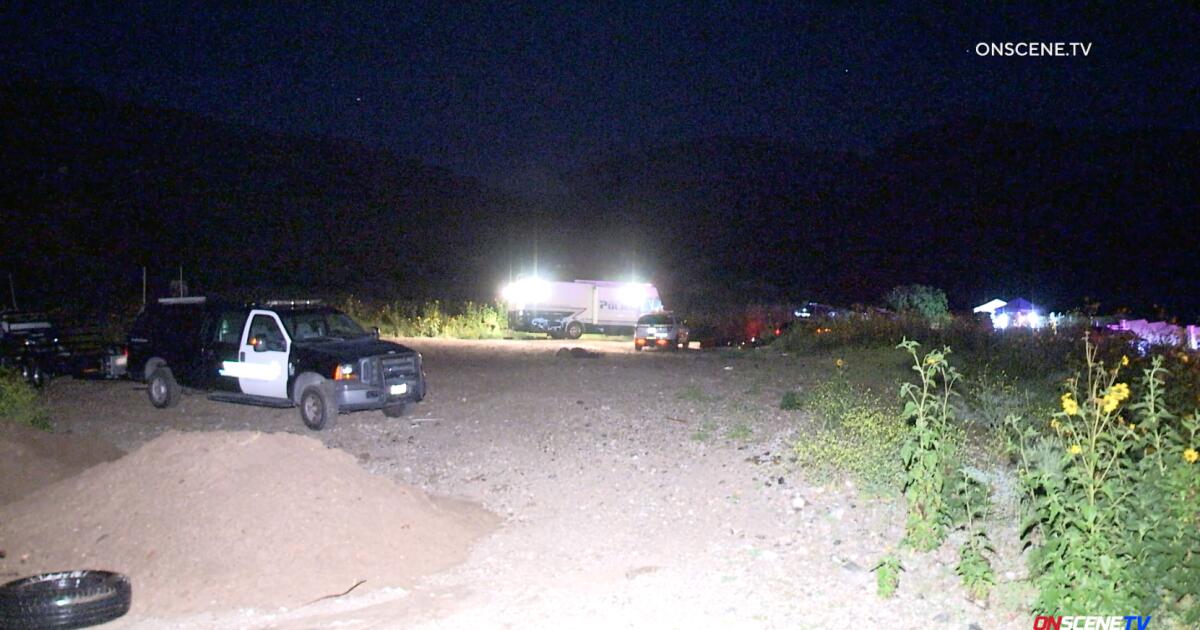
Authorities are investigating a plane crash that occurred in the San Bernardino Mountains on Saturday night, officials said.​
​
The twin-engine Gulfstream Turbo Commander crashed about 8:15 p.m. in the mountains north of Palm Avenue, according to preliminary information from the Federal Aviation Administration, National Transportation Safety Board and San Bernardino County Sheriff’s Department.​
​
A man was found dead at the scene, the Sheriff’s Department said. The department is waiting to release his identity until it notifies his family.​

As usual, Juan Browne has an informative discussion of the accident:

 
There are so many accidents where the weather contributes. One can back up a little and see weak ADM as a factor also.
Look at the plane that just had the inflight breakup, there was weather in the area.
 
I was struck by the comment that the pilot only had 300 hours. That doesn't sound like a lot of experience for what he was taking on. I was also struck by the comment that a lot of low time pilots are doing a lot of flying in order to build 1500 hours, as this pilot was, in order to qualify for airline work.
 
Such a seemingly short and simple flight in a very capable aircraft. This is one of those accidents that just seem bloody unfair. A young kid, just a few minutes in a cloud, and it's all over.

When I think of all the times I got lucky over the years it makes me wonder why couldn't he get lucky just this once?
Over-reliance on the autopilot seems to have been a factor, a trait he shared with TNFlyGirl.
 
Such a seemingly short and simple flight in a very capable aircraft. This is one of those accidents that just seem bloody unfair. A young kid, just a few minutes in a cloud, and it's all over.

When I think of all the times I got lucky over the years it makes me wonder why couldn't he get lucky just this once?
Agree. Very unusually low temperature for the area and moisture. California pilot that wouldn't necessarily expect that at that altitude. He recognized the conditions but was probably never trained to hand fly in those conditions because it's so rare in SoCal!
 
Is the type FIKI-certified?
 
How does someone with 300 hours get insurance in a plane like that?

They wouldn’t even be allowed to fly a Cessna 172 Pt 135.
 
How does someone with 300 hours get insurance in a plane like that?

They wouldn’t even be allowed to fly a Cessna 172 Pt 135.
I believe Mr. Brown says that pilots with less than 300 hours in type are at higher risk. I have not seen what the pilot's times were in this accident. I did read that the pilot was 35 years old, so not a kid.
 
Agree. Very unusually low temperature for the area and moisture. California pilot that wouldn't necessarily expect that at that altitude. He recognized the conditions but was probably never trained to hand fly in those conditions because it's so rare in SoCal!
The weather was accurately forecast, and based on that forecast, the pilot absolutely should have been expecting what was encountered at that altitude.

I don't believe he recognized the conditions at all. The heavy moisture collision with temperatures well below freezing, exacerbated by the rapidly rising terrain and turbulence, presented a clearly challenging situation. The danger certainly should have been apparent to an instrument rated pilot in a substantial aircraft, but he apparently flew blithely into the maw relying on the autopilot.

He may not have been trained to "hand fly in those conditions," but the failure was to recognize those conditions existed. He was unprepared and ambushed by the ice.
 
Wow, I went running in those hills Saturday and Sunday. Walked outside when I left in the AM Sunday and went back in for my beanie, it was COLD and around 32*.

I’m surprised we didn’t have more accidents this year, weather has been very not SoCalish weather.
 
Wow, I went running in those hills Saturday and Sunday. Walked outside when I left in the AM Sunday and went back in for my beanie, it was COLD and around 32*.

I’m surprised we didn’t have more accidents this year, weather has been very not SoCalish weather.
Must be that global warming rearing its ugly head...
 
The weather was accurately forecast, and based on that forecast, the pilot absolutely should have been expecting what was encountered at that altitude.

I don't believe he recognized the conditions at all. The heavy moisture collision with temperatures well below freezing, exacerbated by the rapidly rising terrain and turbulence, presented a clearly challenging situation. The danger certainly should have been apparent to an instrument rated pilot in a substantial aircraft, but he apparently flew blithely into the maw relying on the autopilot.

He may not have been trained to "hand fly in those conditions," but the failure was to recognize those conditions existed. He was unprepared and ambushed by the ice.

:(

Or was it: "He was unprepared and ambushed by the ice."
 
I flew out of LA on Sunday. Unusually crappy weather in the area on Sat/Sunday. Predicted snow level was between 3500 and 5500, not sure what the actual was. I remember looking up at the San Gabriel mountains north of Ontario on Saturday afternoon thinking it was not a day to fly.

Sad
 
There are so many accidents where the weather contributes. One can back up a little and see weak ADM as a factor also.
Look at the plane that just had the inflight breakup, there was weather in the area.
I was flying in the Bakersfield area doing some cloud seeding at about 9000 feet, about halfway through my flight when this Commander 695 went down. I had the worst icing of the year on the Navajo, which resulted in me having to ask to go down to a low altitude of 3000 feet where I shed the ice that I had collected in the first hour of flight. I needed to go down because I was not able to shed enough ice with the deicing equipment to maintain the flight.
 
I tell my students, “ The wise bird knows where the good weather’s at”. Always make sure the escape route is open.
 
Lots of similarities between this crash and the crash that killed NASCAR driver Alan Kulwicki in 1993. Icing, Garrett engines, failed to properly use the engine anti-icing equipment, both engines flamed out, plane plummets to the ground.
 
NTSB Final Report for N965BC

The airplane flew its descent in instrument meteorological conditions and moderate to severe icing conditions, including supercooled liquid droplets (SLD). Given the conditions, the airplane likely encountered serious icing during the descent.

Medical review indicated that the pilot had used a cannabis product and it is possible that he could have been experiencing associated impairing effects at the time of the accident.

The operator provided an estimated flight time for the pilot of 3,100 total hours, 950 hours of which were within the previous year. According to the operator, the accident pilot had been working for the company as a contract pilot for about 18 months before the accident.

The National Transportation Safety Board determines the probable cause(s) of this accident to be:

The pilot’s continued use of the airplane’s autopilot after flight into moderate to severe icing conditions, which resulted in an exceedance of the airplane’s critical angle of attack and an aerodynamic stall.
 
And the pilot’s continued use of the Devil's Lettuce....
 
Back
Top