I am training in a pipistrel alpha trainer, and have about 21 hours. I am having an issue that when I flare I start to climb. I can be perfectly on speed and glideslope, and flare as gentle and low and lightly as possible, and I still start climbing. I don’t know if I’m still doing it too high or hard, but I don’t see how I could do it any lower or softer. I know it’s hard to tell without actually seeing it, but I thought I’d see if anyone has any advice.

You are using an out of date browser. It may not display this or other websites correctly.
You should upgrade or use an alternative browser.
You should upgrade or use an alternative browser.
Climbing in flare
- Thread starter bdoss2006
- Start date

- Joined
- Apr 18, 2013
- Messages
- 5,322
- Location
- The independent worm saloon
- Display Name
- Mantis Toboggan, MD
What does your instructor say?
Nauga,
and the fox
Nauga,
and the fox

Old97
Pre-takeoff checklist
Have you done the excercise where you try to keep it just off the runway for as long as possible? Admittedly I have never flown any pipistrel.

Gilbert Buettner
Cleared for Takeoff
It seems to me that you have a little bit of excess speed. That's an indication of too fast when it climbs in the flare. When you get close to the runway, try NOT to land. In other words, just be patient and hold the landing attitude until the wheels touch.

Daleandee
Final Approach
- Joined
- Mar 4, 2020
- Messages
- 8,354
- Display Name
- Dale Andee
Good advice above. Ask your instructor what they see as the problem & fly it just above the runway trying to prevent it from landing as you reduce power.
You seem to indicate that you are doing everything right but it's still not working. If you are climbing then something isn't correct. Too much speed or too much back pressure on the stick. The good news is, if you stay at it, pretty soon you'll come back and tell us what the problem was. Might be a fear of the ground ...
You seem to indicate that you are doing everything right but it's still not working. If you are climbing then something isn't correct. Too much speed or too much back pressure on the stick. The good news is, if you stay at it, pretty soon you'll come back and tell us what the problem was. Might be a fear of the ground ...

DaleB
Final Approach
This. Put the airplane a foot or so above the runway, engine at idle, and try not to land. You’ll fail (land) gracefully.When you get close to the runway, try NOT to land. In other words, just be patient and hold the landing attitude until the wheels touch.


flyingcheesehead
Taxi to Parking
- Joined
- Feb 23, 2005
- Messages
- 28,184
- Location
- UQACY, WI
- Display Name
- iMooniac
- Home Airfield
- KUES/KMKE
You either have too much speed/energy, or you're still doing it too fast, or both.I am training in a pipistrel alpha trainer, and have about 21 hours. I am having an issue that when I flare I start to climb. I can be perfectly on speed and glideslope, and flare as gentle and low and lightly as possible, and I still start climbing. I don’t know if I’m still doing it too high or hard, but I don’t see how I could do it any lower or softer. I know it’s hard to tell without actually seeing it, but I thought I’d see if anyone has any advice.
What speed are you using for "perfectly on speed"? What is Vs0, and what is the normal approach speed for the flap setting you are using? What flap setting are you using? Is your instructor on board? What is your actual weight, and your max gross weight?
I ask all of these because I don't know a ton about the Alpha Trainer but I searched for a POH and looked at the web site and the numbers are somewhat different. The POH I found was for a 2019 and it says normal approach speed at Flaps +2 is 55 KIAS, while stall speed in the landing configuration is 37 KIAS.
Most new pilots over-control to some extent. Don't think about moving the stick - Think about changing the amount of pressure you're putting on it. On final approach, you should be trimmed such that you aren't putting any pressure either forward or aft on the stick at the correct final approach speed. Then, as you go to flare, just think about slowly adding back pressure to the stick without moving it.
I have 20 hours in an Alpha Trainer N520AT. What a great plane. It is very slippery. Don't forget its longer wing variant is a glider. This plane can descend or slow down but it can't do both at the same time. If you ever want to have some fun climb to 3500 AGL and try to slip it. It quickly becomes spin training .
As for landing, I think you are flaring a bit early. Try to fly 1 ft off the ground with zero power, eventually it will slow down. By trying to maintain the distance from the runway it will force you to flare without trying.
Good luck and have fun
As for landing, I think you are flaring a bit early. Try to fly 1 ft off the ground with zero power, eventually it will slow down. By trying to maintain the distance from the runway it will force you to flare without trying.
Good luck and have fun

- Joined
- Dec 5, 2010
- Messages
- 6,581
- Display Name
- GeorgeC
BTDT with the 162. On a calm day, I did some pattern work and flew every lap a little slower. It turned out that I had to slow down by quite a lot to get it where it felt right. I imagine it's even more pronounced with the pipistrel.

FastEddieB
Touchdown! Greaser!
- Joined
- Oct 14, 2013
- Messages
- 11,865
- Location
- Lenoir City, TN/Mineral Bluff, GA
- Display Name
- Fast Eddie B
- Home Airfield
- Big T Airport (80TN)
Where are you looking as you flare?

^^^ this ^^^You either have too much speed/energy, or you're still doing it too fast, or both. ...

rhkennerly
Line Up and Wait
- Joined
- Jun 10, 2021
- Messages
- 663
- Location
- Virginia Beach, VA
- Display Name
- rhkennerly
- Home Airfield
- KCPK Chesapeake Regional
I transitioned from 172s to LSAs & had the same problem. It’s a matter of wing loading: most LSAs are mere motorized leafs. It is really just a matter of learning to feel it. As suggested above, find a long runway, aim for the numbers & then flare just a tiny bit & hold it, trying to keep from landing. You may float way, way, way down the runway, which is fine at this point. As you struggle to not land, you get a feel about how to play the elevator. You can also do an exercise where you start your takeoff roll & just barely skim the runway, play power & elevator to just stay airborne. Then brake before you get to the end.
Actually, this feature should be considered a gift. It creates a more finely tuned sense speed & control. You’ve got to be way more in sync with the plane than with heavier hardware. Keep at it. You’re doing fine.
Actually, this feature should be considered a gift. It creates a more finely tuned sense speed & control. You’ve got to be way more in sync with the plane than with heavier hardware. Keep at it. You’re doing fine.
FastEddieB
Touchdown! Greaser!
- Joined
- Oct 14, 2013
- Messages
- 11,865
- Location
- Lenoir City, TN/Mineral Bluff, GA
- Display Name
- Fast Eddie B
- Home Airfield
- Big T Airport (80TN)
Let me clarify, early for speed, not altitude. It still needs to slow a bit more. I've seen under 30 knots with a headwind on landing.
30 knots KIAS? If so, what does a headwind have to do with anything?
rhkennerly
Line Up and Wait
- Joined
- Jun 10, 2021
- Messages
- 663
- Location
- Virginia Beach, VA
- Display Name
- rhkennerly
- Home Airfield
- KCPK Chesapeake Regional
I think just context.30 knots KIAS? If so, what does a headwind have to do with anything?

Ed Haywood
Final Approach
We have a Pipistrel on field. It glides and floats insanely well. Definitely need an instructor who knows the plane. Any advice you get on the Internet based on other planes is going to be nonsense.

I've gotten negative ground speeds in a 172. It helps to live in a windy area. On approach to KORS winds were 50 kts from the north and I figured, what the heck, might as well slow way down and get the bragging rights.We tried to get 0 ground speed but alas I got it down to 6 knots. It was actually less but no Pic, so no proof.
flyingcheesehead
Taxi to Parking
- Joined
- Feb 23, 2005
- Messages
- 28,184
- Location
- UQACY, WI
- Display Name
- iMooniac
- Home Airfield
- KUES/KMKE
It's not possible to get a negative ground speed.I've gotten negative ground speeds in a 172. It helps to live in a windy area. On approach to KORS winds were 50 kts from the north and I figured, what the heck, might as well slow way down and get the bragging rights.
You can, however, get a positive ground speed in the opposite direction.

That depends on how you define "negative ground speed". I suggest an intuitive definition: whenever the ground track is more than 90* different from the heading.It's not possible to get a negative ground speed.
You can, however, get a positive ground speed in the opposite direction.
In other words, consider whatever the noise is pointing at. Positive ground speed means you're getting closer to it, negative means you're getting further away from it.

EdFred
Taxi to Parking
- Joined
- Feb 25, 2005
- Messages
- 31,402
- Location
- Michigan
- Display Name
- The Ed
- Home Airfield
- 9D9 / 6Y9 / 88TN
Except someone else seeing you on ADSB will see xx@xxx not -xx@xxx. Same with controllers on RADAR.That depends on how you define "negative ground speed". I suggest an intuitive definition: whenever the ground track is more than 90* different from the heading.
In other words, consider whatever the noise is pointing at. Positive ground speed means you're getting closer to it, negative means you're getting further away from it.
I would expect the ground speed would still be positive just going in the opposite direction of where the nose is pointing. That is why zero would have been cool. Of course if the winds were like that on the ground we would have never launched. It was a bumpy ride. My CFI was getting tired of me always waiting for a Goldilocks day and said I needed to get in some more challenging weather. We we doing turns around a point. It was a fun day.
For the OP, the Alpha should be fitted with spoilers as standard equipment, but it unfortunately is not. But on the bright side you will absolutely learn energy management. Perhaps Mooney training... IDK, though because I never flew a Mooney.
For the OP, the Alpha should be fitted with spoilers as standard equipment, but it unfortunately is not. But on the bright side you will absolutely learn energy management. Perhaps Mooney training... IDK, though because I never flew a Mooney.
Yep. It's relative - they can't see your heading either.Except someone else seeing you on ADSB will see xx@xxx not -xx@xxx. Same with controllers on RADAR.
Clip4
Touchdown! Greaser!
My guess is you are driving the plane to the ground and experiencing excessive floating. You need to smoothly reduce the power to idle as you enter ground effect.I am training in a pipistrel alpha trainer, and have about 21 hours. I am having an issue that when I flare I start to climb. I can be perfectly on speed and glideslope, and flare as gentle and low and lightly as possible, and I still start climbing. I don’t know if I’m still doing it too high or hard, but I don’t see how I could do it any lower or softer. I know it’s hard to tell without actually seeing it, but I thought I’d see if anyone has any advice.

Dan Thomas
Touchdown! Greaser!
- Joined
- Jun 16, 2008
- Messages
- 12,389
- Display Name
- Dan Thomas
That's all too common. Some instructors teach it that way, maybe because they're afraid of stalling. But the FAA's Airplane Flying Handbook has this to say:My guess is you are driving the plane to the ground and experiencing excessive floating. You need to smoothly reduce the power to idle as you enter ground effect.
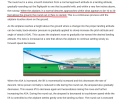
I underlined the important bit. None of this carrying the approach speed down to two or three feet above the runway. The airplane needs to be slowed well before it gets into ground effect, and if it's done right there is no float at all. This way, the risk of damage from porpoising, wheelbarrowing, ballooning, tire blowout from heavy braking or running off the end of the runway, is avoided.
Clip4
Touchdown! Greaser!
Dan, you might cut and paste ground effect too.
Dan Thomas
Touchdown! Greaser!
- Joined
- Jun 16, 2008
- Messages
- 12,389
- Display Name
- Dan Thomas
Why? It's not much of a factor if the round-out is started soon enough and speed is bled off before ground effect becomes a problem.Dan, you might cut and paste ground effect too.
Using the technique I posted enabled me, almost 50 years ago, to regularly land a glider tug (my old Auster) in under 200 feet, while the published landing distance was nearly 300 feet. One can land and stop a 150 or 172 in less than book values, too. BTDT.
In Canada, our government-published Flight Training Manual calls for the roundout to start at 15 to 30 feet. Reduce power and raise the nose to get the airplane slowing down. For the OP's Pipistrel, I'd stick to the FAA's 10 to 20 feet. Light airplanes lose speed more quickly.
Ground effect has an effect on stall speed, lowering it and enabling float. The surface interferes with the lift-killing wingtip vortices that are quite large at landing speeds, and it reduces the upwash ahead of the leading edge, an effective AoA reduction.

midwestpa24
Final Approach
If you are climbing in the flare, you are carrying way too much speed to the flare, or flaring way too aggressively, or likely some combination of both. If you were going slow enough, even an aggressive flare would not cause a climb because the airplane would just stall and plop down.
FastEddieB
Touchdown! Greaser!
- Joined
- Oct 14, 2013
- Messages
- 11,865
- Location
- Lenoir City, TN/Mineral Bluff, GA
- Display Name
- Fast Eddie B
- Home Airfield
- Big T Airport (80TN)
I will stipulate that being on speed and stabilized and properly rounding out into ground effect are a big help in not climbing in the flare.
But I still think not looking in the right place is very often the real problem. You can't balloon WAY high without first climbing a tiny bit and not realizing it, then a little more, and so on. It's not that hard to stop pulling and relax a bit of back pressure the moment you see you're climbing - if you can see you're climbing - and letting the plane settle a bit and repeating. In fact, a good exercise might be to choose an adequately long runway and intentionally come in fast and holding the plane inches above the runway during a VERY long flare. I've done it with students and I think it helps. Too much speed is definitely NOT a good thing, but I don't think that by itself accounts for climbing in the flare.
But I still think not looking in the right place is very often the real problem. You can't balloon WAY high without first climbing a tiny bit and not realizing it, then a little more, and so on. It's not that hard to stop pulling and relax a bit of back pressure the moment you see you're climbing - if you can see you're climbing - and letting the plane settle a bit and repeating. In fact, a good exercise might be to choose an adequately long runway and intentionally come in fast and holding the plane inches above the runway during a VERY long flare. I've done it with students and I think it helps. Too much speed is definitely NOT a good thing, but I don't think that by itself accounts for climbing in the flare.
Clip4
Touchdown! Greaser!
Because most CFIs do a really poor job of describing it and what the effect is during landing and your excellent cut and paste is only part of the story.Why? It's not much of a factor if the round-out is started soon enough and speed is bled off before ground effect becomes a problem.
Using the technique I posted enabled me, almost 50 years ago, to regularly land a glider tug (my old Auster) in under 200 feet, while the published landing distance was nearly 300 feet. One can land and stop a 150 or 172 in less than book values, too. BTDT.
In Canada, our government-published Flight Training Manual calls for the roundout to start at 15 to 30 feet. Reduce power and raise the nose to get the airplane slowing down. For the OP's Pipistrel, I'd stick to the FAA's 10 to 20 feet. Light airplanes lose speed more quickly.
Ground effect has an effect on stall speed, lowering it and enabling float. The surface interferes with the lift-killing wingtip vortices that are quite large at landing speeds, and it reduces the upwash ahead of the leading edge, an effective AoA reduction.
The best advise I was given flying the Pipistrel Alpha (N520AT) was don't land. Just let it fly down the runway and hold it off. My CFI saying don't land, don't land, don't land until it just didn't have enough energy to fly.
These posts are helpful but just get in there and try again.
These posts are helpful but just get in there and try again.