Citabria wooden wings?

Rick A

Line Up and Wait
PoA Supporter
Joined
Sep 25, 2019
Messages
828
Location
Lancaster, Pennsylvania
Display Name
Rick A
Home Airfield
KLNS
A group of us are considering forming a four-way partnership and purchasing a 1972 Bellanca Citabria that comes with a hangar, and a question regarding the integrity of the wood wings has come up.

The plane would be used for "gentleman acrobatics" and none of the current group of potential partners are interested in competition, or conducting any aggressive acrobatics.

The plane has 1700+TT and around 1000 hours on the engine. It was recently recovered and painted, and the wooden wings inspected with some replacement wooden parts by a local mechanic that specializes in restoring / recovering fabric aircraft (for over 40 years), and he has a great reputation. It was signed off for an annual a few months ago, after the work and paint, and flying hands off perfectly.

One of the potential partners says he's heard some horror stories about Bellanca wooden wings, and at the present time wants them inspected before he's willing to participate.

My questions are, can the wood wings be inspected electronically (ultra sound, x-ray, etc.), or does the wing inspection involve any fabric removal or puncture? Also, are there any problem areas that we should be looking into outside of the norm?
 
@Ed Haywood flies one and just took it to the IAC US Nationals. He’s flying back today, but can give you some insight as he’s recently done a lot of work on his plane. Not due to damage, it was just time for an OH and that turned to re-skin and some avionics, too.
 
My questions are, can the wood wings be inspected electronically (ultra sound, x-ray, etc.), or does the wing inspection involve any fabric removal or puncture? Also, are there any problem areas that we should be looking into outside of the norm?
Depends on what you are looking at or for. But given the aircraft was worked on by a very experienced mechanic, I think perhaps have that partner sit down with this mechanic and have his concerns addressed vs an inspection. In general, wood can be equal to or better than aluminum structures when properly maintained on several levels.
 
I’m not a guru on this by no means; but I have been around aircraft with

wood structures. Many “ horror stories “ have to do with lack of

proper maintenance. Mooneys, Bellancas, T-crafts, Cubs etc used wood

this material and are70+ years old. There are cheap scopes that can be

recorded and reviewed. IMHO you have taken the first step by bringing a

knowledgeable person on board. Steel, aluminum and composites are not

w/o issues as well. Wood maintenance is not rocket science. Touch up

varnish to assure no bare wood and making sure drain holes are open

will go a long way in the longevity department.
 
Wood spars with aluminum ribs, not wood wings. Only the low wing Bellancas have an all wood wing, and issues with those are from years of being tied down in all kinds of weather.
Wood spars are not the boogey man that some will have you believe. As long as the AD for the spar inspection is complied with by someone knowledgeable about these planes, then you should be good. That's not to say that sometimes issues are found, especially with hard aerobatics. X-rays and such are for metal structures only.
Ask the guys that own them, https://champcitabriadecathlonforums.com/
 
Last edited:
Depends on what you are looking at or for. But given the aircraft was worked on by a very experienced mechanic, I think perhaps have that partner sit down with this mechanic and have his concerns addressed vs an inspection. In general, wood can be equal to or better than aluminum structures when properly maintained on several levels.
This. The spars would normally be inspected at annual through inspection holes. But if the wings were recently uncovered, they would have been thoroughly inspected. Someone that worried about it might never be comfortable in a wood spar plane.
 
That's not to say that sometimes issues are found, especially with hard aerobatics.
A Chief guy told me once that the only wooden spars that showed cracks were airplanes with a history of extensive aerobatics or ground loops that impacted the wings. But that might have been specific to the small engine Champs and Chiefs.
 
Last edited:
I've owned 5 airplanes with wood spars and two (both ultralights) without. Never had a problem with any of them.

OTOH, I shared a hangar with a Citabria that hadn't flown for years because of a cracked that the owner couldn't afford to fix it. Spar quality spruce is getting to be unobtanium. Though I think wood Citabria spars can be swapped for aluminum?
 
The Aeronca spar AD was for compression cracking, which in addition to aerobatics and ground loops also included being flipped over on its back due to winds or accident. With the wings supported on the tips the spar cracked in compression usually at the plywood plates at strut attachment. Rainbow Aviation in Moses Lake, WA has the spars.
 
Ok, here's the deal on wood spars on the 7 and 8 series Bellancas.

The main issue is unrepaired and unreported damage from ground loops. Someone drags a wingtip and nobody sees it, so they fix the cosmetic damage and keep flying. Nothing gets logged, because nobody wants to create a damage history. Unbeknownst to them and subsequent owners, they cracked the spar, usually compression cracks just outbound of the doubler plate at the strut attachment point.

About 30 years ago a Scout 8GCBC lost a wing in flight. No acro, just cruising along straight and level and it folded. The aircraft turned out to have a history of ground loops. When the FAA started digging deeper, they found many other aircraft with similar damage. Since there was no way to determine with confidence the damage history of any given plane, they issued an AD requiring annual inspection of the spar.

The AD requires visual inspection of the entire spar. Every square inch, especially the top, using a mirror and bend-a-light. To do it properly takes several hours and adds several hundred dollars to the annual. Thoroughness varies, of course.

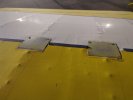
The panels on the bottom are no big deal, but nobody wants to break the top surface of the wing and allow water to intrude. There is an STC for waterproof inspection panels on top of the strut attachment point. Picture:

17596297740648457623031635862139.jpg

If the wing has been rebuilt and you are confident of the accident history since that point, there should be zero risk or concern. It still has to get the AD inspection every year.

I have a wood spar Decathlon with the original spars from 1978. I regularly fly acro to 5G. I get it inspected every year per the AD. I have no concerns. A Decathlon spar is much beefier than a Citabria spar, but Decathlons are flown much harder.

Citabrias have two options for metal wings. First, the factory sells them. They run around $40K. Alternatively, there is an STC for a metal spar retrofit into the existing wings known as the Milman Spar.

Contrary to popular belief, aerobatics is not the cause of the spar issues. If you fly within the structural limits of the aircraft, they are not life limited. It is pretty hard to overstress an aerobatic aircraft. You would just about have to do it deliberately.
 
Last edited:
Thanks to all... great information. I'll pass it all onto the potential partner with the wood reservations.
 
The Aeronca spar AD was for compression cracking, which in addition to aerobatics and ground loops also included being flipped over on its back due to winds or accident. With the wings supported on the tips the spar cracked in compression usually at the plywood plates at strut attachment. Rainbow Aviation in Moses Lake, WA has the spars.
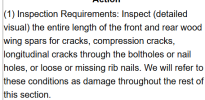
Not so simple as that. From the AD:

1759676708404.png

"Longitudinal cracks through the bolt holes or nail holes." The ribs are aluminum, and they are fastened to the spar by small nails through a flange on the rib. As the spar ages it gradually shrinks across the grain, and those nails, being in rigid aluminum, try to prevent that. The wood cracks along the grain through the nail holes. If it got bad enough, the cracks could join up between the ribs, and the strength of the spar is lost since its web is destroyed. If nails get loose enough and fall out due to this wear, that rib starts working up and down and cuts into the top and bottom of the spar.

Been there, seen it.
 
I would stick to something with aluminum spars, like the pa-28 or pa-36.

 
I’ve seen some of what Dan mentioned. The rib nails loosen and wallow out

the hole. The intent of the AD is early detection to prevent failure.

A thorough inspection may reveal the issue which might still be able to

address via access holes without a complete recovery. One guy added

about 20 holes per wing to do so!
 
Back
Top