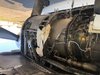
who is responsible for stuff left in your aircraft?
Stuff like that should have a length of red surveyor's tape attached to it. Makes it harder to overlook.I instituted that rule after finding a plastic oil bottle in the engine one time - it had been used when replacing the oil filter.
It takes about 2 minutes to open the cheeks on my Mooney and inspect the entire engine compartment and reinstall them. If you don’t have the removable cheeks, you have a serious problem.One of the very few things I really hate about my Mooney is there are at least a hundred screws holding on the cowling. Uncowling the engine enough to get a good look is the work of a half hour or more, and then they have to be replaced, and the screws don't always like to go in the way they came out doncha know. I have a really good mechanic, and I think I'm more likely to screw the pooch than him. But I certain do miss being able to just unlatch the cowlings and look at the engine, the way I used to on my Cherokee.
You must be the flash then. Like I said, lots and lots of screws, and they aren't always easily put back in.It takes about 2 minutes to open the cheeks on my Mooney and inspect the entire engine compartment and reinstall them. If you don’t have the removable cheeks, you have a serious problem.
"Whether it's a part left out or a tool left in, the first flight after maintenance can be dangerous."
Haha in A&P school our instructor said to never engrave your tools for this exact reason.I found a big screwdriver in the lower cowl of a Bonanza. It had the mechanics name engraved on it.
You don't like getting free tools? ;-)It's amazing the "extras" you can find post-annual. I've found crescent wrenches, nice socket wrenches, rags, and screwdrivers atop the engine when opening the cowling for post annual preflight inspection. I don't use that shop anymore.
Humans are fallible. I’ve seen this in every sector of aerospace I’ve been in- tools and crap left over from the factory, mechanics leaving tools in engines or not torquing/installing stuff in correctly and causing more damage or a crash. Tools and flashlights being left in satellites that are now in geo orbit.
I used to think an A&P friend was kind of OCD about his tools (foam cutouts, everything in its place)... but then he explained how we can make sure no tools have been left in the airplane... he always always always did an inventory of his tools after working on an aircraft.
USAF policy was if a pilot lost a pencil in cockpit the Ejection Seat would
be pulled before next flight.
Yes, the great thing about an E-AB (or E-LSA) is you can do all your own work (except perhaps the condition inspection - depends...). But the down side is that if you don't get it done, it doesn't get done. My ride ain't flew since some time mid November. Engine came off for a water pump seal (Rotax 912) and when I went to re-hang it last Sunday, I found some *&%)^%$ previous owner had (*&^% up installing engine mount bushings and then the wife called and said it was time to come home. So, wait for Saturday. Then I can hang it. Then I can purge the oil system (did I mention it's a Rotax 912?). Then I can sync the carbs (on account of Rotax). Then, who knows, I might even be able to fly it.I don't own an airplane yet, but things described in this thread (and a few others) makes me want to go the experimental route more and more. I do most of my own maintenance on all of my cars and bikes, and I would like to do the same with an airplane.
I would have loved seeing that myself. Raccoons are quite funny little animals (as long as they are not in my house or my trash can)I once did a cross country with a friend (as in he flew a second 172) and after we landed I watched as a full sized racoon scrambled out of the bottom of the cowling of his a/c!