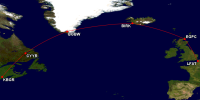
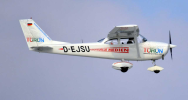
Cessna 185 Down at KBGR

Saw a video, ground loop - go around into stall/spin @ ~100 feet. Very ugly.

 
Landed runway 33 (330°m). Looks like the wind picked up the right wing. BGR is a former SAC base and has a loooong runway.

KBGR 221653Z 35010G18KT 10SM SCT070 25/09 A2995 RMK AO2 SLP138 T02500089

KBGR 221753Z 35012G16KT 10SM SCT070 26/09 A2995 RMK AO2 SLP138 T02610089 10267 20156 56004

Note a 350° true wind is close to 005° magnetic at BGR.
If you misjudge the wind and get a wing lift in a high-winged Cessna it's best to stay on the ground and accept the consequences. In my case, it was a wing drag and a folded prop. This guy may have just had a ground loop. Maybe even without damage. Sometimes you just can't "save that landing".
 
Looks like that 10G18 crosswind became a significant tailwind at an already too slow speed.
 
Last edited:
Will be interesting to see how many taildragger hours and time in type the pilot had.
 
So fatigue might be a significant contributing factor.
Seemed to be two ~5 hour legs on 8/16, then one 5-6 hour leg per day on 8/17, 8/18, 8/21, and the accident flight on 8/22. There were also a couple short, local flights around Narsarsuaq on 8/19.
 
Don't want to second guess this pilot, but this tragic event seems strange, and preventable.

Seems the tight left turn downwind, then stall, right after lift off in a steep left bank is what killed him. I don't understand the rush to keep a tight left turn and steep bank going, as I'm sure the hills and trees in the background were not that close. Lowering the nose and reducing the bank was in order, but not done (or even attempted).

My taildragger time (over half a Century ago) is only about 65 hours in a J-3 Cub. I was never taught, or even shown a wheel landing. Only full stall. Crab on final, transition into a slip during the flare keeping the upwind wing down as needed, plop down in a full stall with the ailerons into the wind, and dance on the rudders as needed.

Yet, all I see now is taildraggers conducting wheel landings. Are wheel landings safer and/or easier in strong gusty crosswinds? Seems the longer the low altitude exposure during a wheel landing provides a greater chance for a gust to lift the wing that's pointed into wind while flying in ground effect, at a significantly lower angle of attack.

Any insights on wheel landings versus full stall, and if that relates to this accident? Does anybody do full stall landings in taildraggers any more?
 
Any insights on wheel landings versus full stall, and if that relates to this accident? Does anybody do full stall landings in taildraggers any more?

That will start a multi-page argument. Like asking whether hi wing or low wing is better.

My personal belief is that 3 point full stall landings are preferable. Having the tailwheel firmly on the ground is what stops ground loops. The sooner you get that done, the better. I got that advice from a fellow with 30,000 GA hours, about 1/3 of them tailwheel.

But other very experienced taildragger people feel equally strongly that wheel landings give more control in high and gusty crosswind conditions. And 3 point landings are frowned upon in some aircraft, like the DC-3.

If you start to lose directional control, lifting your tail and giving it a blast of power is the right correction. But that's just enough power to get airflow over the rudder to make it effective, NOT so much that you take off. That is panic mode.
 
Last edited:
I don't understand the rush to keep a tight left turn and steep bank going,
I’m not sure how much control was retained in that moment considering the airplane basically became airborne with very low energy, but already in the bank, plus all the left turning tendencies added in the moment. Have to also consider potential damage to the left wingtip if it made ground contact and was damaged during the ground loop (video doesn’t really confirm that).

My guess is either way, the ailerons wouldn’t have been very effective - think recovery from a power-on stall in a 20-30° left bank. In other words, not sure the steep bank was intentional, it was likely more a result of physics.
 
And 3 point landings are frowned upon in some aircraft, like the DC-3.
What makes a DC-3 any different than any other taildragger during a full stall 3-point landing? Is a DC-3 just more forgiving when landing on two wheels? And if so, wouldn't that 2 versus 3 wheel comparison of techniques remain constant for all taildraggers landing in a strong gusty crosswind?

I know that back in WWII and Korea when C-47's (DC-3's) and its much larger pedigree, the C-46 Commando were commonly flown (and routinely flown significantly overweight compared with FAA approved numbers), pilots were taught full stall landings should be exclusively used on all rough or short landing surfaces, including beaches, etc.

Wheel landings were allegedly only preferred for landings on long paved runways when a pilot wanted to impress passengers (or superiors) with a smooth landing.
 
Seems the tight left turn downwind, then stall, right after lift off in a steep left bank is what killed him. I don't understand the rush to keep a tight left turn and steep bank going,
I think it was more that he was in an airplane that was out of control on the ground, and when he took it into the air it was still out of control.
 
Looked like he tried to prevent a ground loop by adding power but then stalled it. Unfortunate.
 
plop down in a full stall with the ailerons into the wind,
If the wing is fully stalled, the ailerons are useless. Very, very few airplanes will do a "full-stall" landing. You don't want that wing to stall. You lose control when it stalls. Stall it a little higher and it could drop a wing or drop its nose.

I measured the angle between the wing chord and the ground surface on out Citabrias. 12°. That means that in a touchdown, minimum sink, the wing is at or near 12° in the three-point attitude. Stall angle is around 17°, so the wing is nowhere near stalled. Airplanes are not designed to stall in the landing.
Any insights on wheel landings versus full stall, and if that relates to this accident? Does anybody do full stall landings in taildraggers any more?
I have plenty of taildragger time. I prefer wheel landings, as the slightly higher speed gives better control until the mains are on the ground, especially in crosswinds. Even without a crosswind one can make a better landing by banking just a hair just before touchdown, and the energy that can bounce the airplane back into the air is instead dissipated by rolling the airplane level.

Some airplanes, especially the 185, have long main legs and high instrument panels, making forward visibility in a three-point marginal, or even impossible for short pilots. The wheel touchdown fixes that, even if the tail is only six inches off, which means that the touchdown speed in that landing is only a bit more than in a three-point. Takeoff, similarly, is better if the tail is raised soon after opening the throttle. Don't do that too soon in a 185 if you have a crosswind from the left. You could run out of rudder.

The 185's horizontal stab is close to the ground in the three-point. When lightly loaded, that stab, getting into ground effect, doesn't want to put the tailwheel on the runway. You run out of elevator, and so the mains hit, the tail slams down, the lift increases and you start bouncing. The cure is to plan to do the wheel landing in the first place.

The guys that run into trouble with a wing lifting are the guys that don't keep aileron increasing as the speed bleeds off. They think that since the wheels are on the ground, the flight is over. It's not. Any time that wing is moving through air it can generate lift.
 
Hmm. Believe what you choose to but Skywagons 3-point just fine. This guy’s landing technique didn’t cause the accident. If the tail starts to swing the response is retract flaps, apply full rudder, and step hard on that brake. At that point the goal is to get stopped.
 
What makes a DC-3 any different than any other taildragger during a full stall 3-point landing?

I don't know. I just know what I have heard and read. I think perhaps differential thrust on big twins may have something to do with it.

My friend has a Beech twin 18. I plan to get my multi rating in it once it is finally flying again. He says to always wheel land it, and control yaw with differential thrust.
 
I was taught, and adamently believe that excessive speed into the flare and carried down to the runway is the leading cause of landing accidents in all light aircraft, both tailwheels and tricycles.

Watching the large amount of videos out there (i.e. Oshkosh landings) showing taildraggers damaging planes during landing incidents such as ground loops, or more serious events like this one, I ask the following question: Is the extra speed talked about for better control during a taildragger wheel landing more dangerous to life and limb than a full stall (or nearly full) 3-point landing?
Can't recall ever seeing video of an incident following a full stall 3-point taildragger arrival. But maybe it's only because very few pilots, for whatever personal technique reasons, are using less speed over the fence and three pointing their taildragger, so there's not much video available to view? The only 3 point arrivals I recall viewing are during STOL short landing competitions, and they're successful arrivals.
 
Is the extra speed talked about for better control during a taildragger wheel landing more dangerous to life and limb than a full stall (or nearly full) 3-point landing?
What’s dangerous to life and limb is a poorly-controlled landing, regardless of type or speed. The difference is that a poorly-controlled airplane usually includes poor speed control.
 
DC-3 on short landing areas, best stopping is a wheel landing, then immediately raise the flaps (puts more weight on wheels) then modulate braking with elevator till tail wheel comes into contact with ground.
 
DC-3 on short landing areas, best stopping is a wheel landing, then immediately raise the flaps (puts more weight on wheels) then modulate braking with elevator till tail wheel comes into contact with ground.
That works in most taildraggers. I never did it with the Jodel, since the tail was so light I might have run out of elevator, along with heel brakes that weren't all that precise. Risked noseover a bit too easily. Citabrias and the 180 and 185 were fine with it.
 
I was taught, and adamently believe that excessive speed into the flare and carried down to the runway is the leading cause of landing accidents in all light aircraft, both tailwheels and tricycles.
Yup. Too true.
Watching the large amount of videos out there (i.e. Oshkosh landings) showing taildraggers damaging planes during landing incidents such as ground loops, or more serious events like this one, I ask the following question: Is the extra speed talked about for better control during a taildragger wheel landing more dangerous to life and limb than a full stall (or nearly full) 3-point landing?
Ground loops most often are due to pilot inattention (he thinks the flight is over) or because whatever crosswind is there is beyond his personal capabilities. Sometimes he's just a passenger, too. There's a video of a 185 landing at OSH a few years ago that gets into a groundloop in a crosswind, and you can see no aileron or rudder deflection whatever during the event. The pilot must have been half asleep.

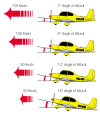
As far as airspeed and landings: there is a hard relationship between airspeed and Angle of attack (reflected by the pitch attitude) that many pilots either didn't get during training, or don't remember, or didn't think it was important. This:

1755987202301.png

In cruise the pitch attitude is level because of the high airspeed. In slow flight the nose is way up, since the wing needs a much higher AoA to generate the same lift. Both are in level flight. The gross weight of the airplane will change it somewhat, of course, but the basic thing is that a higher airspeed means a lower pitch attitude.

Now, look at an tricycle airplane in cruise flight:

1755987417240.png

Look at how that nosewheel is a lot lower than the mains. The nose strut is extended and the airplane's level attitude lowers it more. On the ground it sits nose-up.
So when you arrive at the runway with too much speed, that nosewheel is going to hit first and you will bounce back into the air. Attempts to salvage the landing might result in porpoising, and maybe a busted airplane. Or the pilot will flare near the ground with all that speed and get a ballooning and maybe run out of airspeed ten feet up and pancake the thing on the runway. Flaps down will increase the nose-down attitude.

Speed needs to be bled off before you get into ground effect, not two feet off the ground. Depending on the airplane, the round-out, as it's called, should start 15 to 30 feet up.

Here's a video of a too-fast touchdown resulting in porpoising and nosegear failure:


Can't recall ever seeing video of an incident following a full stall 3-point taildragger arrival. But maybe it's only because very few pilots, for whatever personal technique reasons, are using less speed over the fence and three pointing their taildragger, so there's not much video available to view?
It happens often enough. But learning to fly taildraggers will usually break you of bad habits like trying to land too fast. The taildragger will not forgive you that. Wheel landings do require a bit more speed, for exactly the reasons outlined regarding AoA and attitude; you can't land tail-low if you're speed is too high.
 
Hmm. Believe what you choose to but Skywagons 3-point just fine. This guy’s landing technique didn’t cause the accident. If the tail starts to swing the response is retract flaps, apply full rudder, and step hard on that brake. At that point the goal is to get stopped.
The 185 we had did not like 3-pointers with light loads, like just me and some fuel. And everything was rigged right, too.

The pilot's fault was letting that upwind wing rise, dragging a wing and setting off the groundloop, and the attempt to go around in a confined space did the rest.
 
I read that the wind shifted and this guy landed downwind unknowingly. I’m familiar with that situation. Landings don’t have to be pretty but even a faster than normal downwind landing didn’t kill him. Having an unusual rollout and facing an unpracticed and unexpected split second decision… and making the wrong one, did. It could happen to anyone. We should mourn the loss and use the video as a learning tool so we might not repeat what he did.
 
The 185 we had did not like 3-pointers with light loads, like just me and some fuel. And everything was rigged right, too.

The pilot's fault was letting that upwind wing rise, dragging a wing and setting off the groundloop, and the attempt to go around in a confined space did the rest.
No plane likes 3-pointers with forward CG. It can still be done and has been required for me to demonstrate during every BFR I’ve ever had.
 
Last edited:
Wheel landings do require a bit more speed, for exactly the reasons outlined regarding AoA and attitude; you can't land tail-low if your speed is too high.
Very well explained, and appreciated.

Went back and reviewed the landing a few times, and was surprised to see that after touching down there was little apparent deceleration as he proceeded at least 800' or more down the runway. Then there was ample energy remaining to ground loop (possibly dragging a wingtip), become airborne (into a tail wind), climb up to 60'+ altitude in almost knife flight (60 to 70' high) while maintaining level flight and the steep bank for a short time before dropping to the ground.

Considering the above, IMO the plane must have remained at a higher speed on the runway than would normally be expected for a wheel landing with the reported winds. However, I've never done a wheel landing so my opinion on this ain't worth much.
 
What makes a DC-3 any different than any other taildragger during a full stall 3-point landing? Is a DC-3 just more forgiving when landing on two wheels? And if so, wouldn't that 2 versus 3 wheel comparison of techniques remain constant for all taildraggers landing in a strong gusty crosswind?

I know that back in WWII and Korea when C-47's (DC-3's) and its much larger pedigree, the C-46 Commando were commonly flown (and routinely flown significantly overweight compared with FAA approved numbers), pilots were taught full stall landings should be exclusively used on all rough or short landing surfaces, including beaches, etc.

Wheel landings were allegedly only preferred for landings on long paved runways when a pilot wanted to impress passengers (or superiors) with a smooth landing.


FWIW ... the manufacturer of the plane I fly recommends to use three point for take-off and landings. Wheel landing are fun when the wind is fairly calm.

I posted this three years ago. Worth the read: https://rareaircraft.com/landing-the-airplane/
 
The primary difference between a 3-point and wheel landing isn’t speed. Those are very similar. A 3-point landing keeps the tail down. A wheel landing is usually followed by forward yoke to keep the tail up. If winds are unfavorable most pilots I know will use a wheel landing and quickly retract flaps to drop the tail and get on the brakes. But I live in the off-airport world. Nobody I know uses 3-points, and I know a lot of Skywagon pilots. I read this plane had just come across the Atlantic. I wonder if it was a ferry pilot. He didn’t fly like any Skywagon pilots I know.
 
Last edited:
A wheel landing is usually followed by forward yoke to keep the tail up. If winds are unfavorable most pilots I know will use a wheel landing and quickly retract flaps to drop the tail and get on the brakes.
At what point during a wheel landing is the power typically reduced to idle? Is there a rule, preference, or event that could be considered optimum?
 
Depends on the plane.
OK, I'll rephrase the question: Flying a taildragger you're familiar with, typically loaded, and landing with a gusty crosswind on a long hard surfaced runway... at what point during the landing would you consider reducing the power to idle, and why?
 
Back
Top