mandm
Avionics Upgrade
1977 Cessna A 150M - N15CU Aircraft For Sale - Indy Air Sales
1970s-cessna-a150m-aerobat-garmin-king-trig
 indyairsales.com
What are your thoughts on this aircraft? Anyone have the VREF value?
 indyairsales.com


1977 Cessna A 150M - N15CU Aircraft For Sale - Indy Air Sales
1970s-cessna-a150m-aerobat-garmin-king-trig
What are your thoughts on this aircraft? Anyone have the VREF value?

Aerobats were available in both 150 and 152 models. I fly a 1973 A-150L with an O-360 (STC) and tow gliders with it.Nit picking, but all Aerobats were Cessna 152's, not 150's.
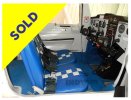
The interior pic did not seem to show the door jettison D rings, which are installed on each side door pillar.
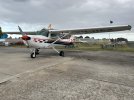
Mighty pretty plane, though. I have flown aerobatic in one, and liked it. That one had no seat upholstery, I sat on the parachute, and it also padded the back. Not very comfortable. This plane is nicer.
Priced to make a profit!


Okay so what is the proper name for the 150 Aerobat?Nit picking, but all Aerobats were Cessna 152's, not 150's.
The interior pic did not seem to show the door jettison D rings, which are installed on each side door pillar.
Mighty pretty plane, though. I have flown aerobatic in one, and liked it. That one had no seat upholstery, I sat on the parachute, and it also padded the back. Not very comfortable. This plane is nicer.
Priced to make a profit!

SlowOkay so what is the proper name for the 150 Aerobat?

As a former 150B (1962) owner, you win best comment in the thread!!! Good job.Slow
The factory Cessna POH in the ad clearly says 1977 Cessna 150 Aerobat.Nit picking, but all Aerobats were Cessna 152's, not 150's.
The interior pic did not seem to show the door jettison D rings, which are installed on each side door pillar.
Mighty pretty plane, though. I have flown aerobatic in one, and liked it. That one had no seat upholstery, I sat on the parachute, and it also padded the back. Not very comfortable. This plane is nicer.
Priced to make a profit!


The first Aerobat was the A150K, 1970 model year.Nit picking, but all Aerobats were Cessna 152's, not 150's.


Rear window came with the 1964 150D. Important safety feature - you need it to see where you're going in a headwind.I thought that the change from no rear window to the newer airframe with a window defined the change from 150 to 152.
Also changed to 28V electrical system.Rear window came with the 1964 150D. Important safety feature - you need it to see where you're going in a headwind.
The new 152 was more-or-less an evolutionary change for the 1978 model year - switch to Lyc O-235, gross weight up to 1670 lb, flaps limited to 30° - otherwise same as the '77 150M.
A regular 150 in decent hands will do the same maneuver as long as nobody sees you.After you get over the novelty of those first few loops and aileron rolls, you're not gonna care much about continuing to do acro in an Aerobat and you might as well have a regular 150/152 for much less money.

Sure, but those who already know this and who would be safe doing it will not be interested in the first place.A regular 150 in decent hands will do the same maneuver as long as nobody sees you.
 A super Decathlon would be better, but each of us has to pay our money and make our choice.

what is the benefit to 28v vs 12v system?Also changed to 28V electrical system


Yes.Does the Aerobat differ structurally from the regular 152?
Per Cessna aerodynamicist and test pilot Bill Robinson:Does the Aerobat differ structurally from the regular 152?

They don't. No inverted oil system either. So you're really limited in the acro that you can do. No legit negative g manuevers - so no slow rolls, no proper Imelmanns, etc. You can "cheat" a lot of those and have them kinda look right and functionally work out, but that makes for terrible acro training, which is what most folks would want to do in an aerobat. A Citabria (7KCAB) or Decathlon (8KCAB) has fuel injection and an inverted oil system (good for 20-30 seconds anyway), so they make for far better choices.I got to thinking, how do 150/152 Aerobats pull negative G's with carbureted engines?

I think I see a D-ring on the door post...Nit picking, but all Aerobats were Cessna 152's, not 150's.
The interior pic did not seem to show the door jettison D rings, which are installed on each side door pillar.
Mighty pretty plane, though. I have flown aerobatic in one, and liked it. That one had no seat upholstery, I sat on the parachute, and it also padded the back. Not very comfortable. This plane is nicer.
Priced to make a profit!
Not really true. I've been to contests where Aerobats flew Primary and did pretty good rolls. All rolls in competition must be on a linear trajectory (aka "slow" rolls w/ negative G) to score well. As long as you don't mind the engine quitting for a couple seconds, dumping a little oil, and spraying a little fuel out of the vents, they can do "slow" rolls just fine as long as the pilot is capable, as was the case with what I saw. Engine stoppage doesn't hurt anything. The prop keeps windmilling with plenty of speed. Engine resumes the moment you regain positive G. That being said, I'd certainly not recommend an Aerobat to anyone who has true interest in aerobatics. Most people do what I described here just for occasional ****s and giggles. Everyone on the ground loves to watch this sort of thing mix it up with the usual Pitts' and Extras. The pilots had just as much fun.They don't. No inverted oil system either. So you're really limited in the acro that you can do. No legit negative g manuevers - so no slow rolls...

I own a Cessna 152 Aerobat as well as a Super Decathlon. I have much time instructing aerobatics in both (plus the 150 Aerobat and Std Decathlon).Looks real nice, but I would personally look at a Decathlon instead.
Less current draw, more efficient, can handle bigger loads - for example if you upgrade the panel.what is the benefit to 28v vs 12v system?