Centurion KPWK 3-4-26

Racerx

Final Approach
PoA Supporter
Joined
May 15, 2020
Messages
7,764
Display Name
Ernie
Home Airfield
C81
The SPECI issued about two minutes prior to the accident, which occurred at 0341z, was about the same, just a little more viz (putting it above the BR to FG delineation):

SPECI KPWK 050339Z 07005KT 3/4SM BR VV002 03/03 A3003 RMK AO2 TWR VIS 1 T00330033

Needless to say, conditions were deteriorating from the evening into the overnight hours as that low passed to the south and set up a fog event. At 01z, there was an active AIRMET for IFR all the way up to near the IL/WI border, forecast to expand northward throughout the incident period.

The nearest TAF is KORD, 7nm to the south. The 0030z KORD TAF called for 1SM in -SHRADZ BR SCT003 OVC004 with a TEMPO from 01 to 05z for 3/4SM -RADZ BR OVC003.
 
There was a dense fog advisory for drivers issues in the Chicago area, definitely very hard conditions to be flying in and find the airport amongst all the city lights would have been tough.
 
There was a dense fog advisory for drivers issues in the Chicago area, definitely very hard conditions to be flying in and find the airport amongst all the city lights would have been tough.
I believe it was during an instrument approach.
 
I couldn't clearly see the street lamp light across the street from my house last night with all the fog. It was just a blur of mist. Probably about 150' away. If it was anything like that ~25nm NE where this occurred, then even IFR he would have been in bad shape.
 
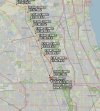
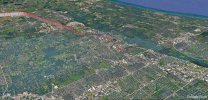
He wasn't that close. Descended way early and never regained altitude. Roughly 2.5 miles north of the airport. No post impact fire.

Looks like he was on autopilot when he realized he descended too low then disconnected and hand flew

Executive is 647 elevation. C81 to the north is 788

IMG_3360.jpegIMG_3359.jpeg
 
I couldn't clearly see the street lamp light across the street from my house last night with all the fog. It was just a blur of mist. Probably about 150' away. If it was anything like that ~25nm NE where this occurred, then even IFR he would have been in bad shape.
Well, I live 150 miles away from you, and it it was the same here, so I'm thinking it was pretty widespread.
 
Descended way early and never regained altitude. Roughly 2.5 miles north of the airport. No post impact fire.
I was about to say the same.
Looking at his flight path, soon after he passed the IAF, but before the FAF he descended to minimums (or lower).
Lack of a fire made me think about fuel exhaustion, but he flew at that low altitude longer than possible if the engine was out.
 
Last edited:
Well, I live 150 miles away from you, and it it was the same here, so I'm thinking it was pretty widespread.
Yeah that. An ORD-KBMI flight last night supposedly diverted to Madison after trying to get in here. Heard the inbounds to CMI had trouble getting in too.
 
first, my condolences to the family and friends of the pilot. this is going to be a bit harsh but is not meant to be judgemental, I just hope that it helps stop somebody else from making theses mistakes.

there are two many IFR accidents because pilots say, " i have done my six approaches ect and i'm current". yes, you are legal, but not current. as a 15,000 hour 121 captain those weather conditions still would make the hairs on my neck stand up. approaches down to mins are a serious game and should only be done by pilots that are more current than 6 approaches in six months.

the atc tapes show that this pilot was well behind the aircraft and weather conditions. he received multiple low altitude alerts from atc, that is the time to go around and go some where else.

weather mins. the approach mins for that ils is 7/8 and 927 feet, 300 feet above the ground. the current weather was 1/2 and vv2. both below mins. yes under part 91 you can "go take a look" but that really is not a good idea. 300 feet above the ground single pilot, looking for the runway is not a good place to be, and that's why in the 135 and 121 world you cannot "go take a look"

it saddens me every time i see an accident like this, we as pilots are doing a poor job at decision making skills, and CFI's need to do a better job of teaching these skills and dangers when teaching IFR students. there are a lot of lessons that can be learned from this accident, lets all look at it objectively and learn something so theses types of accidents don't happen.

 
the atc tapes show that this pilot was well behind the aircraft and weather conditions. he received multiple low altitude alerts from atc, that is the time to go around and go some where else.
No arguments. But there might not have been a somewhere else. Damn near the whole state was low ifr. Lot of SPECI's mixed in with the metar but it was predominantly poor throughout and he should have known it wasn't going to clear up.
 
first, my condolences to the family and friends of the pilot. this is going to be a bit harsh but is not meant to be judgemental, I just hope that it helps stop somebody else from making theses mistakes.

there are two many IFR accidents because pilots say, " i have done my six approaches ect and i'm current". yes, you are legal, but not current. as a 15,000 hour 121 captain those weather conditions still would make the hairs on my neck stand up. approaches down to mins are a serious game and should only be done by pilots that are more current than 6 approaches in six months.

the atc tapes show that this pilot was well behind the aircraft and weather conditions. he received multiple low altitude alerts from atc, that is the time to go around and go some where else.

weather mins. the approach mins for that ils is 7/8 and 927 feet, 300 feet above the ground. the current weather was 1/2 and vv2. both below mins. yes under part 91 you can "go take a look" but that really is not a good idea. 300 feet above the ground single pilot, looking for the runway is not a good place to be, and that's why in the 135 and 121 world you cannot "go take a look"

it saddens me every time i see an accident like this, we as pilots are doing a poor job at decision making skills, and CFI's need to do a better job of teaching these skills and dangers when teaching IFR students. there are a lot of lessons that can be learned from this accident, lets all look at it objectively and learn something so theses types of accidents don't happen.
All valid, but the weather being at or below minimums really didn’t even enter the picture at the point where he presumably lost control several miles from the runway. It could have been 800-2 and the divergence still would have happened in IMC. Maybe the end result could have been prevented after breaking out in that case, hard to say. I’m just saying he didn’t even get to the point of “taking a look.”
 
CFI's need to do a better job of teaching these skills and dangers when teaching IFR students. there are a lot of lessons that can be learned from this accident, lets all look at it objectively and learn something so theses types of accidents don't happen.

Good point. Not sure how many new instrument pilots, including some instructors, have much experience or knowledge about what things look like during a nighttime approach in very low and widespread low vis conditions.

When the weather is down at night (especially true when widespread) in light or calm winds, and low horizontal visibility, it's not unusual to see lights, and even the ground while looking straight down. In the Chicago suburbs the amount of lighting on the ground can give an unfamiliar pilot a false sense of safety, and coax the pilot to duck under minimum altitudes in the mistaken expectation to visually locate the runway.

Only a WAG, but my speculation is this pilot may have been splitting their attention between the flight instruments and outside (a lot of pretty lights down there), and drifting down beneath minimums (either inadvertently or deliberate). This is a recipe for disaster. You've got to be paying full attention to the instruments, on final, at the correct altitude like your life depends on it. Because, it does.
 
Pilot was ID'd. I think they said he was 75. Not sure if that plays a role, bad decision making can happen at any age. But that probably didn't help either.
 
Pilot was ID'd. I think they said he was 75. Not sure if that plays a role, bad decision making can happen at any age. But that probably didn't help either.

His age certainly didn't make him any sharper, especially if he didn't keep his judgement, skills and currency up to snuff.

Seems the older I get, the more often I have to fly and practice to keep managing the electronics to an acceptable level of performance. In my case, the first thing to get stale is operating the new electronics.

I counter any electronic mistakes or weaknesses by backing up from lots of hand-flying hours while IMC, in mostly the same type of aircraft. Which IMO is better than a lot of non-elderly pilots who may be the opposite way around (great electronic and autopilot skills but weak on backing up with acceptable instrument hand-flying in non-normal or difficult situations).

A friend that I frequently fly with is 82 years old with a recent panel upgrade, including a Garmin 750 in his Mooney. And he's excellent with the 750 (much better than me - but I don't have one). He is loath to put on a hood and practice flying instruments, and never done much serious IFR, and that was a long time ago. He's weak on hand flying with a hood, and promises to keep out of the clouds and stay visual. Wearing my CFII hat, I remind him someday he may get stuck and have to hand fly, so some practice is always recommended, but he balks.

Everyone is different; cognitively, experience level, judgement, and general flying abilities. However, age can certainly be a big factor in this crash.
 
Back
Top