Katamarino
Pattern Altitude
- Joined
- Dec 14, 2011
- Messages
- 2,231
- Location
- YPJT
- Display Name
- Katamarino
- Home Airfield
- Jandakot YPJT
All survived pretty much unharmed.



On hang gliders ( and I assume paragliders ) the deployment is a manual throw of a bag that is bound with rubber bands. At the end of the tether, the bands break and the chute deploys. The purpose of that is to get the chute clear of the wing before it opens so it doesn't tangle. We used to practice throws in a school gym hanging from the ceiling. Guys would get us swinging to simulate a broken wing (hang glider). Then we would pull the handle, then throw the chute. That was usually tied in with a re-packing seminar.Is that yellow D ring on her lap the reserve deploy? Looked like she grabbed the bundle and chucked it manually into the wind. That's pretty quick thinking, I don't know how that setup is rigged, I always figured that deployment would be automatic once the handle is pulled. Def an action you want to practice on the ground.


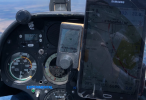
My reciever doesn't differentiate between ADSB or Flarm, but it was nice that a least a few of them were showing up.Cripes. Thank God the plane wasn’t cruising 10 feet lower.
I think I would have to invest in a personal ADSB-Out transmitter and some new boxers after that.

We used to practice throws in a school gym hanging from the ceiling. Guys would get us swinging to simulate a broken wing (hang glider). Then we would pull the handle, then throw the chute. That was usually tied in with a re-packing seminar.

Those were the days! Fortunately I never had to make that toss.On hang gliders ( and I assume paragliders ) the deployment is a manual throw of a bag that is bound with rubber bands. At the end of the tether, the bands break and the chute deploys. The purpose of that is to get the chute clear of the wing before it opens so it doesn't tangle. We used to practice throws in a school gym hanging from the ceiling. Guys would get us swinging to simulate a broken wing (hang glider). Then we would pull the handle, then throw the chute. That was usually tied in with a re-packing seminar.


When I first started doing air-to-air photography, I shot a lot of powered parachutes and paragliders. I can tell you that even when you know where they are, and they're bright colors, they are very hard to spot. Your mind is trained to look for motion and they're moving very slowly.How the heck does one hit a paraglider on a bright sunny day?


 salzburg.orf.at
Ordinary negligence is generally not criminal in the United States (with some exceptions), but it's much more likely to be in other countries.And now it seems Austrian police is charging the pilot with negligence.
Anzeige gegen Pilot nach Crash mit Paragleiterin
Nach dem Paragleiterunfall im Pinzgau hat die Polizei am Montag Anzeige wegen fahrlässiger Körperverletzung gegen den Piloten des Kleinflugzeugs erstattet. Der 28-jährige Tiroler hatte mit seiner Maschine am Samstag den Gleitschirm einer 44-jährigen Oberösterreicherin im Luftraum über Piesendorf...
I think this is a very slippery path to take, when we all know how well see and avoid works. They do have a couple traffic alerting systems over there, but not a unified system. Gliders use FLARM (and a few paragliders as well), but most paragliders/hang gliders use an app called safesky, which relies on an active internet connection while airborne (how reliable is that?). So as a pilot, you'd need two different traffic monitoring systems to have a decent chance of seeing what's around you.

"See and avoid" is an awful thing to rely upon.This C182 pilot needs to spend a little more time looking out the windshield...

It's the only thing you can rely on with things like Buzzards... so it's nevah, evah, evah, going away."See and avoid" is an awful thing to rely upon.
We need some sort of Airborne Detection System - Buzzard.It's the only thing you can rely on with things like Buzzards... so it's nevah, evah, evah, going away.