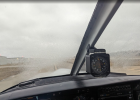
Aztec down in Montana wilderness

Looking at the flight aware speeds, seems like a rough ride with a lot of headwind.
 

Attachments

  • IMG_1731.jpeg
    IMG_1731.jpeg
    33.6 KB · Views: 59
Wonder if it was a Turbo Aztec? SE ceiling on normally aspirated is not much.
 
Accident time of about 2215z according to ADS-B. Winds aloft forecasts in that area at 12,000’ were around 280@45. ADS-B showed them at 14,000, 12,000, then 13,000 as they neared the front range of the Rockies.

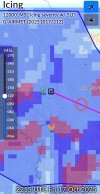
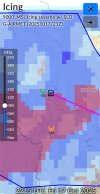
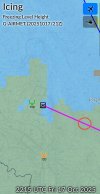
There was an AIRMET for moderate icing from 060/090 to 18,000. The freezing level prior to the accident area was forecast to be between 070 and 090, but dropped to 050 to 070 not far from the accident site.

There was a PIREP over Missoula, about 40nm to the south about 45 minutes prior at 12,000 for moderate rime. Another one 30 or so miles away from the accident site only about 30 minutes prior for light rime at 15,000.

Another PIREP for Mountain Obscuration.

Engine issues aside, the conditions in that area weren’t great. Could have made engine-out ops pretty tough, performance and workload-wise.

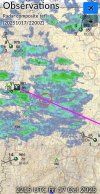
Below are some weather charts that were current at that time, including the observations and icing forecasts in that area. The magenta line is between Billings and Polson, the red circle showing the approximate accident area.

IMG_6890.jpeg

IMG_6887.jpeg

IMG_6888.jpeg

IMG_6889.jpeg

Father and two daughters.
Apparently one daughter was a flight instructor.
 
GPS direct over the mountains not looking like a good idea — diverting around the worst of the weather should have been obvious one would think. And that’s before the engine failure.
 
Big winds over the mountains and likely turbulence encountered downwind in the lea of the mountains. Mix that with moderate to severe icing. Add in engine trouble and it soon could become a tragedy. The reported engine trouble could easily relate back to icing. Propeller ice, induction ice, etc.

The decision to turn around apparently didn't come soon enough. With high terrain below, descending in a search for ice-free air is not an encouraging option. You have a load, and finding a layer of warm air over the mountains to melt it would be a gift.

It is so easy to think it will get better up ahead as the flight progresses, and hope becomes the strategy. Pray there's a miracle and they're found alive.
 
It is so easy to think it will get better up ahead as the flight progresses, and hope becomes the strategy. Pray there's a miracle and they're found alive.
Unfortunately all three perished.
 
Sector (VFR) altiudes are about 9,000, and ther record shows VFR altitudes. Checkout the speed over ground. Not turbo equipped airspeeds even presuming a 30 knot headwind. IFR altitudes are 12 and 13K. Even the V120 requires 12,100.
That is the CONTINENTAL Divide. There is no place to land there at ALL and on ONE, the service ceiling would be about 6-7,000 feet after two hours of fuel burn, with three aboard.

They also may have been slammed by more than moderate ice. I crossed there a month ago at 13,000....managed to stay ABOVE the cloud cover however....even with a course revesal, no place easily survivable, to land....

RIP
 
I became aware of this tragedy late yesterday, and was too troubled to post about it. After reviewing the FlightAware track, which shows the precip in the area, and looking at other weather resources, it appears the pilot made extremely poor choices.

The results are tragic. I can't fathom why pilots take risks that have such devastating consequences.

1000002927.webp
 
Soul crushing. I'll never get used to pilot fathers killing their family.
In this case one of the daughter's was a CFI.

I learned long ago to speak up if something is uncomfortable as well as to tell my passengers to tell me if theyre uncomfortable with whatever is going on.

Just because he was PIC. The experienced pilot sitting next to him could have also spoken up.
 
Looked like the Aztec was equipped for icing.
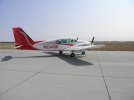
Viewing the photo I posted above, one can see the puny hot prop strip and insignificant wing boots on the Aztec.

That's all this man was armed with when he challenged the altitudes of the Montana mountains and forecasted weather conditions. I don't mean to come across as overly dramatic. I'm just at a complete loss in trying to understand the reasoning involved.
 
Worth noting at the time this occurred they had already been flying for about 7 hours that day.
Even with two pilots aboard to share the work, fatigue combined "getthereitis" might have been key contributors to their fatal decision making.

Sad :(
 
Last edited:
That job on that day required at least something that burns kerosene.
 
Being from Alabama, I don’t know how much high mountain flying experience these folks had, but the direct line from Billings to Polson goes over the extremely rugged and remote Lewis and Clark Range, home to several of the largest wilderness areas in the country. Altering the route to follow highway 200 from Rogers Pass to Lincoln and the Blackfoot Valley before going south of the Missions from Seely Lake (or even farther south to Missoula, then north) gives a pilot a lot more outs versus following the direct route, which is only saving maybe 16 miles (or ~30 miles if going the Missoula route). Or just follow I-90 the whole way from Billings to Missoula and have plenty of outs. Either way, you’re going to have some fairly elevated passes and tight terrain regardless of which route you fly, some worse than others.

Hard to know what they were seeing at the time, though - any alternative route may have been even more obscured from their POV. Just saying that flying in that area elevated risk, no matter what, and that’s before factoring in the weather.

Speaking of the weather, it should be noted that most of the snow/rain showers in that area had not really developed on radar until almost exactly the time of departure from Billings (and radar at lower elevations is pretty obscured in that area, anyway). That front really developed and moved into that area during the two hours (plus) of the flight itself. But all of the weather resources I found depicted the existence, development, and movement of those areas of precip, with the worst of it at the time of the accident predicted to be centered on accident area.

Additionally, there was a PIREP at 19Z (an hour or so before departure) over Seely Lake for moderate time at 10,000 with cloud bases at 9,000.

Again, we don’t know the direct cause of the engine trouble, how/if the weather really affected the outcome, or what kind of info went into the decision making, but hindsight being what it is, we don’t have to wait two years for an NTSB report to remind ourselves to not take mountain flying and mountain weather lightly.
 
Viewing the photo I posted above, one can see the puny hot prop strip and insignificant wing boots on the Aztec.

That's all this man was armed with when he challenged the altitudes of the Montana mountains and forecasted weather conditions.

May be a good example of collectively "they didn't know what they didn't know". A total reliance upon notoriously unreliable known ice escape equipment (hot strips and inflatable rubber boots) in an older legacy aircraft was a very risky choice flying the route being flown.

Considering 45 knot winds aloft over the mountains (confirmed by their low groundspeeds), they also may not have considered the potential of encountering severe turbulence. A mountain and wind produced rotor can bust up an aircraft as efficiently as a thunderstorm.

Tragically, a brief encounter (a minute or two's worth) with a pocket of Super Large Droplets (SLD) can in extreme cases bring down an aircraft. Even less time in a rotor. Turning back means flying through those conditions one more time.

I've known a few pilots flying twins believing their known ice equipment will keep them flying throughout the winter. They pay for it, and use it. I doubt they're planning too many trips with longer routes, or delaying trips altogether because of icing potentials.

Carrying a healthy load of ice over the mountains with near freezing ground temps (or colder) below, then needing to find a place with enough visibility to land is a one shot survival tactic at best. Certainly nowhere you want to have passengers along, especially family.
 
Worth noting at the time this occurred they had already been flying for about 7 hours that day.
Even with two pilots aboard to share the work, fatigue combined "getthereitis" might have been key contributors to their fatal decision making.

Sad :(
Good point on the time already flown.

Still, and this is purely conjecture because we don’t know the actual cause and don’t know their previous mountain flying experience (it could be that they’ve done this several times, had training, etc), so I’m speaking in generalities here in hopes that maybe someone considering this will understand the gravity of it:

This isn’t the first accident we’ve seen upon encountering the mountains on a “Great American Cross-Country.” Not that it doesn’t happen to locals, too, but it always feels a little extra tragic when this kind of thing happens to a flatlander the first time they fly into the mountains.

Yet, inexperienced people still feel called to do this and there’s absolutely nothing stopping a pilot from attempting to do so. Nothing. And if your training wasn’t done by someone who has experience and knows better, the hazards and necessary decision-making involved often get glossed over. Maybe you think your plane is capable, maybe you think your instrumentation, your EFB will get you through it. And yep, plenty do make it. All I’m saying is take it seriously. Understand that you may not know what you don’t know and by the time you do get that point, it might be too late.

 
Experience in Alabama and the Appalachians is not experience in the Rockies. Whole different rodeo. And we're right about the time where weather in the Rockies is in flux, where the 12K and 13K peaks are starting to get snow accumulation.
 
Good point on the time already flown.

Still, and this is purely conjecture because we don’t know the actual cause and don’t know their previous mountain flying experience (it could be that they’ve done this several times, had training, etc), so I’m speaking in generalities here in hopes that maybe someone considering this will understand the gravity of it:

This isn’t the first accident we’ve seen upon encountering the mountains on a “Great American Cross-Country.” Not that it doesn’t happen to locals, too, but it always feels a little extra tragic when this kind of thing happens to a flatlander the first time they fly into the mountains.

Yet, inexperienced people still feel called to do this and there’s absolutely nothing stopping a pilot from attempting to do so. Nothing. And if your training wasn’t done by someone who has experience and knows better, the hazards and necessary decision-making involved often get glossed over. Maybe you think your plane is capable, maybe you think your instrumentation, your EFB will get you through it. And yep, plenty do make it. All I’m saying is take it seriously. Understand that you may not know what you don’t know and by the time you do get that point, it might be too late.
Agree on all accounts.

I don't know how much collective windy mountain flying/icing encounters they had onboard, but it wasn't enough. Seeing as how they operated out of Alabama as home base -- I can understand how that may have been the case.

I'm a firm believer that you should approach new geographical areas with caution. If you're like me and accustomed to VFR flying in the Midwest flatlands where weather is super predictable and there are tons of outs and plenty of hospitable terrain -- then I should recognize the inherent danger of applying/extrapolating that learned experience and comfort in an area with virtually no outs, weather I'm unfamiliar with, all while over some of the most inhospitable terrain in the country.
 
You can say it’s hindsight, but if he took the I-90 corridor he would have likely been able to remain VMC, with options in the back pocket should things get dicey. The fallback position being to land & rent a car. The weather at most of the airports in the area ‘seemed’ to have ceilings at 7k or so, maybe higher. Yes, it was a little windy at some.

With ‘orographic lifting’ the worst of the weather seemed to be over the high terrain where they went down. I know there are limitations out west, but most of us have onboard weather, a supplement to the preflight weather check.

I left Salt Lake a few years ago, some light weather in the area. I was easily able to fly East above the I-80 corridor.
 

Attachments

  • IMG_1058.jpeg
    IMG_1058.jpeg
    209.5 KB · Views: 65
Say what you will about scud running, but at least there's no ice.

That depends. Whenever there are low temperatures, clouds or precipitation around, ice is where you find it.
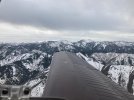
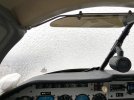
These pics were taken in light drizzle, in VMC conditions (5+ mile vis) beneath an overcast following 10 or 15 seconds of climbing through a pocket of SLD icing.
IMG_1470.JPG

IMG_1471.JPG
 
Last edited:
That depends. Whenever there are low temperatures, clouds or precipitation around, ice is where you find it.
These pics were taken in light drizzle, in VMC conditions (5+ mile vis) beneath an overcast following 10 or 15 seconds of climbing through a pocket of SLD icing.
View attachment 146385

View attachment 146386
I'll echo that...
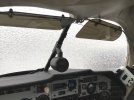
Nowhere near as severe as @Rick A icing. But mine was pure VFR, good visibility and a little bit of what looked like mist. There were icing reports in the clouds 2k' above, but none at my level outside the clouds.
In about 5-7 minutes after takeoff I couldn't see out the front except for the small section by the defrost/heater vent at the bottom. Landed immediately. This photo was after some had melted off. It was quite scary.
Even scarier when me and the FBO guy pushed the aircraft and my wings felt all rough and jagged from ice build up. Never knew ice could build that fast in VMC!
1760983600292.png
 
Experience in Alabama and the Appalachians is not experience in the Rockies. Whole different rodeo.

Very true.... learned how to fly back in the 70's in Utah. The older experienced guys flying pistons said when the weather is cold, nasty, windy and IMC over the Rockies you just stay on the ground, period. Typically the cold fronts move through quickly, and there's always the next day to fly.
 
You can be one of the best pilots in the flat lands, and just an early solo in the Rocky Mountains.

I have enjoyed enough ridge lift on the up wind side of the Appalachian Mountains to realize that I will never put myself anywhere near the down wind side of a big mountain. I have also flown in benign weather in Colorado, and had a small taste of what the "good weather" can be like. In Colorado springs, a beautiful day trip to the top of Pikes Peak turned into a violent thunderstorm and flash flooding, hailstones an inch deep in the parking lot. My decision to depart the top as a threatening cloud developed in the distance was just in time on the next cog train going down. Those who stayed for the next train had an inside view of a violent lightning event. As a power company employee, I recognized the massive lightning rod installation for what it would be like to be there when they were doing their protection.

I was there for a week, and intended to fly to the highest paved airport in the lower 48, Leadville, but the forecast each morning had possible thunderstorms. It was the 'dry' season, but storms did develop in widely scattered areas, including the Pikes Peak one. After my daily 6 AM weather briefing, I went back to bed and slept until 7 or so. I have never had regrets for chickening out for that flight, 5 times.
 
Last edited:
I'll echo that...
Nowhere near as severe as @Rick A icing. But mine was pure VFR, good visibility and a little bit of what looked like mist. There were icing reports in the clouds 2k' above, but none at my level outside the clouds.
In about 5-7 minutes after takeoff I couldn't see out the front except for the small section by the defrost/heater vent at the bottom. Landed immediately. This photo was after some had melted off. It was quite scary.
Even scarier when me and the FBO guy pushed the aircraft and my wings felt all rough and jagged from ice build up. Never knew ice could build that fast in VMC!
View attachment 146388
Is that C56?
 
I peripherally knew the family, he was based at my home airport. He was well known as a very experienced and cautious pilot with well maintained capable equipment. Had you asked me prior to this to plan the same route, in my O2 equipped turbo FIKI Seneca, I would have gone direct just like him. Learning from this (as we all should rather than pile on post mortem criticism) I sat down to plan it the other night as an exercise. For me, following the T268 to Missoula then V231 would be my choice now. Lots of options for weather and drift down with engine loss. I looked up the view they may have had when their engine quit on Google Earth and knowing the plane was going down with no way to clear the ridge line in front must have been terrifying. My worst nightmare with my family on board.
 
Back
Top