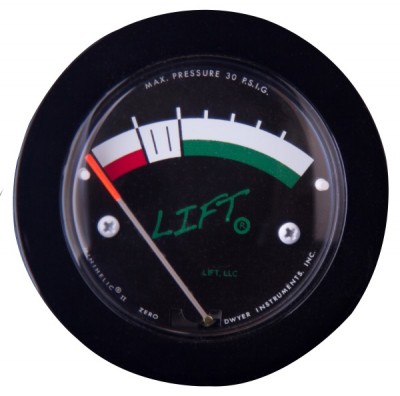
Having installed the CYA and flown behind an alpha systems AOA I think you're actually asking the wrong question. both methods of sensing the angle of attack are functionally equivalent to the pilot and both seem to work very well. The major difference between the CYA and the alpha systems is that the CYA only lights up one LED, which is very hard to interpret as a pilot. In other words you may be looking at one of three or four red versus yellow versus green lights but it is very difficult to tell which yellow light or which green light is lit up at a time. So it is very hard to understand where you are in your angle of attack using the CYA system. The alpha systems, lights up many LEDs at a time, so that you can easily identify where you're at in the scheme of things. It also has a much more sophisticated system of identifying whether you are at the ideal angle of attack for approach or any other angle of attack. In other words there are discrete indicators to show you at the correct angle of attack for approach, versus VY or VX. with the CYA, it's a straight line interpolation based on where you calibrate, so there's no real way of knowing whether you're at the correct angle for a approach.
On the other hand, the CYA is easier to install because it just requires effectively a telephone cord going out into the wing, versus the pneumatic type which typically require two pneumatic tubes to go out to the gauge and feedback through the wing to a sensing unit which sits behind the firewall.
Ideally the CYA unit will be upgraded to have a functional end-user display, because it's so much easier to install. Right now it's very difficult to recommend the CYA system to anybody because it's very difficult to get any sense out of it when you're also trying to look out the windscreen.