Another 787 fire! LHR shut down

The fire area looks to be nowhere near either of the batteries. One of the articles says the aircraft had been parked for 8 hours.
 
Last edited:
Looks like it got hot in there (look at the top of the fuselage). Somebody left the coffee pot on. :rofl:

attachment.php
 

Attachments

  • ScreenShot622.png
    ScreenShot622.png
    308.3 KB · Views: 336
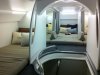
The Dreamlighter... wonder if this will be attributed to the lithium batteries. From what I understand the batteries are aft of the wing, but farther forward than the damaged area in the pic. The space immediately below the burned area is a crew rest lounge.
 
I don't think anything can be ruled out, including sabotage.

With a one 787 returning to the field and one on fire at the gate, I was thinking they may have thought the same thing and shut the airport down.
 
airport shut down because the fire dept. was responding to the 787 fire and hence not available to respond to any other potential accident.
 
FA smoking in the bunk area? Sure seems to have been isolated to that area from the burned paint.

Somebody was really "going at it". Or maintenance workers smoking? I don't know...

Here's what it looks like up there:

attachment.php
 

Attachments

  • 4e7f632c7be04b5595e25827767f2254-IMG_3448[2].jpg
    4e7f632c7be04b5595e25827767f2254-IMG_3448[2].jpg
    102 KB · Views: 407
it'll be interesting to see How that is repaired and the material strength quantified.
 
it'll be interesting to see How that is repaired and the material strength quantified.

That really is the question with a composite structure isn't it? My bets are that hull will not see commercial flight again.
 
That really is the question with a composite structure isn't it? My bets are that hull will not see commercial flight again.
yep. There's a lot to be said for Al and rivets, or wood, vs fiberglass and carbon fiber. I still be believe it's the unknowns around minor repairs that cause the high cirrus insurance rates, not all this nonsense about parachutes vs no chutes.
 
yep. There's a lot to be said for Al and rivets, or wood, vs fiberglass and carbon fiber. I still be believe it's the unknowns around minor repairs that cause the high cirrus insurance rates, not all this nonsense about parachutes vs no chutes.

For everything everyone says they "know" about engineering in carbon fiber, I still continuously see it fail in expensive and highly engineered applications. I've been working with the stuff since the late 70s and do not trust it in a pure CF & resin matrix. There are some interesting multi material weaves incorporating CF, Kevlar and polypropylene that I am interested in trying.
 
If they can't make beer cans, the what do they do with it?

Would a metal plane be able to be fixed with the same amount of damage?
 
If they can't make beer cans, the what do they do with it?

Would a metal plane be able to be fixed with the same amount of damage?

I believe they fixed the Hawian air 737 that peeled back the skin... Henning makes a good point though... CF is a tricky material to patch...

Ps.... Welcome back to POA captain Henning....:yes:
 
If they can't make beer cans, the what do they do with it?

Would a metal plane be able to be fixed with the same amount of damage?

Metal plane you drill rivets back to unaffected metal and rivet in new metal. Theoretically with a composite structure you can scarf in new material, however these are autoclaved, continuous lay structures which the repair cannot duplicate the structural qualities of. Yes, it could be repaired and be strong enough, but to my knowledge, there is no tested engineering basis for an approved repair of this magnitude in such a critical area. I suspect, at least if I was running Boeing I would, this will be the engineering testbed for developing that type of data for future incidents requiring major structural repairs. I am sure the insurer will total this hull and never insure it again.
 
Metal plane you drill rivets back to unaffected metal and rivet in new metal. Theoretically with a composite structure you can scarf in new material, however these are autoclaved, continuous lay structures which the repair cannot duplicate the structural qualities of. Yes, it could be repaired and be strong enough, but to my knowledge, there is no tested engineering basis for an approved repair of this magnitude in such a critical area. I suspect, at least if I was running Boeing I would, this will be the engineering testbed for developing that type of data for future incidents requiring major structural repairs. I am sure the insurer will total this hull and never insure it again.

Yup.... probably turn into a freight dog....
 
I believe they fixed the Hawian air 737 that peeled back the skin... Henning makes a good point though... CF is a tricky material to patch...

Ps.... Welcome back to POA captain Henning....:yes:

Thanks, hanging out in Whittier AK on a different plastic hull. Should be in Seattle around Oct.
 
Are you kidding? Insurance wise, freight is worth more than human life, and that hull I suspect will never again be insurable.

So...........


Let's think outside the box...

Boeing buys it back, repairs it as best they think it can be and turns it into a freighter to shuttle parts from the Seattle area and their plant in SC. They self insure and monitor it to see if CF repairs are really viable.. And as a test bed.. it is deductable too..:yes:;)
 
Lots of repairs developed for military composites, including primary structure. Whether or not this one can be repaired depends on a lot of things including magnitude of the heat affected zone.

Probably the best use of the airframe would be as a non flier for repair development or long term fatigue testing, even though composites don't fatigue in the classic sense. Boeing has a lot of experience on the Military side with big composite structures.

Sort of looks like "Smokin in the boys room" ;)

Cheers
 
The fuselage is built in sections, why not just replace that section.
 
I believe they fixed the Hawian air 737 that peeled back the skin... Henning makes a good point though... CF is a tricky material to patch...

The convertible Aloha 737 was scrapped, but the United 747 that lost a cargo door out of Hawaii was repaired.
 
yep. There's a lot to be said for Al and rivets, or wood, vs fiberglass and carbon fiber. I still be believe it's the unknowns around minor repairs that cause the high cirrus insurance rates, not all this nonsense about parachutes vs no chutes.

Cirrus is a mix of carbon fiber, fiberglass and aluminum. As such it is a lot easier to repair than, for example, a Corvalis which is all carbon fiber. For example, all movable control surfaces on a Cirrus are aluminum. Still, I expect repair might be more expensive. As for insurance, mine was slightly cheaper to insure than a Bonanza of comparable value hull value but I expect if I had shopped harder I could have gotten the cost down to the same as the Cirrus. I was just doing a cost comparison exercise so I didn't put too much effort into it.
 
Coffee pot heater in the aft galley is to blame for the Ethiopian 787 fire, according to PPRuNe. The plane had power because it was plugged into a GPU while it was parked.
 
Don't believe everything they come up with on pprune, no network confirms it.
 
Why would it be powered if it was going to be sitting there for 8+ hrs? Or maybe it is a pia to get the computers going again if they shut down???
 
Do we even know 100% that it was powered?
No, it is really easy to restart computers from their cold & dark state.
 
So...........


Let's think outside the box...

Boeing buys it back, repairs it as best they think it can be and turns it into a freighter to shuttle parts from the Seattle area and their plant in SC. They self insure and monitor it to see if CF repairs are really viable.. And as a test bed.. it is deductable too..:yes:;)

You can't think outside the box on this. In order for them to be able to haul even their own freight, the plane will have to have a full Transport category certificate in force which means the repairs will need to be approved. Kind of a Catch-22 situation, this hull may one day see the use you say, however it'll be a long way down the road is my bet.
 
Are you kidding? Insurance wise, freight is worth more than human life, and that hull I suspect will never again be insurable.


How would they mount antennas on composite pressure vessle? Like you said we can drill holes and fill old antenna holes with patches and just make new ones to relocate or add antenas in aluminum, a lot more flexibilty when it comes to modification.

Another question I have, is there test that can be performed to determine extent of heat damage like the conductivity tests for metal aircraft? I've seen bleed air leak damage & repairs, all on metal structures.
 
Back
Top