Alternator or Voltage Regulator or?

RyanB

Super Administrator
Management Council Member
PoA Supporter
Joined
Jul 21, 2010
Messages
17,161
Location
Chattanooga, TN
Display Name
Ryan
The Archer has been having a slight electrical woe.

The ALT light will flicker at all phases of flight, about 1 time per second. If I increase the load (ie., landing light, beacon, strobe, pitot heat etc) the amp meter will shoot up and start dancing and the ALT light flashes faster. I can hear it audibly in my headset as well. In the past when this has happened, either turning the electrical off completely or reducing load would get it to stop, now it doesn’t seem to go away. I’m thinking it seems like the regulator by how it behaves. The alternator was replaced with a light weight plane power a year or so ago. I don’t think it’s that, but how would I know? I am going to put a volt meter in the cigarette lighter and see what we get.

Thoughts?
 
I would start checking connections, including those between regulator and alternator…. Really check them as the amp load is erratic and the light flashes, possibly caused by a loose connection resulting in intermittent load, which will also cause voltage to drop setting off lamp in most system as load will decrease volts…check if amp load increases same time as lamp illuminates. MOST alternators and generators are not self exciting, and require a small field voltage to begin producing power (think of alternators more like an amplifier of power…..you put a small bit of power in, but get far more back……if that small field voltage cuts in/out, the amp load will bounce as well.

Without seeing your setup, sometimes connections to regulator are through plastic connector…. If so check the snugness of the small crimped metal terminals in connectors or check resistance while wiggling wires.

Also check grounding of alternator …should be close to zero. And check grounding going to regulator, also wiggling wires at same time. Regulator ground wire at alternator connector and/or alternator case to block should be near zero ohms.

My bet it’s a grounding issue between regulator and alternator or to known ground wire.

I’ve seen wire terminals so corroded connections were intermittent with vibration and barely making any connection but damage not visible ….

If this fails, borrow a regulator and see if you got same issue.

Hope this helps.
 
Thoughts?
Look for one of the recent threads on alternator troubleshooting and follow those simple sets to see if its anything obvious like a loose connection or frayed wire. Which would be my first look based on those symptoms. Any questions report back.
 
:yeahthat:
I had a problem like this recently. One of the lugs on the alt field breaker was loose. Time to limber up and climb under the panel.

"No, no, no, don't tug on that. You never know what it might be attached to." - Dr. Buckaroo Banzai
 
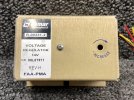
So this is the voltage regulator that is installed. I see this “increase” hole, which I presume increases the output of the regulator. What kind of adjustment is that?

Mechanic checking it out tomorrow.

IMG_9052.jpeg
 
What kind of adjustment is that?
The kind where an A&P uses a magic screwdriver to adjust the potentiometer a little at a time until the set point is correct.

Did you sort out the flicker?
 
The kind where an A&P uses a magic screwdriver to adjust the potentiometer a little at a time until the set point is correct.

Did you sort out the flicker?
No, that’s what I’m still trying to figure out. I assume trying to adjust the setting won’t solve it, but was curious about its purpose.
 
No, that’s what I’m still trying to figure out. I assume trying to adjust the setting won’t solve it, but was curious about its purpose.
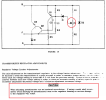
From the Cessna charging system manual:

1749507778121.png

Yes, you have a Lamar, but the principles will be the same. In the red circle is the potentiometer that is accessed through that hole. In the red square is something to pay attention to. Should have some tape wrapped around the screwdriver shank to prevent accidental shorting should the screwdriver tip contact the pot's case.
 
From the Cessna charging system manual:

View attachment 141794

Yes, you have a Lamar, but the principles will be the same. In the red circle is the potentiometer that is accessed through that hole. In the red square is something to pay attention to. Should have some tape wrapped around the screwdriver shank to prevent accidental shorting should the screwdriver tip contact the pot's case.
Really, a warning label in the manual was the best solution for this. Seems like the label on the regulator would have been better (or both). Better still put a rubber gromet in the hole so the 99.9% of screwdrivers that would fit in there won't ground it out.

Brian
 
Magic screwdriver? Commonly used by electronics technicians are plastic screwdrivers with metal blades for stuff like this.

1749569511708.png

Of course, not many mechanics won't have this in their toolboxes. The point about having a grommet around that hole is valid, but at the same time, any adjustments to that regulator should be done using a calibrated voltmeter, since cheaper meters are not usually accurate to a tenth of a volt. A guy that has a calibrated voltmeter will quite likely have the right screwdriver, too.

I have some plastic drivers from over 50 years ago. I used them when aligning TV and radio circuits, where a metal driver will upset the adjustable core in a tuning coil. I also have brass drivers for calibrating compasses. An iron-based driver will mess up the compass.
 
I’ve met Field Circuit Breakers on Archers that were defective and reduced

voltage. Might try temp connection to another.

Checking voltage from breaker vs battery voltage might give a clue.
 
If an adjustment is made to the voltage regulator while system is not energized, curious how any shorting could take place. Are there capacitors that don’t bleed down here? Do folks make adjustments while engine and charging system are running? I don’t doubt the authenticity of the warning cited at all. Just a puzzle.
 
If an adjustment is made to the voltage regulator while system is not energized, curious how any shorting could take place. Are there capacitors that don’t bleed down here? Do folks make adjustments while engine and charging system are running? I don’t doubt the authenticity of the warning cited at all. Just a puzzle.
And I get the potential shorting issue if system is up and running.
 
The kind where an A&P uses a magic screwdriver to adjust the potentiometer a little at a time until the set point is correct.

Did you sort out the flicker?
I call 'em a pot tweaker. That brings back memories of the TTL days.
 
Back
Top