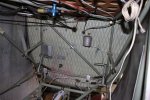
Aeronca champ Sitka wood side panel rot?

As noted those are just formers, not primary structure. There are a number of products for the treatment and repair of dry rot. One of the best is Bondo Rotted Wood Restorer (that's the actual name) It's about $25 for an 8 oz can and is a clear fluid that soaks into the wood then hardens it rock solid. You would have to remove any varnish or paint on the surface so it could get in there. It doesn't take much.
 
That generally involves an engine swap from an A65 to a C85 or better. Not for the budget minded.
The don't recall which engine the one the guy I was flying with had, it was an A65 of A85. Engine type could have easily been a requirement of the STC.
Besides paperwork all he had to do was add to 2 reinforcements under the dash. I recall each one was just a tube that clamped on to two of the fuselage frame tubes. I assume they either stiffened the motor mount, landing gear structure or both.

Brian
 
IIRC Mfg has published data that allows engine upgrades via converting

a 7AC model to a 7BC up to a 7EC. The last one required extensive tubing

replace via welding.

The Ercoupe folks also had model conversions “ the equivalent of “ IIRC.
 
Monday morning trivia - The sordid history of the Champ type certificate:

Aeronca Aircraft Corporation from October 1945 to July 1954
Champion Aircraft Corporation from July 1954 to March 1971
Bellanca Aircraft Corporation from March 1971 to November 1982
Back to Champion Aircraft Company from November 1982 to October 1988
Tetelestai from October 1988 to December 1988
FRA Enterprises from December 1988 to May 1989
American Champion Aircraft Corp from May 1989 to present

Champion Aircraft Corporation introduced a crazy number of model variations including the Citabria and the tricycle geared 7FC but probably the weirdest of them all was the 7JC.

7JC.jpg

It's almost as if, following the commercial flop of the tricycle geared version they tried to get rid of the leftover nose wheels by mounting them halfway between the main gear and the tail.

To top that off they also produced the twin engined Champ, called the Lancer. Must have been some crazy engineers working at that place.
 
The current Aeronca has nothing to do with the Champ or the 15AC Sedan, the type certificate of which currently belongs to Burl's Aircraft LLC and is for sale if your interested.
 
Curiosity, where on earth did you get that idea?
Magellan Aerospace has a facility located on the field at Middletown Ohio, where the old Aeronca factory was. Beyond that, Aeronca made heat shields and other sub-assemblies for various things, including the Apollo capsule. That business was ultimately absorbed/purchased by Magellan, which continues to make thrust reversers, heat shields, etc. under the Magellan name.

So, just as Consolidated ultimately wound up as part of Lock-Mart, Aeronca (or portions thereof) eventually became part of Magellan.
 
The current Aeronca has nothing to do with the Champ or the 15AC Sedan, the type certificate of which currently belongs to Burl's Aircraft LLC and is for sale if your interested.
I am currious what this means since the TCDC covers these models
A-759 Aeronca 7 Series 7ACA, 7EC, 7GCB, S7AC, S7EC7, GCBA, (L-16A) 7BCM, 7ECA, 7GCBC, (L-16B) 7CCM, 7FC, 7HC, S7CCM, 7GC, 7JC, 7DC, 7GCA, 7KC, S7DC, 7GCAA, 7KCAB
I am pretty sure American Champion has been building 7ECA, and the 7GCBC models. can Burl's own the TC and American Champion build it, Or is the Type Certificate Burl's have only for limited number of these models?

Edit: I think I ended up answering my own question when I actually looked at the TCDS. Unless it is out of date.

The TCDS says the certificate holder is : American Champion Aircraft Corp. P. O. Box 37 Rochester, WI 53167

here is the list of previous TC holders and dats of transfer from the TCDS.

Aeronca Aircraft Corporation transferred TC A-759 to Champion Aircraft Corporation on July 19, 1954 Champion Aircraft Corporation transferred TC A-759 to Bellanca Aircraft Corporation on March 15, 1971 Bellanca Aircraft Corporation transferred TC A-759 to Champion Aircraft Company, Inc. on November 1, 1982 Champion Aircraft Company, Inc. transferred TC A-759 to Tetelestai, Inc. on October 11, 1988 Tetelestai transferred TC A-759 to FRA Enterprises, Inc. on December 27, 1988 FRA Enterprises, Inc. transferred TC A-759 to American Champion Aircraft Corp.on May 30, 1989
 
Last edited:
I am currious what this means since the TCDC covers these models
A-759 Aeronca 7 Series 7ACA, 7EC, 7GCB, S7AC, S7EC7, GCBA, (L-16A) 7BCM, 7ECA, 7GCBC, (L-16B) 7CCM, 7FC, 7HC, S7CCM, 7GC, 7JC, 7DC, 7GCA, 7KC, S7DC, 7GCAA, 7KCAB
I am pretty American Champion has been building 7ECA, and the 7GCBC models. can Burl's own the TC and American Champion build it, Or is the Type Certificate Burl's have only for limited number of these models?
I thought Burl only owned the TC for the Sedan?
 
I think the Aeronca line of model numbers is way overly complicated and confusing

I remember way back when, the flight school had one on leaseback. I attempted and failed to get my tailwheel sign-off in that thing...
I remember the school seemed to always have great confusion about what should be recorded in the logbook. My instructor always recorded it as 7BCM, but there are a few scratched-out and corrected entries in there as the school was confused. I guess the registration might have been screwed up in some way or another because I have no idea why we wouldn't have looked at that and called it good.

anyway
According to my research a couple of years back, when I was transferring my logbook to a spreadsheet, it's really supposed to be 7AC

Type Year Model serial number HP
N3692E Aeronca 7AC Champion 1947 7AC-6997 65

The 7 hours I have logged in that thing, + the tiny bit of time I logged later in a Bellanca 7GCBC, was the most fun I had flying (also the most frustrating)
 
My first flights were in a club 7AC @ $4/hr wet.

Never soloed it but have owned and flown other tailwheels.

It’s on the Bucket List to do so.
 
Nothing confusing about the Aeronca model numbers.

Number is the design number. Design number 7

Letter after the number is the variation of the design, A or B or C . . Same as Cessna did with the 150A or B or C or D. . .

Letter after the letter is the engine. C is Continential.

Easy peezy.

Bellanca, Champion and ACA added the letter after the engine, so the7ACA is their variation of the 7 series Light Sport.
Unlike Wacos, where one of the letters was the chief engineer’s mother-in-law’s middle initial. ;)
 
So “A” = Aircooled Motors ( Franklin) ?

My guess would have been AVCO (Lycoming)
 
So how come a KCAB has a Lycoming engine? and while we're at it so does a GCBC
 
so Bellanca 7GCBC is teh G variant, Continental engine...what would BC indicate?

And 7BCM...M for military?
 
So how come a KCAB has a Lycoming engine? and while we're at it so does a GCBC
If the "C" in the model means Continental, they sure didn't stick with it for long. The 7ACA introduced by Bellanca in the 1970s had a 60-HP Franklin in it, but there is no "F" apparent anywhere. Lycomings showed up as long ago as 1958, in the 7GC. No "L" there either.

Lots of details in the TCDS, here: https://drs.faa.gov/browse/excelExternalWindow/2B3FA1C355E95F9A862578380053D423.0001
ahhh, interesting!

That document rekindled some 30+year old memories.
I think the confusion about what to log it came from the engine. Now I'm remembering some hangar flying debates on that topic!!

I'm pretty sure the aircraft they had on leaseback had been repowered. Maybe it had whatever engine is spelled out by Champion's service letter No. 13.
so the registration probably called it 7AC, but it at least in part had been converted to a 7BCM

yeah, what I said before.... it's confusing!

The FAA's N-number lookup calls it 7AC so that's what I'm calling it in my digital logs.
and I will never know what engine was in it...and even if it was the correct engine, was the entire service letter complied with...the placards and all teh rest of it? I guess I'll never know...unless the current owner is on the forum and the logbooks are thorough enough for them to tell me what engine it had back in those days. That said, it doesn't matter and would not be worth the problem to do all of that research.

(the font choice in this copy and paste of the reference note was not mine, that's how it copied in, even using paste as plain text... and I can't figure out how to fix it.)
N O T E 4 . A l l M o d e l 7 A C a i r p l a n e s a r e e l i g i b l e w i t h t h e e n g i n e i n s t a l l a t i o n s l i s t e d u n d e r S e c t i o n s I I I , I V , V​
a n d V I I I , w h e n a c c o m p l i s h e d i n a c c o r d a n c e w i t h t h e f o l l o w i n g C h a m p i o n S e r v i c e L e t t e r s :​
N o . 1 3 7 A C t o 7 B C M​
N o . 1 4 7 A C t o 7 D C​
N o . 1 5 7 A C t o 7 C C M​
N o . 5 6 7 A C t o 7 E C​
A l l M o d e l 7 E C a i r p l a n e s a r e e l i g i b l e w i t h t h e e n g i n e i n s t a l l a t i o n s l i s t e d u n d e r S e c t i o n I X w h e n​
a c c o m p l i s h e d i n a c c o r d a n c e w i t h t h e f o l l o w i n g C h a m p i o n S e r v i c e L e t t e r s :​
N o . 6 0 7 E C t o 7 G C​
W h e n m a k i n g t h i s c o n v e r s i o n , t h e n a m e p l a t e i n t h e a i r p l a n e m u s t b e r e s t a m p e d w i t h t h e p r o p e r​
m o d e l d e s i g n a t i o n a n d t h e l e t t e r s " C O N V " a d d e d . T h e a i r p l a n e s e r i a l n u m b e r s h o u l d n o t b e​
c h a n g e d .​
N O T E 5 . M i l i t a r y S / N A A F 4 7 - 7 8 8 t h r u A A F 4 7 - 1 2 9 6 e l i g i b l e a s 7 B C M . M i l i t a r y S / N A A F 4 8 - 4 2 4 t h r u​
A A F 4 8 - 5 2 4 e l​

I do sometimes wish that I'd done a better/more thorough job of logging all the different airplanes that I've flown. Recording serial numbers, engine, etc... Not that it really matters except for trivial bragging rights or whatever. Anyway, I did a lot of online research online a few years back and found all of them, but I have no way to know if databases now for power, etc...matches what was in the aircraft when I flew it
 
so the registration probably called it 7AC, but it at least in part had been converted to a 7BCM
What model was stamped on the data plate? Technically that is the model the aircraft is. Champion, etc were good about requiring the conversion model to be stamped on plate. Regardless, wasnt a fan of their model ID system and would decline any work requiring a conformity sign off unless it was a ground up restoration or repair.
 
Like I said folks, Aeronca was straightforward. Champion and later added all the other stuff. So don’t mix the two systems together. And L was for Lycoming and yes, M was military for Aeronca. They stopped production in 1951.
 
Like I said folks, Aeronca was straightforward. Champion and later added all the other
If the "C" in the model means Continental, they sure didn't stick with it for long. The 7ACA introduced by Bellanca in the 1970s had a 60-HP Franklin in it, but there is no "F" apparent anywhere. Lycomings showed up as long ago as 1958, in the 7GC. No "L" there either.

Lots of details in the TCDS, here: https://drs.faa.gov/browse/excelExternalWindow/2B3FA1C355E95F9A862578380053D423.0001

stuff. And L was for Lycoming and yes, M was military.
You’re mixing Aeronca with Champion systems.
 
Have the mechanic who would maintain this aircraft if you bought it take a look at those fairing strips. I'm not seeing the rot you describe. And as noted have him check the wing spars and struts. Regardless, any replacement of the wooden fuselage fairing strips will require fabric work.


The part doesn't determine whether its a repair, the work required does. And as mentioned, those are not longerons but fuselage fairing strips and are not load bearing members. Perhaps stick to your CFI bashing as you appear to have more experience with that.;)
I specifically stated that OP needs to determine what part he's working on.

Its literally THE FIRST FIVE WORDS: (43)(b)(1).

"Repairs to the following parts"

The list of qualified repair types basically excludes exact replacement.

The tricky part is that there is a part at the end 'such as....' and it lists welding or riveting. But you can't seriously think that because they didn't list every fabrication process its somehow an out?

If you do then you're gonna need to 'show some maths'

Is there some sort of 'Coleal' (sp?) interpretation out there that speaks to major repairs?
 
Last edited:
Its literally THE FIRST FIVE WORDS: (43)(b)(1).
The tricky part is that there is a part at the end 'such as....' and it lists welding or riveting.
What on earth are you talking about? I replied to your comment and I quote:

If you replace it with a factory/PMA part then its not a repair.
Yet by your own 43 reference and words above, by “welding or riveting” a factory/PMA part on the aircraft it is a repair. So which is it: a repair or not a repair? Seems the only tricky part is your understanding of the differences between a repair, alteration, and part replacement. As I stated, stick to bashing CFIs or MOSAIC as the hole you're digging on the mx side will require a longer handle for your shovel if you keep it up at this pace.:rolleyes:
 
Last edited:
What model was stamped on the data plate?
that was to my point about wishing that I'd have taken better notes in my logbook. Can't really say I looked at the dataplate on most aircraft that I've rented, and I'm pretty sure that I never recorded any of them.
I never even recorded the variants. I remembered that the one I flew most often was a 172N, but all the log entries were just C152, C150, C172, PA-23-150, etc...
Well after a quick thumb through that's not entirely correct, I did record M-20F and probably a few others
It took me quite a bit of research to figure out all the different 150 and 172 variants, such a long time after the fact.
 
What on earth are you talking about?

As I stated, stick to bashing CFIs or MOSAIC as the hole you're digging on the mx side will require a longer handle for your shovel if you keep it up at this pace.:rolleyes:
But the buffoonery is entertaining.
 
Curiosity, where on earth did you get that idea?
  • 1928: Aeronautical Corporation of America is founded.

  • 1929: The pioneering C-2 light plane is introduced.

  • 1941: The company officially abbreviates its name to Aeronca and enters war production.

  • 1946: Numerous new models of aircraft are brought out after the war.

  • 1951: Aeronca exits light plane production.

  • 1986: Fleet Aerospace (later called Magellan) acquires Aeronca.

  • 2000: Bolstered by new contracts, Aeronca expands its facilities.


Not sure who owns the TCDS, but the company proper is part of Magellen.
 
Last edited:
What on earth are you talking about? I replied to your comment and I quote:


Yet by your own 43 reference and words above, by “welding or riveting” a factory/PMA part on the aircraft it is a repair. So which is it: a repair or not a repair? Seems the only tricky part is your understanding of the differences between a repair, alteration, and part replacement. As I stated, stick to bashing CFIs or MOSAIC as the hole you're digging on the mx side will require a longer handle for your shovel if you keep it up at this pace.:rolleyes:

My own words are pretty clear. If its a PMA part done iaw approved/acceptable documentation then its not a REPAIR its a REPLACEMENT. If you repair a broken rib by riveting a donor part from a PMA part its still a major repair.

You said the PROCESS dictates if its a manor repair, that is blatantly false.

AGAIN:

"Repairs to the following parts of an airframe..."

There is a second part "repairs of the following types, involving the strengthening, reinforcing, splicing, and manufacturing of primary structural members or their replacement"

what other parts 'primary structural members' are there that are not listed under major airframe repair?

I'll wait while you try and do the maths. Give examples. Not just rhetoric.
 
But the buffoonery is entertaining.
Ever notice other than posting drivel they never seem to be able to post anything useful?

I post a FAR and a cogent thought and in return others post personal attacks.. one goober even tried to dox me and also tried to attack my credentials..... lol they were wrong, but hey, C+ for effort.
 
Ever notice other than posting drivel they never seem to be able to post anything useful?

iu


I post a FAR and a cogent thought and in return others post personal attacks..

You seem to struggle with the FAR's quite a bit and when someone tries to correct your misinterpretation you double down.

As far as personal attacks, you seem to hold that record as well.

one goober even tried to dox me and also tried to attack my credentials..... lol they were wrong, but hey, C+ for effort.

Credentials? Well now, here's your chance to set everyone straight. Please post your "credentials".
 
You said the PROCESS dictates if its a manor repair, that is blatantly false.
AGAIN:
"Repairs to the following parts of an airframe..."
There is a second part "repairs of the following types, involving the strengthening, reinforcing, splicing, and manufacturing of primary structural members or their replacement"

Ha. Wrong again. At least you’re consistent. Since it appears you struggle to get the proper reference posted, I screenshot the complete rule below. So in the context of a replacement under 43 Appx A(b)(1), even your PMA part will be considered a repair when it is installed by riveting or welding, ie., the PROCESS of how it is installed and not the part type. I suppose you also believe that all STCs are major alterations as well? :rolleyes:

As to your credentials, we have been questioning those since your first post here. And based on those posts, like this one, points to you either not having any maintenance credentials, or at best, you do have an A or P or maybe both, but for less than a year or two.

1762956441713.png
 
Last edited:
You said the PROCESS dictates if its a manor repair, that is blatantly false.

Ever notice other than posting drivel they never seem to be able to post anything useful?

So you, based on your limited experience, are challenging a respected AP/IA with decades of experience?

As Bell206 and I and other have asked you many times, what are your aviation credentials and experience?
 
  • 1928: Aeronautical Corporation of America is founded.

  • 1929: The pioneering C-2 light plane is introduced.

  • 1941: The company officially abbreviates its name to Aeronca and enters war production.

  • 1946: Numerous new models of aircraft are brought out after the war.

  • 1951: Aeronca exits light plane production.

  • 1986: Fleet Aerospace (later called Magellan) acquires Aeronca.

  • 2000: Bolstered by new contracts, Aeronca expands its facilities.


Not sure who owns the TCDS, but the company proper is part of Magellen.
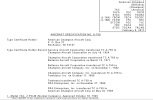
From the TCDS, page 1:

1763049885901.png

It lists no transfer to Fleet Aerospace (Magellan) in 1986. No transfers at all in 1986.

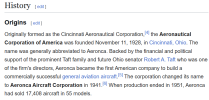
From the Wiki article on Aeronca:

1763050352331.png

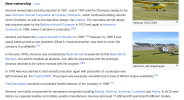
And from the end of that article:

1763050414021.png

Second-to-last sentence there:

Aeronca now builds components for aerospace companies including Boeing, Northrop Grumman, Lockheed and Airbus.

In other words, that Aeronca outfit owned by Magellan has had NOTHING to do with Aeronca, Champion or any other models of those airplanes for 60 years. They never built Aeroncas or Champs. At all. And the TCDS reflects that.
 
So the Airknocker company and the Champ design diverged in 1954. Cool! I learn something new every day.
 
Back
Top