250 RPM drop

A J Smith

Filing Flight Plan
Joined
Apr 5, 2021
Messages
15
Display Name
JustBecause
My turbo arrow suddenly had a 250 rpm drop with the right mag on runup.
This is only on the right side. Mags swapped, new ignition harness, spark plugs cleaned & regapped,
fuel injectors cleaned, accessory gear borescoped, ignition switch checked.
Has anybody encountered this issue before? What could cause this?
 
A bad plug could do it... did you swap them top to bottom as well? Could also be a short in the right P-lead.
 
Has anybody encountered this issue before? What could cause this?
Does it still drop 250?
Was there any other troubleshooting done before the mx you listed was performed?
When was the last 500 hr inspection or overhaul done on the mag?
 
I agree with Bell. Mag Drop diagnosis is usually started with a

“ Cold Cylinder Check”.
 
Mag 500 hr had been done, spark plugs were changed last annual, If P lead was shorted to engine or airframe
the magneto would not work at all.
 
A drop of 250 is usually rough since you are likely dropping 1 cylinder.

If smooth it can be timing. New plugs go bad too. Ohm check1?

Unless you have a monitor system the Cold Cylinder Check will guide you.

It’s not only about ignition.
 
If it happens only on the right mag, it's ignition and nothing else. Anything from the ignition switch to the P-lead to the mag to the harness to the plugs.

So a 500-hour inspection was done. Who did it? Did they do it in accordance with the applicable magneto service manual? Did they get the E-gap set right? Did they torque the screws to spec? A loose, or overtightened and broken points screw can mess things up mightily. Did they test the condenser? Did they look for cracks in that distributor?

A frayed P-lead vibrating against a grounding point can cause problems.

That ignition switch. Bendix or ACS? They both have ADs against them. Too many mechanics assume it's a Bendix and do the Bendix function check; they never crawl under the panel to see if it's an ACS with its totally different AD that demands a 2000-hour inspection for burnt contacts, and a diode across the starter contactor. Problems in the switch can make a mag act up. Bits of burned start contact rattling around in there could foul the mag contacts.

Maybe one or more old-model Champion plugs were installed. Somebody's old stock. Junk right from new. They belong in the trash.
 
A dropped plug no longer qualifies as New.

Happens.or antiseize or head, etc, etc
 
Mag 500 hr had been done, spark plugs were changed last annual, If P lead was shorted to engine or airframe the magneto would not work at all.
So its still dropping 250?
And there was no other troubleshooting performed before the mx you listed?
If it were me and you still have a 250 drop, I would start with the "cold cylinder" check mentioned above. I can post how its done if you need.
 
My turbo arrow suddenly had a 250 rpm drop with the right mag on runup.
This is only on the right side. Mags swapped, new ignition harness, spark plugs cleaned & regapped,
fuel injectors cleaned, accessory gear borescoped, ignition switch checked.
Has anybody encountered this issue before? What could cause this?
If any one is interested...
Problem solved. There were a couple of Tempest plugs that resistance broke down that caused the problem.
I replaced all 12 with Champion and gapped .018" and worked great.
Thanks
 
Interesting. I had two brand new Tempests fail in flight last year at, I think, they were both less than 100hrs...and looked fine.
 
It's good the problem was solved, but as you can see, everyone that responded above waved the big red flag at a single cylinder ignition issue. A better and more focused troubleshooting process by your mechanic would have begun with the plugs, including cleaning, regapping, and testing, then moving to the ignition harness, and then the mags.

I'm not criticizing your mechanic. Uh, yeah, I am. That RPM drop pointed directly at a single cylinder misfire, and that's where he should have focused. And I'm not being harsh on you, you're unfamiliar with these things.
 
Halfway through I was going to put in a "see thread on ground leaning" post until you solved it...

Good lesson that a plug can be new or look good and still be broken. I don't work on airplanes, but from IT/electrical people know that a new part typically has a higher failure rate than one that's been in service for X thousand hours. They used to call it infant mortality rate, without any sarcasm or humor intended, just factual, but that's dark enough people might not do that anymore.
 
My turbo arrow suddenly had a 250 rpm drop with the right mag on runup.
This is only on the right side. Mags swapped, new ignition harness, spark plugs cleaned & regapped,
fuel injectors cleaned, accessory gear borescoped, ignition switch checked.
Has anybody encountered this issue before? What could cause this?
A better and more focused troubleshooting process by your mechanic would have begun with the plugs, including cleaning, regapping, and testing,
As shown above, the OP's plugs don't appear to have been tested, and testing often finds defective plugs.

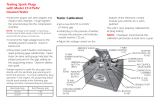
From Champion's AV6-R spark plug maintenance manual:

1746202984601.png

Most of the info is referring to the calibration of the machine, with a plug gapped to .035" and the spark set to extinguish at 125 psi. Look at the little chart at the bottom left: plugs gapped to .016" (very common setting) must continue to spark until the pressure reaches 135 PSI. Air is a dielectric and as more of it is shoved between the electrode, the spark suffers.

Without a tester like this you cannot determine that any plug is healthy. The internal resistors in aircraft plugs have a habit of breaking down and the spark current is impeded and the spark fails when the mag tries to fire it. The old Champions were really infamous for this. Tempest has been good, but maybe they're now experiencing quality failures. The old Auburn plugs (which I used to use until Champion bought them up and shut them down) never had any hassles like that, and lasted a long time. Their warranty was far longer than Champion's.
 
Last edited:
As shown above, the OP's plugs don't appear to have been tested, and testing often finds defective plugs.

From Champion's AV6-R spark plug maintenance manual:

View attachment 140623

Most of the info is referring to the calibration of the machine, with a plug gapped to .035" and the spark set to extinguish at 125 psi. Look at the little chart at the bottom left: plugs gapped to .016" (very common setting) must continue to spark until the pressure reaches 135 PSI. Air is a dielectric and as more of it is shoved between the electrode, the spark suffers.

Without a tester like this you cannot determine that any plug is healthy. The internal resistors in aircraft plugs have a habit of breaking down and the spark current is impeded and the spark fails when the mag tries to fire it. The old Champions were really infamous for this. Tempest has been good, but maybe they're now experiencing quality failures. The old Auburn plugs (which I used to use until Champion bought them up and shut them down) never had any hassles like that, and lasted a long time. Their warranty was far longer than Champion's.

It's disappointing to read the laundry list of snipe hunting that the OP was subjected to. One might think his mechanic was taking advantage of him.
 
too bad these testers are $2000 (you can buy a lot of spark plugs for that)
There are some off brand testers that cost less than $750. And then you have the used market. Have also seen a couple DIY versions as well. All depends how far down the rabbit hole you want to go. Perhaps seek out a local mechanic with a tester and make offer to test plugs? I did.
 
If any one is interested...
Problem solved. There were a couple of Tempest plugs that resistance broke down that caused the problem.
I replaced all 12 with Champion and gapped .018" and worked great.
Thanks
Glad you found the problem.
When I first read your post I suspected spark plugs since your engine is turbo charged which is much tougher on spark plugs that NA.
As you found out just because they were cleaned or replaced at annual doesn't mean they are good.
 
If any one is interested...
Problem solved. There were a couple of Tempest plugs that resistance broke down that caused the problem.
I replaced all 12 with Champion and gapped .018" and worked great.
Thanks
I hope you got new stock Champions and not the older design with the so-called replaceable resistors. Those Champions made me a Tempest customer.
 
And then you have the used market.
My son bought an older used Champion cleaner/tester for $200. Canadian $. Around US$150 at current exchange rates. They were widely used in automotive shops when plugs needed regular cleaning (leaded gas) and didn't last over 100K miles.
 

Does this work?
 
If you are only measuring resistance, all you need is a simple multimeter. Most people already own one, and if you don't, you can get one for less than $50 and it's generally useful for a million other things too.
Generally speaking, the resistance of an aviation spark plug should be between 1 and 4 kOhm, not more than 5. Automotive plugs can be a little higher.
What do the more expensive ones do?
 
What do the more expensive ones do?
They seal off the sparky end of the plug, apply high air pressure and actually fire it under those conditions, with a viewing window so you can see the spark. They often also have automatic spark plug cleaning, essentially a gentle sand-blasting.

However, most of the time if a plug is bad, the reason is obvious. It's either visually deformed/worn/dirty or the resistance is out of spec. That's why I consider the fancy machines as "nice to have" not "must have".
 
However, most of the time if a plug is bad, the reason is obvious. It's either visually deformed/worn/dirty or the resistance is out of spec. That's why I consider the fancy machines as "nice to have" not "must have".
I have tested sparkplugs many thousands of times, and had good-looking plugs fail even if the resistor tested good. Hairline cracks can develop in the ceramic insulator, and no multimeter will detect those. The pressure tester will, as the spark will short to ground inside the plug when the pressure comes up.


There is no substitute for the right tool.
 
I bought a ATS spark plug cleaner and tester, basically a Champion clone. I also bought tempest fine wire plugs. My IA said not to bead blast the fine wire plugs, so I had only used the cleaner part twice for others around airport with the massive electrode plugs, but the tester part I've used more. Only had 2 of the fine wires go bad in 800 hours. Although the more 100 LL we use the more they need cleaning. When running a good %75 MOGAS to %25 100LL the cleaning process is a little brushing with acetone or alcohol, very little lead build up.
 
I still say the process should BEGIN with diagnosis. Either using on-board

instruments or the Cold Cylinder Check. To review:

1. Confirm which mag is dropping. No point in chasing the wrong one.

If needed run - up again to confirm.

2. On some aircraft you may have to remove cowl to access engine.

3. Start on “ bad “ mag or immediately switch there after start.

4. Run about 30 seconds at 1000 rpm and shut down.

5. Determine which cylinder exhaust stack is cold. Squirt water, laser temp

gun or a wet fingertip are some methods that work.

6. Now you know the cylinder and affected mag.

NOTE: LEFT is the pilot side.

7. Trace plug leads and remove plug.

Often you may find that the whole issue to due to a tiny bit of lead

shorting out the plug. Clean or install your spare.

PS: I hope you caught this on your Post Flight Run-Up!
 
Back
Top