I fly multi ETOPS ETPs …. it can get bit complicated as there are a few requirements, but I think you are asking why more than one point is needed.
Here’s the deal…normally, under icao and other CAA regs, a twin engine must be within 60 min of a suitable landing field….this doesn’t have to be just over ocean, but anywhere, so flying over, say Africa, where airports are scarce, you would have to flight plan to always be within 1 hours flight time, which is obviously inefficient….this rule doesn’t apply to 3 or four engine aircraft , just 2.
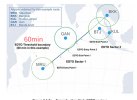
ETOPS simply allows you to fly more than the standard 60 minutes at single engine speed and altitudes (a few other criteria such as if using anti ice performance and such). The normal 180 minute ETOPS route across Atlantic may have 3 points, each being within 180 min flight time of a different airport…..as you leave one point, you are closer to next ETOPS alternate airport, then next point you are closer to next alternate , and so on. You officially leave ETOPS requirements when within 60 min flight time from a suitable airport , such as Shannon Ireland when you approach Europe…..after that, you are always within in 60 min of some airport and back to normal rules and no longer need ETOPS extension.
However, you are still planned required to land with min fuel reserves. These reserves are not only based on min landing quantity, such as a 45 minute IFR reserves we use in GA, but plus a reserve based on duration of flight time (let’s call this enroute reserve fuel… this can be significantly more than the domestic reserves…. The longer the flight, the more landing fuel reserves required )….
To avoid kicking off revenue (passengers and cargo), airlines will dispatch the flight to an airport closer than destination airport. This allows them to have lower enroute fuel reserves (=more payload). A very simplified example may be flight London to LAX is released by dispatcher with capt’s concurrence from London to JFK. JFK is now called a re-release point/way point. Approaching land and VOR coverage, you are Now within ground nav aid coverage or other outside method of affirming position rest of flight. As such, you can essentially reset flight plan to use lower domestic fuel reserves as if flight is now JFK to LAX. More specifically, your re release point will note a minimum fuel in tanks required to continue to LAX. If you don’t have that min fuel, you would be required to land at jfk and refuel; if you do have at least that min fuel, you carry on to LAX now using domestic fuel rules. you are now not required to carry the enroute reserves going forward.
It’s a weird concept, but look at it this way…. The re-release flight plans allows airline to use a flight plan that requires less fuel (weight) on board by resetting the requirements from the higher enroute fuel reserves for portion over land, once over or close to land, to lower domestic fuel requirements without enroute reserves, , such as destination to alternate +45 min.
When ever you have a question why airlines do something, the answer is almost always money. All airlines fly the same plane models with same performance , pay same for fuel, landing fees, ECT.. and margins are thin. So re-release allows them greater payload.
Hope this helpful
BTW, In this Atlantic example, you would be going more north to remain within 180 min to an airport, it if coming from a southern departure as Miami and wanting a more direct route which leaves you further south more than 180 min for alternates..so 180 min isn’t enough and may flight plan for longer ETOPS depending on airline specs and airplane….the airplane I fly has certs up to 330 mins. So, airlines may plan with a greater than 180 mins as option.