
billsgs126
Line Up and Wait
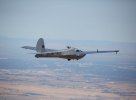
Or do I need a turbine rating too?


Maybe, it is certificated as a glider, and there is no multi- for gliders. But, there is also no multi- for Part 103. So which pattern is followed?And multi too, right?
Maybe, it is certificated as a glider, and there is no multi- for gliders. But, there is also no multi- for Part 103. So which pattern is followed?
They are.If those are jets, you'll need a type rating.


Depends on what the type certificate says. For example, the Pipistrel Sinus is certified as a Glider even though it has a Rotax 912 and a feathering prop. You can get a Glider pilot Certificate and fly the Sinus as an airplane and never shut off the engine.I'm curious what is the definition of glider for FAA purposes, and where an aircraft ceases to be a glider and becomes an airplane when it gains an engine...or two.
To paraphrase (which is always dangerous) a self-launching glider is designed to ascend to initial altitude under power but then to fly without power*. The original Sanders modification to the Schweitzer 1-26 (pictured above) had a 4-or-so-gallon fuel tank, so that would preclude a long flight under power.I'm curious what is the definition of glider for FAA purposes, and where an aircraft ceases to be a glider and becomes an airplane when it gains an engine...or two.

Yes, and at it's core, "powered-glider" is an oxymoron. Yet at least two forms exist."Glider means a heavier-than-air aircraft, that is supported in flight by the dynamic reaction of the air against its lifting surfaces and whose free flight does not depend principally on an engine."
"Airplane means an engine-driven fixed-wing aircraft heavier than air, that is supported in flight by the dynamic reaction of the air against its wings."
