
You are using an out of date browser. It may not display this or other websites correctly.
You should upgrade or use an alternative browser.
You should upgrade or use an alternative browser.
Slips and skidding turns
- Thread starter motoadve
- Start date


smv
Pattern Altitude
- Joined
- Dec 30, 2019
- Messages
- 1,659
- Display Name
- smv
Not clear of the term in English.
What I do is lower one wing and apply opposite rudder , enough amount so the airplane does not start to turn, to loose altitude without gaining speed.
Forward slip to a landing. Area of Operation IV, Task 'M' in the Private Pilot - Airplane ACS.
Another nice video, by the way...
PaulS
Touchdown! Greaser!
Aileron with opposite rudder, slip, useful, but be careful not to stall as airspeed scrubs off. Aileron and same side rudder, no good. Very tempting to do if you blow through final from base. Combined with too low speed can turn into a spin. If I blow through final during a base to final turn, I just stay in the turn (coordinated) until I come back on final, no big deal.
Edit, Just watched most of your video, you know the above, I think. Be careful out there.
Edit, Just watched most of your video, you know the above, I think. Be careful out there.
Last edited:

You’re living on the edge. I hope you never cross over. I’m trying not to be negative, but man it’s hard. It just seems so totally unnecessary to push so hard. Slipping into the trees for a thrill when the field is plenty long enough. Skidding around a river bend, when straight ahead is perfect terrain for a climb out. I hope you never flush a big bird out of one of those trees. You have little room for anything to go wrong.


Larry Vrooman
Pre-takeoff checklist
- Joined
- Jan 30, 2020
- Messages
- 158
- Display Name
- N5168T
I'll echo some of PaulS's comments. A slip (aileron with top rudder) is uncoordinated flight, but still very useful for adding substantial drag to lose altitude without gaining speed. In fact I prefer it to using flaps when the actual landing speed isn't critical, as I can immediately reduce or remove the slip angle to adjust the approach and touchdown point, where taking flaps back off is both bad form (by FAA standards) and problematic given the effect on stall speed.
A stall in this condition is still bad, but the less bad news is that, the upper wing will drop, moving you back toward level flight and making the recovery comparatively simple. It can be fairly benign in some aircraft, but a lot less so in others.
In contrast, a skid (rudder into the low wing) is all bad and will quickly get worse if you stall. A stall from a skid will result in the low wing stalling and the aircraft then basically rolling into the low wing and into a close to nose down attitude. If that happens, you'll probably need at least 500' of altitude to recover. If you don't have at least 500', you're probably going to impact in a non survivable nose down attitude.
Unfortunately, it's that kind of slip that precedes many approach to landing stalls. Typically a pilot may be on base leg, with a tailwind that is causing the pilot to overshoot the runway. Since the pilot is low, the pilot may instinctively not want to increase the bank angle as required to increase the rate of turn, so in order to force the nose around without increasing bank angle, he or she will step on the bottom rudder, creating a skid. Unfortunately, and just as instinctively, the pilot may also apply back pressure and reduce the airspeed to both maintain altitude and decrease the radius of the turn. If the pilot then stalls in this cross controlled bottom rudder applied condition, he or she will snap roll nicely into a steep nose down spin in a nearly inverted position with almost no chance of recovery in the remaining available altitude.
In that overshoot situation it's preferable to complete a coordinated turn to the runway heading and then slide slip back into the wind to line up on the runway, or turn a bit farther to crab back into the wind on final, or if you've been blown too far downwind, just go around.
Consequently, if you need to intentionally fly the aircraft in uncoordinated flight, you want to be in a slip, not a skid, AND you want to watch the airspeed or angle of attack very closely to ensure you don't stall the aircraft.
----
I was ok with the OP's slipping the aircraft, but what bothered me was the skidding turns on takeoff. I didn't see a need for that, and it'll eventually end badly. In that regard, I enjoy watching pilots in short field take off and landing competitions, but the reality is that a fair percentage of them eventually bend their plane when something unexpected, like a poorly timed gust of wind, happens. You're playing the odds and if you play long enough you'll eventually lose.

James331
Ejection Handle Pulled
- Joined
- Apr 18, 2014
- Messages
- 20,307
- Display Name
- James331
- Home Airfield
- X04
You’re living on the edge. I hope you never cross over. I’m trying not to be negative, but man it’s hard. It just seems so totally unnecessary to push so hard. Slipping into the trees for a thrill when the field is plenty long enough. Skidding around a river bend, when straight ahead is perfect terrain for a climb out. I hope you never flush a big bird out of one of those trees. You have little room for anything to go wrong.
I think he had a good ways to go to be living on the edge.
Frankly watching people force SR22s and 182 onto huuuuge runways waaay over vref speed gives me more concern than the slips in that video or the landing areas.

luvflyin
Touchdown! Greaser!
- Joined
- May 8, 2015
- Messages
- 17,446
- Location
- Santa Barbara, CA
- Display Name
- Luvflyin
- Home Airfield
- KVUO
Aileron with opposite rudder, slip, useful, but be careful not to stall as airspeed scrubs off. Aileron and same side rudder, no good. Very tempting to do if you blow through final from base. Combined with too low speed can turn into a spin. If I blow through final during a base to final turn, I just stay in the turn (coordinated) until I come back on final, no big deal.
Edit, Just watched most of your video, you know the above, I think. Be careful out there.
Not disagreeing with anything you said. Just using ‘reply’ to your post for perspective. The skid he did wasn’t the classic power off, tighten the turn to final, low wing stalls first and you’re in a spin ‘right now’ with no time to recover. He did it while climbing, at full power and cross controlled. Left rudder and right aileron, which is a typical slip input. The inside, low, wing is probably less prone to stalling than it would be in a left aileron, left rudder stall.

FastEddieB
Touchdown! Greaser!
- Joined
- Oct 14, 2013
- Messages
- 11,865
- Location
- Lenoir City, TN/Mineral Bluff, GA
- Display Name
- Fast Eddie B
- Home Airfield
- Big T Airport (80TN)
Unfortunately, it's that kind of slip that precedes many approach to landing stalls.
Pretty sure you meant to say skid here.

Velocity173
Touchdown! Greaser!
- Joined
- Jul 3, 2012
- Messages
- 16,369
- Display Name
- Velocity173
The first demo is a simple slip to landing. I’d expect every private pilot to be able to that. Can be very useful.
I don’t see any benefit to the skidding takeoff. In the vids you could climb straight ahead and not had to put the aircraft in a skid. If you truly had terrain that didn’t allow a straight ahead climb, you could’ve just used a coordinated higher AoB vs a shallow AoB as in the vid. While the skid assists the turn, the additional drag of the skid and decreased stall speed makes up for that “assist.” Could’ve just used a coordinated 45 degree turn vs a skidded 30 and not have the threat of a spin.
I don’t see any benefit to the skidding takeoff. In the vids you could climb straight ahead and not had to put the aircraft in a skid. If you truly had terrain that didn’t allow a straight ahead climb, you could’ve just used a coordinated higher AoB vs a shallow AoB as in the vid. While the skid assists the turn, the additional drag of the skid and decreased stall speed makes up for that “assist.” Could’ve just used a coordinated 45 degree turn vs a skidded 30 and not have the threat of a spin.

steingar
Taxi to Parking
OP has mad skills. Hope nothing ever goes wrong, he's a ways out there. That said, one thing I love about these videos is he usually has someone else filming the aircraft, meaning there's someone around should something go south.
smv
Pattern Altitude
- Joined
- Dec 30, 2019
- Messages
- 1,659
- Display Name
- smv
He did it while climbing, at full power and cross controlled. Left rudder and right aileron, which is a typical slip input.
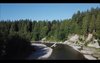
Are you sure that is what he did? Looks to me like he used left aileron and a LOT of left rudder. That is a pretty steep left bank to have been using right aileron.
GrummanBear
Ejection Handle Pulled
- Joined
- Jan 28, 2020
- Messages
- 225
- Display Name
- X
There is sometimes a fine line between a Konstantin Artseulov (early spin recovery) and a Mad Mike Hughes (well, you know) until after the fact. Time will be the judge.
I truly appreciate your innovative mind and spirit.
I truly appreciate your innovative mind and spirit.
I think he's right. He shows the inside view during the maneuver, you can see that he's holding a little right aileron. And even in your still shot, it looks to me like the left aileron is "down". Of course, that means an even steeper angle of attack on the left wing....Are you sure that is what he did? Looks to me like he used left aileron and a LOT of left rudder. That is a pretty steep left bank to have been using right aileron.
View attachment 83033
He's clearly very skilled and knows his airplane insanely well. I still feel like the risks aren't worth the rewards. It's not like it will just be a bad day if something goes a little wrong. It will be a really, really bad day. An engine sputter, a bird, a gust.... He's just so close to a situation where there is no recovery at all. He's basically pushing it until the point where he has no "buffer" left.
Last edited:
Yup. Even in the picture above, he could have done a 45 degree bank and not hit the ground. Of course, the only reason to be that low in the first place is for the thrill. That plane could have been 40 feet higher than that or more by then.Could’ve just used a coordinated 45 degree turn vs a skidded 30 and not have the threat of a spin.
smv
Pattern Altitude
- Joined
- Dec 30, 2019
- Messages
- 1,659
- Display Name
- smv
think he's right. He shows the inside view during the maneuver, you can see that he's holding a little right aileron.
Corrected, I stand...


- Joined
- Sep 11, 2019
- Messages
- 2,886
- Display Name
- Domenick
Some basic background on slips and skids:
https://www.aopa.org/news-and-media/all-news/2019/april/pilot/technique-taming-the-stall
https://www.aopa.org/news-and-media/all-news/2019/april/pilot/technique-taming-the-stall
PaulS
Touchdown! Greaser!
In my primary training, a long time ago now, I read Kershner to learn how to fly. I trained in a skipper and one of the basic exercises was to fly at minimum controllable airspeed, hanging in the buffet, and maneuver, shallow turns using only the rudder. We also only used the rudder in the stall, recovery is aileron neutral, stay coordinated and step on the wing that drops if it drops. Now I read to use coordinated aileron and rudder to counter the wing drop. Which I guess is ok for a blended wing like a cirrus, but was a no no for a plane like a skipper, where using the ailerons at a stall contributed more adverse yaw than wing leveling and could cause the situation to worsen.
I will say, that I was doing stalls in an SR-22 and one of the stalls the left wing dropped on me, not expected, (I was coordinated). The drop was quick, I stomped on right rudder, while unloading the wing, and the airplane snapped level. I suppose that's the law of primacy, but it worked.
Anyway, maybe some of you aviation experts can chime in, but I always thought that in a skidding turn, you are skidding away from the center of radius of the turn you are trying to make, so why do it on purpose?

Dan Thomas
Touchdown! Greaser!
- Joined
- Jun 16, 2008
- Messages
- 12,389
- Display Name
- Dan Thomas
Not disagreeing with anything you said. Just using ‘reply’ to your post for perspective. The skid he did wasn’t the classic power off, tighten the turn to final, low wing stalls first and you’re in a spin ‘right now’ with no time to recover. He did it while climbing, at full power and cross controlled. Left rudder and right aileron, which is a typical slip input. The inside, low, wing is probably less prone to stalling than it would be in a left aileron, left rudder stall.
A climbing turn stall is no joke. It drops the outside wing fairly aggressively, and at the OP's altitudes it's fatal.
luvflyin
Touchdown! Greaser!
- Joined
- May 8, 2015
- Messages
- 17,446
- Location
- Santa Barbara, CA
- Display Name
- Luvflyin
- Home Airfield
- KVUO
Are you sure that is what he did? Looks to me like he used left aileron and a LOT of left rudder. That is a pretty steep left bank to have been using right aileron.
View attachment 83033
Go to about 8:10 in the video. Maybe a touch of left aileron to initiate the turn, but then it’s right aileron while he’s turning the plane left with left rudder.
Last edited:
PaulS
Touchdown! Greaser!
I think some of you fellas should probably also avert your eyes from those flying farmer Cub acts.
I have no problem with people doing, ahem, interesting things, but getting used to flying at the edge of the envelope can bite you, the wide eyed unsuspecting need to know this.

Kenny Phillips
Final Approach
- Joined
- Jul 29, 2018
- Messages
- 6,572
- Display Name
- Kenny Phillips
Ultimately, one should become proficient at flying the edge of the envelop; more important than comfort doing so.I have no problem with people doing, ahem, interesting things, but getting used to flying at the edge of the envelope can bite you, the wide eyed unsuspecting need to know this.
I will admit that I'm an elevator ride guy, often plopping it in from "too high", making a Skyhawk flaps 40° approach seem shallow. Even on 6K' runways. But the trees I was in between were a couple of hundred feet away, as I like them to be.
Dan Thomas
Touchdown! Greaser!
- Joined
- Jun 16, 2008
- Messages
- 12,389
- Display Name
- Dan Thomas
Ultimately, one should become proficient at flying the edge of the envelop; more important than comfort doing so.
Yes, but not at 25 feet AGL.
Last edited:
PaulS
Touchdown! Greaser!
Ultimately, one should become proficient at flying the edge of the envelop; more important than comfort doing so.
I will admit that I'm an elevator ride guy, often plopping it in from "too high", making a Skyhawk flaps 40° approach seem shallow. Even on 6K' runways. But the trees I was in between were a couple of hundred feet away, as I like them to be.
Agreed, but 20 feet above the ground is not the place to be exploring the envelope or even being near the limits. Exploring the envelope generally involves finding the edge by going past it. Much better to do with a few thousand feet to recover.
luvflyin
Touchdown! Greaser!
- Joined
- May 8, 2015
- Messages
- 17,446
- Location
- Santa Barbara, CA
- Display Name
- Luvflyin
- Home Airfield
- KVUO
The first demo is a simple slip to landing. I’d expect every private pilot to be able to that. Can be very useful.
I don’t see any benefit to the skidding takeoff. In the vids you could climb straight ahead and not had to put the aircraft in a skid. If you truly had terrain that didn’t allow a straight ahead climb, you could’ve just used a coordinated higher AoB vs a shallow AoB as in the vid. While the skid assists the turn, the additional drag of the skid and decreased stall speed makes up for that “assist.” Could’ve just used a coordinated 45 degree turn vs a skidded 30 and not have the threat of a spin.
Yeah. Not disagreeing, but thinking about what the stall speed is going to be in those configurations. In a skid, the 'inside' wing is going to stall first. But how much higher is the stall speed for that to happen? Stall speeds are higher with more bank. Looked up a C182(yeah, he has some wing mod) and the stall speeds are typically 5-6 knots higher at 45 degrees than 30 degrees. So the skidding 30 degree bank turn has a lower stall speed than the coordinated 45 degree bank turn. Of course in a skid, the inside wing lets go first, and that's what puts you in the spin right away which is the killer. I dunno. I think his reason to do it is to keep the inside wingtip higher to make it less likely to contact the ground. This isn't a 'snuck up on you base to final power off stall/spin' like most of the killers we read about. It's a deliberate, for a reason, maneuver. I don't think he's anymore on the 'edge' than he already is by just doing back country flying.
luvflyin
Touchdown! Greaser!
- Joined
- May 8, 2015
- Messages
- 17,446
- Location
- Santa Barbara, CA
- Display Name
- Luvflyin
- Home Airfield
- KVUO
Not clear of the term in English.
What I do is lower one wing and apply opposite rudder , enough amount so the airplane does not start to turn, to loose altitude without gaining speed.
Which wing is the AOA sensor on, left or right? How different does it read depending on which way you are turning/slipping/skidding?
Velocity173
Touchdown! Greaser!
- Joined
- Jul 3, 2012
- Messages
- 16,369
- Display Name
- Velocity173
Yeah. Not disagreeing, but thinking about what the stall speed is going to be in those configurations. In a skid, the 'inside' wing is going to stall first. But how much higher is the stall speed for that to happen? Stall speeds are higher with more bank. Looked up a C182(yeah, he has some wing mod) and the stall speeds are typically 5-6 knots higher at 45 degrees than 30 degrees. So the skidding 30 degree bank turn has a lower stall speed than the coordinated 45 degree bank turn. Of course in a skid, the inside wing lets go first, and that's what puts you in the spin right away which is the killer. I dunno. I think his reason to do it is to keep the inside wingtip higher to make it less likely to contact the ground. This isn't a 'snuck up on you base to final power off stall/spin' like most of the killers we read about. It's a deliberate, for a reason, maneuver. I don't think he's anymore on the 'edge' than he already is by just doing back country flying.
No idea how much higher but it will stall before the raised wing. I’d much rather be riding the buffet in a coordinated turn than riding the buffet in a skid.
Increased yaw with increased turn rate isn’t synonymous with changing direction over the ground. You get radius reduction by flying at the slowest possible coordinated speed with a high bank angle. Whatever small benefit the OP got with the skid is lost with the increased distance he used to accelerate IGE and then the increase in drag of the skid.
https://airfactsjournal.com/2020/01...-the-radius-of-your-turn-in-case-you-need-to/
So, if the OP just would’ve gone straight to Vx and maintained an AoB just above stall speed, I guarantee he would cut his turn radius below what he demonstrated. He also would’ve been probably 500 ft above the point where he starts his pull up. Gives more options in the event of engine failure. Of course he had plenty of room to climb straight ahead at Vx / Vy anyway so it’s all a moot point.
To be clear, I’m not saying the OP is dangerous for flying on the edge. It’s not magic, he’s just flying his aircraft within its limits. Air show pilots fly on the edge as well. Obviously though both types of flying don't leave much room for error.

455 Bravo Uniform
Final Approach
Which wing is the AOA sensor on, left or right? How different does it read depending on which way you are turning/slipping/skidding?
Right wing
luvflyin
Touchdown! Greaser!
- Joined
- May 8, 2015
- Messages
- 17,446
- Location
- Santa Barbara, CA
- Display Name
- Luvflyin
- Home Airfield
- KVUO
No idea how much higher but it will stall before the raised wing. I’d much rather be riding the buffet in a coordinated turn than riding the buffet in a skid.
Increased yaw with increased turn rate isn’t synonymous with changing direction over the ground. You get radius reduction by flying at the slowest possible coordinated speed with a high bank angle. Whatever small benefit the OP got with the skid is lost with the increased distance he used to accelerate IGE and then the increase in drag of the skid.
https://airfactsjournal.com/2020/01...-the-radius-of-your-turn-in-case-you-need-to/
So, if the OP just would’ve gone straight to Vx and maintained an AoB just above stall speed, I guarantee he would cut his turn radius below what he demonstrated. He also would’ve been probably 500 ft above the point where he starts his pull up. Gives more options in the event of engine failure. Of course he had plenty of room to climb straight ahead at Vx / Vy anyway so it’s all a moot point.
To be clear, I’m not saying the OP is dangerous for flying on the edge. It’s not magic, he’s just flying his aircraft within its limits. Air show pilots fly on the edge as well. Obviously though both types of flying don't leave much room for error.
Good read, thanks.
Larry Vrooman
Pre-takeoff checklist
- Joined
- Jan 30, 2020
- Messages
- 158
- Display Name
- N5168T
In my primary training, a long time ago now, I read Kershner to learn how to fly. I trained in a skipper and one of the basic exercises was to fly at minimum controllable airspeed, hanging in the buffet, and maneuver, shallow turns using only the rudder. We also only used the rudder in the stall, recovery is aileron neutral, stay coordinated and step on the wing that drops if it drops. Now I read to use coordinated aileron and rudder to counter the wing drop. Which I guess is ok for a blended wing like a cirrus, but was a no no for a plane like a skipper, where using the ailerons at a stall contributed more adverse yaw than wing leveling and could cause the situation to worsen.
I will say, that I was doing stalls in an SR-22 and one of the stalls the left wing dropped on me, not expected, (I was coordinated). The drop was quick, I stomped on right rudder, while unloading the wing, and the airplane snapped level. I suppose that's the law of primacy, but it worked.
Anyway, maybe some of you aviation experts can chime in, but I always thought that in a skidding turn, you are skidding away from the center of radius of the turn you are trying to make, so why do it on purpose?
I was taught the same way by an instructor who learned to fly in WWII. But it's a dated method that wasn't always properly contextualized, fully understood, or properly applied.
Per the "pick up the wing with the rudder" theory, if you try to pick up a low wing with aileron at high angles of attack (AoA) near a stall, you are lowering the aileron on that wing, which effectively lowers the trailing edge of the wing in the section with the aileron. That then effectively lowers the rear of the chord line, which increases the angle of incidence, and thus increases the AoA, and thus *theoretically* could cause a stall on the low wing, making things worse instead of better.
In *practice*, there's a lot more going on. Many aircraft designs use some washout in each wing (slightly less angle of incidence at the wing tips) to help keep the outer portion of the wing flying at a slightly lower angle of attack than the inboard sections, and thus help maintain aileron effectiveness as the inboard sections of the wings will stall first. You'll also find slots or slats on the outboard sections of some wings (Stinson, L-5 etc) to keep the airflow attached on the outboard section of the wing to maintain aileron effectiveness.
In addition, wing planform matters. With a straight Hershey bar planform wing (think Cherokee 140, Piper Cub, Aeronca Champ, Citabria, etc), the wing roots stall first, which disturbs the air over the horizontal stabilizer and elevator (or stabilator in the case of the Cherokee series) and gives stall warning in the form of buffeting while the outboard sections of the wings are still flying and thus still giving you good aileron control. (Adding a Toblerone candy bar shaped stall strip on the inboard section of the wing will give you even earlier warning in the form of buffeting before the stall occurs over the inboard section of the wing as well.)
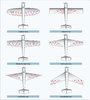
However, pretty much every other wing planform will either stall from the center of the wing and progress both inboard and outboard over the wing, or stall in the outward sections first and progress inboard. (See below). That's where washout and things like stall strips become even more important and more common. You'll usually find both on a tapered wing to curb that outboard to inboard stall progression effect. (Semi-tapered, tapered, and in particular elliptical wing planforms offer improved lift distribution and efficiency, which is why they are used, but they are also progressively more expensive to produce.)
Still, with all of that said, the "pick up the low wing with rudder" theory is that if you apply enough aileron trying to pick up a low wing at high AoA, you will stall the outboard section of that wing and make the situation worse. The theory continues that if you ignore your instinct to pick the wing up with the aileron and instead pick it up with opposite rudder, you will instead advance the dropped wing into the relative wind and increase the airflow over the wing, increasing it's lift.
That's also where the theory runs off the rails, due to the interaction between yaw and dihedral angle in the wing. When the wings have dihedral angle (or alternatively wing sweepback), the yaw caused by applying opposite rudder to "pick up" the low wing increases the AoA of the advancing wing and decreases the AoA of of the retreating wing. The greater the dihedral angle (or sweepback angle) the greater the rolling effect created by yaw. If you've ever flown a single channel, two channel or 3 channel R/C aircraft where you have no aileron control, you understand the concept. If you ever (successfully) designed your own no aileron R/C aircraft, you also understand the interplay between vertical fin area and dihedral angle to keep those no aileron turns coordinated.
Consequently, the "pick up the low wing with rudder" theory works by increasing the AoA on the low wing (which advanced when opposite rudder is applied) and reducing the AoA on the high wing (which retreats when opposite rudder is applied), rolling the aircraft back to level flight - provided the wing has dihedral angle (or wing sweep).
However, the "pick up the low wing with rudder" theory comes up short in two areas:
1) If you are picking a low wing up with rudder in an aircraft with substantial dihedral angle, you are actually increasing the AOA over the entire wing - and could potentially stall that wing with aggressive enough rudder input at a high enough angle of attack; and
2) the theory only works if the low wing is still flying and sufficiently below the critical AoA so that increasing the AoA does not cause it to stall. In other words it works ok in slow flight *approaching* the critical AoA, but WILL make things a lot worse if applied at or just below the critical AoA by causing or deepening the stall on that wing.
Which takes us to the current thinking on the issue....
The critical action to take in a stall is to reduce the angle of attack to get the wing flying again. In the old days, the FAA's standards focused on minimizing altitude loss (50' IIRC), which led to some pilots developing the bad habit of cramming on lots of power and flying their way out of the stall, while giving up as little back pressure as possible. That works fine in something like a Supercub, but it works a lot less fine in something like a 285 hp V35 Bonanza, where the torque of the engine combined with the small V tail creates a Vmc that is higher than the stall speed. Full power applied at or just above stall speed gets really interesting really quick and leaves you looking straight down at the ground when you run out of both rudder and aileron and depart over the top.
Not just coincidentally, I learned to fly in a Supercub 150 and developed that habit of flying out of a stall with basically no altitude loss. I had an instructor during my commercial work ask me for a left hand turn using full right rudder and right aileron. I had to think about it a few seconds, before adding full power, and slowing down until I had full right rudder and some sight aileron applied, and had the aircraft ( a 285 hp V35 Bonanza) turning a steep climbing left hand turn. He then told me to hold it in that climbing turn and stall it. I learned a lot in that stall as I departed/snapped over the right wing and found myself looking almost straight down.
So...my understanding is the current thinking is focused on the critical action of reducing the AoA to get the wings flying again. Then, once the wings are flying, use coordinated rudder and aileron to get the aircraft level again. My understanding is that there's now less focus on minimum altitude loss, and more emphasis on breaking the stall and staying in coordinated flight to avoid the potential for a secondary stall and spin. It strikes me as a very positive change.
------
The thing I struggle with a bit is the FAA perhaps over applying the "normalization of deviance" concept and not wanting pilots to demonstrate slow flight with the stall warning horn activated. That's based on a fear that they'll get used to it, think the stall warning horn is "normal" and ignore it at a critical time. (But it should be normal - on each and every full stall landing.)
On most light aircraft no stall warning horn in "slow flight" leaves you at least 5 kts above a stall, and on many aircraft it's closer to 10 kts (or more). That's far enough away from a stall that I worry that student pilots may not fully grasp or appreciate things like rapidly increasing induced drag and what it feels like and means to be way behind the power curve, or the nuances of slow flight such as the potential for reduced aileron effectiveness in some aircraft (and in particular with some higher performance wing planforms) as you approach the critical angle of attack. I suspect the pendulum may swing back in the other direction when we've eventually had a sufficient number of accidents caused by what wasn't learned.
Attachments
Larry Vrooman
Pre-takeoff checklist
- Joined
- Jan 30, 2020
- Messages
- 158
- Display Name
- N5168T
Which wing is the AOA sensor on, left or right? How different does it read depending on which way you are turning/slipping/skidding?
On an aircraft with dihedral in the wing, yaw will increase the AoA on the advancing wing and reduce the AoA on the retreating wing.
How much the AoA changes depends on the amount of dihedral and the amount of yaw.
In terms of location, they are placed in undisturbed air, which usually means on the outboard section of a wing in a single engine tractor propeller driven aircraft, in the same general ballpark as the pitot tube but no closer than 5" to 6" to it, to ensure it's in clean air. The actual location is practically speaking dependent on a conveniently located inspection cover on which to mount it with minimal expense or impact on the airframe.
luvflyin
Touchdown! Greaser!
- Joined
- May 8, 2015
- Messages
- 17,446
- Location
- Santa Barbara, CA
- Display Name
- Luvflyin
- Home Airfield
- KVUO
.....but I always thought that in a skidding turn, you are skidding away from the center of radius of the turn you are trying to make, so why do it on purpose?
I don’t think that’s the way it’s working in an ‘aerodynamic’ skid. Take a car. Skid is usually talked about when the rear wheels let loose, you start ‘fish tailing.’ If the front wheels hold traction, the ‘radius’ of the turn is not increasing. You ‘turn the steering wheel in the direction of the ‘skid.’ This is to keep you following the ‘line’ thru the turn. You’re keeping the radius of the turn constant. If the front wheels lose traction along with rear wheels then the whole car starts drifting to the outside of the turn and yeah, radius of turn increases. Comparing a skidding car to a skidding airplane is an apples and oranges thang. And comparing the classic ‘tighten the turn to final while slow at approach speeds with a foot full of rudder’ is not a good comparison to what the OP was doing in his ‘turning immediately after departure off the gravel bar to follow the ‘radius’ of the river.’ Yeah, if it stalls it’s gonna be low wing first and that’s bad Juju. But then stalling that low is going to bad Juju, coordinated or not. There is the benefit of a slower stall speed due to reduced angle of bank. Another benefit is keeping the ‘inside’ wing tip farther from the ground which I think is the OP’s reason for doing it.
Agreed, but 20 feet above the ground is not the place to be exploring the envelope or even being near the limits. Exploring the envelope generally involves finding the edge by going past it. Much better to do with a few thousand feet to recover.
You guys are amazing. Where here did the OP state that the first time he practiced a skidding turn was at 20' AGL? You don't think he started at altitude? When you've practiced certain things enough, you can feel what the airplane is telling you and you know where the edge is. He was not balancing on the edge of stall/spinning in the videos here. Some of you need to be aware that there are folks who work to develop skills outside of the very narrow average skillset most pilots limit themselves to. Some pilots can operate as consistently and as safely at a higher level as the average pilot does under "normal" narrow operations. But the reaction is not surprising considering many feel it's unsafe not to obtain flight following immediately after take off before heading to the "practice area".

Dan Thomas
Touchdown! Greaser!
- Joined
- Jun 16, 2008
- Messages
- 12,389
- Display Name
- Dan Thomas
I don’t think that’s the way it’s working in an ‘aerodynamic’ skid. Take a car. Skid is usually talked about when the rear wheels let loose, you start ‘fish tailing.’ If the front wheels hold traction, the ‘radius’ of the turn is not increasing. You ‘turn the steering wheel in the direction of the ‘skid.’ This is to keep you following the ‘line’ thru the turn. You’re keeping the radius of the turn constant. If the front wheels lose traction along with rear wheels then the whole car starts drifting to the outside of the turn and yeah, radius of turn increases. Comparing a skidding car to a skidding airplane is an apples and oranges thang. And comparing the classic ‘tighten the turn to final while slow at approach speeds with a foot full of rudder’ is not a good comparison to what the OP was doing in his ‘turning immediately after departure off the gravel bar to follow the ‘radius’ of the river.’ Yeah, if it stalls it’s gonna be low wing first and that’s bad Juju. But then stalling that low is going to bad Juju, coordinated or not. There is the benefit of a slower stall speed due to reduced angle of bank. Another benefit is keeping the ‘inside’ wing tip farther from the ground which I think is the OP’s reason for doing it.
How much experience do you have in low-speed skidding turns, and the stall-spin that can result from that? I used to teach this stuff to students in the Citabrias, at safe altitudes, and they didn't skid the airplane anymore in the circuit once they saw what can happen if they do that.
Skidding has no benefit whatever. It will not keep a turn within a useful radius. Keeping a wing clear of the ground in a skid just means poor planning on the pilot's part, putting himself in a situation like that. And yes, a Cessna will forgive much of it, but if he carries that habit into some older design it will kill him. There have been too many pilots who learned in forgiving airplanes, then go buy what they can afford: some old airplane with stall/spin characteristics not one bit like the training airplane, and it bites them when they abuse it.
PaulS
Touchdown! Greaser!
You guys are amazing. Where here did the OP state that the first time he practiced a skidding turn was at 20' AGL? You don't think he started at altitude? When you've practiced certain things enough, you can feel what the airplane is telling you and you know where the edge is. He was not balancing on the edge of stall/spinning in the videos here. Some of you need to be aware that there are folks who work to develop skills outside of the very narrow average skillset most pilots limit themselves to. Some pilots can operate as consistently and as safely at a higher level as the average pilot does under "normal" narrow operations. But the reaction is not surprising considering many feel it's unsafe not to obtain flight following immediately after take off before heading to the "practice area".
Oh Roscoe, no, just no. Talk about an over reaction.
As far as the airplane talking to you when you are at the edge of the envelope, sometimes other factors you don't control and the airplane can't talk to you about, enter into the equation, such as gusts, updrafts, down drafts which can push you past the edge of the envelope at any time faster than you can react to it. Low, slow and inducing a skid is not for me. If you want to do it, have at it. But do us all a favor and get out of the insurance pool first.
Velocity173
Touchdown! Greaser!
- Joined
- Jul 3, 2012
- Messages
- 16,369
- Display Name
- Velocity173
I don’t think that’s the way it’s working in an ‘aerodynamic’ skid. Take a car. Skid is usually talked about when the rear wheels let loose, you start ‘fish tailing.’ If the front wheels hold traction, the ‘radius’ of the turn is not increasing. You ‘turn the steering wheel in the direction of the ‘skid.’ This is to keep you following the ‘line’ thru the turn. You’re keeping the radius of the turn constant. If the front wheels lose traction along with rear wheels then the whole car starts drifting to the outside of the turn and yeah, radius of turn increases. Comparing a skidding car to a skidding airplane is an apples and oranges thang. And comparing the classic ‘tighten the turn to final while slow at approach speeds with a foot full of rudder’ is not a good comparison to what the OP was doing in his ‘turning immediately after departure off the gravel bar to follow the ‘radius’ of the river.’ Yeah, if it stalls it’s gonna be low wing first and that’s bad Juju. But then stalling that low is going to bad Juju, coordinated or not. There is the benefit of a slower stall speed due to reduced angle of bank. Another benefit is keeping the ‘inside’ wing tip farther from the ground which I think is the OP’s reason for doing it.
I still don’t think he’s getting much, if any aerodynamic benefit from the skid. He’s not doing this skidded turn immediately after takeoff because he knows better. He’s building speed to probably 80 kts and throwing it into a skid when there’s no need to do that. Could’ve gotten the same if not better and safer result but flying a coordinated Vx early, then transitioning to Vy. Even with a steeper coordinated bank, while it might be adding drag and increasing stall speed, a skid is doing the same. Either way it’s a trade off but I think the altitude gained with Vx and slower airspeed in a coordinated turn will beat his technique every time.
PaulS
Touchdown! Greaser!
I was taught the same way by an instructor who learned to fly in WWII. But it's a dated method that wasn't always properly contextualized, fully understood, or properly applied.
Per the "pick up the wing with the rudder" theory, if you try to pick up a low wing with aileron at high angles of attack (AoA) near a stall, you are lowering the aileron on that wing, which effectively lowers the trailing edge of the wing in the section with the aileron. That then effectively lowers the rear of the chord line, which increases the angle of incidence, and thus increases the AoA, and thus *theoretically* could cause a stall on the low wing, making things worse instead of better.
In *practice*, there's a lot more going on. Many aircraft designs use some washout in each wing (slightly less angle of incidence at the wing tips) to help keep the outer portion of the wing flying at a slightly lower angle of attack than the inboard sections, and thus help maintain aileron effectiveness as the inboard sections of the wings will stall first. You'll also find slots or slats on the outboard sections of some wings (Stinson, L-5 etc) to keep the airflow attached on the outboard section of the wing to maintain aileron effectiveness.
In addition, wing planform matters. With a straight Hershey bar planform wing (think Cherokee 140, Piper Cub, Aeronca Champ, Citabria, etc), the wing roots stall first, which disturbs the air over the horizontal stabilizer and elevator (or stabilator in the case of the Cherokee series) and gives stall warning in the form of buffeting while the outboard sections of the wings are still flying and thus still giving you good aileron control. (Adding a Toblerone candy bar shaped stall strip on the inboard section of the wing will give you even earlier warning in the form of buffeting before the stall occurs over the inboard section of the wing as well.)
However, pretty much every other wing planform will either stall from the center of the wing and progress both inboard and outboard over the wing, or stall in the outward sections first and progress inboard. (See below). That's where washout and things like stall strips become even more important and more common. You'll usually find both on a tapered wing to curb that outboard to inboard stall progression effect. (Semi-tapered, tapered, and in particular elliptical wing planforms offer improved lift distribution and efficiency, which is why they are used, but they are also progressively more expensive to produce.)
Still, with all of that said, the "pick up the low wing with rudder" theory is that if you apply enough aileron trying to pick up a low wing at high AoA, you will stall the outboard section of that wing and make the situation worse. The theory continues that if you ignore your instinct to pick the wing up with the aileron and instead pick it up with opposite rudder, you will instead advance the dropped wing into the relative wind and increase the airflow over the wing, increasing it's lift.
That's also where the theory runs off the rails, due to the interaction between yaw and dihedral angle in the wing. When the wings have dihedral angle (or alternatively wing sweepback), the yaw caused by applying opposite rudder to "pick up" the low wing increases the AoA of the advancing wing and decreases the AoA of of the retreating wing. The greater the dihedral angle (or sweepback angle) the greater the rolling effect created by yaw. If you've ever flown a single channel, two channel or 3 channel R/C aircraft where you have no aileron control, you understand the concept. If you ever (successfully) designed your own no aileron R/C aircraft, you also understand the interplay between vertical fin area and dihedral angle to keep those no aileron turns coordinated.
Consequently, the "pick up the low wing with rudder" theory works by increasing the AoA on the low wing (which advanced when opposite rudder is applied) and reducing the AoA on the high wing (which retreats when opposite rudder is applied), rolling the aircraft back to level flight - provided the wing has dihedral angle (or wing sweep).
However, the "pick up the low wing with rudder" theory comes up short in two areas:
1) If you are picking a low wing up with rudder in an aircraft with substantial dihedral angle, you are actually increasing the AOA over the entire wing - and could potentially stall that wing with aggressive enough rudder input at a high enough angle of attack; and
2) the theory only works if the low wing is still flying and sufficiently below the critical AoA so that increasing the AoA does not cause it to stall. In other words it works ok in slow flight *approaching* the critical AoA, but WILL make things a lot worse if applied at or just below the critical AoA by causing or deepening the stall on that wing.
Which takes us to the current thinking on the issue....
The critical action to take in a stall is to reduce the angle of attack to get the wing flying again. In the old days, the FAA's standards focused on minimizing altitude loss (50' IIRC), which led to some pilots developing the bad habit of cramming on lots of power and flying their way out of the stall, while giving up as little back pressure as possible. That works fine in something like a Supercub, but it works a lot less fine in something like a 285 hp V35 Bonanza, where the torque of the engine combined with the small V tail creates a Vmc that is higher than the stall speed. Full power applied at or just above stall speed gets really interesting really quick and leaves you looking straight down at the ground when you run out of both rudder and aileron and depart over the top.
Not just coincidentally, I learned to fly in a Supercub 150 and developed that habit of flying out of a stall with basically no altitude loss. I had an instructor during my commercial work ask me for a left hand turn using full right rudder and right aileron. I had to think about it a few seconds, before adding full power, and slowing down until I had full right rudder and some sight aileron applied, and had the aircraft ( a 285 hp V35 Bonanza) turning a steep climbing left hand turn. He then told me to hold it in that climbing turn and stall it. I learned a lot in that stall as I departed/snapped over the right wing and found myself looking almost straight down.
So...my understanding is the current thinking is focused on the critical action of reducing the AoA to get the wings flying again. Then, once the wings are flying, use coordinated rudder and aileron to get the aircraft level again. My understanding is that there's now less focus on minimum altitude loss, and more emphasis on breaking the stall and staying in coordinated flight to avoid the potential for a secondary stall and spin. It strikes me as a very positive change.
------
The thing I struggle with a bit is the FAA perhaps over applying the "normalization of deviance" concept and not wanting pilots to demonstrate slow flight with the stall warning horn activated. That's based on a fear that they'll get used to it, think the stall warning horn is "normal" and ignore it at a critical time. (But it should be normal - on each and every full stall landing.)
On most light aircraft no stall warning horn in "slow flight" leaves you at least 5 kts above a stall, and on many aircraft it's closer to 10 kts (or more). That's far enough away from a stall that I worry that student pilots may not fully grasp or appreciate things like rapidly increasing induced drag and what it feels like and means to be way behind the power curve, or the nuances of slow flight such as the potential for reduced aileron effectiveness in some aircraft (and in particular with some higher performance wing planforms) as you approach the critical angle of attack. I suspect the pendulum may swing back in the other direction when we've eventually had a sufficient number of accidents caused by what wasn't learned.
Larry, thanks for the great write up. You cover much in this post, but concerning the rudder versus aileron in a stall, I was taught is that attempting to correct a dropped wing with the aileron can also cause adverse yaw, which in my understanding, in many planes will seal the deal on entering a spin, especially when combined with a pull when there should be a push on the yoke to decrease the angle of attack. I was always taught that proper stall recovery includes decreasing the angle of attack of the wing, it's not a serial recovery as correcting a spiral should be ( decrease bank, slowly arrest the dive, rather than attempting to arrest the dive as you attempt to decrease bank angle). For the stall, you apply the correct yoke movement (down for a normal, upright stall) and if the wing is dropping address that at the same time. So the rudder increasing the AOA should not be an issue in that case. In my mind, for an unanticipated stall, in panic mode, a pilot whose been taught coordinated controls to level the wings, might in a panic, slam the aileron to the stop causing issues. Where in you can be pretty aggressive with the rudder (within reason) as long as you are decreasing the angle of attack too.
I'll stick with what I've been taught. I've posted this before, I'm flying a 22 now, during one of my checkout rides ( recurrent training is required at the place I rent) I was doing a power on stall, I am absolutely sure I stayed coordinated, but the left wing dropped anyway when the nose dropped. My instant reaction was unload the wing, add more right rudder, which was already in, the plane leveled right out unstalled. As an after thought I added a few degrees of right aileron, but the main input, besides decreasing the AOA was the rudder. Good stuff.
Concerning minimum controllable airspeed, I did a lot of hanging off the prop with the stall horn blaring in my primary training. I never took out of that training that it was ok to hear the stall horn at any time other than the flare. It's just like the airplane now has envelope protection, complete with warnings before you get close. I never hear those either, and consider it a problem if I ever do in regular flying.
luvflyin
Touchdown! Greaser!
- Joined
- May 8, 2015
- Messages
- 17,446
- Location
- Santa Barbara, CA
- Display Name
- Luvflyin
- Home Airfield
- KVUO
How much experience do you have in low-speed skidding turns, and the stall-spin that can result from that? I used to teach this stuff to students in the Citabrias, at safe altitudes, and they didn't skid the airplane anymore in the circuit once they saw what can happen if they do that.
Skidding has no benefit whatever. It will not keep a turn within a useful radius. Keeping a wing clear of the ground in a skid just means poor planning on the pilot's part, putting himself in a situation like that. And yes, a Cessna will forgive much of it, but if he carries that habit into some older design it will kill him. There have been too many pilots who learned in forgiving airplanes, then go buy what they can afford: some old airplane with stall/spin characteristics not one bit like the training airplane, and it bites them when they abuse it.
A little experience. I did PPL back when spins were mandatory and got into spins just like that, stalling from a skid. So I get it. I have no illusions about the seriousness of stalling in a skid. All my talk here is about the particular skid the OP did on departure from the gravel bar. He was accelerating, he did it deliberately. A stall was not going to sneak up on him like the classic turn to final at approach speed stall/spin scenario.
Last edited:
PaulS
Touchdown! Greaser!
A little experience. I did PPL back when spins were mandatory and got into spins just like that, stalling from a skid. So I get it. I have no illusions about the seriousness of stalling in a skid. All my talk here is about the particular skid the OP did on departure from the gravel bar. He was accelerating, he did it deliberately. A stall was not going to sneak up on him like the classic turn to final at approach speed stall/spin scenario.
I'm still not convinced that skidding in that situation is any better than just increasing the bank and staying coordinated. In my mind the skid is allowing the airplane to "slide" from the center of the turn, where being coordinated allows the airplane to better track the intended radius of the turn. I'd draw it out, but I'm too lazy. While the skid makes you feel better because the nose points to where you want to be quicker it does nothing to get you there quicker with out doing something like kicking in the afterburner. Where am I wrong on this?