Round Engines

John Baker

Final Approach
Joined
Oct 4, 2008
Messages
7,471
Location
San Diego, California
Display Name
John Baker
Home Airfield
KMYF
I am sure that this has been posted before, so it might be somewhat unsettling for a few of our members, but I got to thinking, since it is such an old classic, perhaps, if given enough time, they will be able to work themselves beyond this days events. It could be, that in order to save themselves grief, they will read no further.

-John

HATS OFF TO THOSE WHO CAN SURGICALLY SEDUCE AN R-2800 INTO A FOUR-ALARM STACK FIRE, THEN CALMLY BLOW IT OUT!!!!! (FINE-TUNING OF COWL FLAPS PERMITTED).


For you jokers who were round engine drivers .....

We gotta get rid of those turbines, they’re ruining aviation and our hearing.

A turbine is too simple minded, it has no mystery.

The air travels through it in a straight line and doesn’t pick up any of the pungent fragrance of engine oil or pilot sweat.

Anybody can start a turbine. You just move a switch from “OFF” to “START” and then remember to move it to “ON” after a while. My computer is harder to start.

Cranking a round engine requires skill, finesse and style. You have to seduce it into starting. On some planes the pilots aren't even allowed to do it.

Turbines start by whining for awhile, then give a lady like poof and start whining a little louder.

Round engines give a satisfying rattle-rattle, click-click, BANG, more rattles, another BANG, a big macho FART or two, more clicks, a lot of smoke and finally a serious low pitched roar.

We like that. It’s a Guy thing.

When you start a round engine, your mind becomes fully engaged and you can concentrate on the flight ahead.

Starting a turbine is like flicking on a ceiling fan: Useful, but hardly exciting.

If you have started his round engine successfully your crew chief looks at you like he’d let you kiss his sister.

Turbines don’t break or catch fire often enough, and this leads to boredom, inattention and complacency.

A round engine, even at cruise power setting, looks and sounds like it going to blow any minute. This helps in keeping your attention on the task at hand.

Turbine don’t have enough control levers or gauges to keep a pilots attention. There is nothing to fiddle with during long flights.

Turbines smell like a Boy Scout camp full of Coleman lanterns.

Round engines smell like God intended engines to smell.
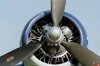
 

Attachments

  • images (2).jpg
    images (2).jpg
    8.4 KB · Views: 29
  • 5878148667_740fa40a9f.jpg
    5878148667_740fa40a9f.jpg
    39.1 KB · Views: 32
  • images (1).jpg
    images (1).jpg
    11.4 KB · Views: 31
  • images.jpg
    images.jpg
    7.9 KB · Views: 29
Don't have either. Like the sound of round engines better.
 
Here is some more:

SUBJECT: RADIAL-ENGINE PILOTS AND JET-ENGINE PILOTS

THE RADIAL-ENGINE AIRCRAFT:

Remember the days of piston engines in aircraft and airliners? Well, read
this fascinating account of how to start, fly and land one, it is just
wonderful and terrifying at the same time.

The R-3350 was the engine on the Douglas DC-7...times four...and the Lockheed
P2V Neptune 's......times two, plus many more.

Note: The AD6 is the US Navy version of the Douglas AD1 Skyraider

cid:[email protected]


Starting, take off and flying with the wonderful radial powered aircraft
(an AD-6)

RADIAL STARTING (R-3350 ENGINE ON AN AD-6):

Be sure you drain both the sumps. (You can fill your Zippo lighter while
you do this)
Look out the left side of the oily cockpit canopy and notice a very nervous
person holding a huge fire bottle. Nod to this person.

1. Crack throttle about one-quarter of an inch.
2. Battery on
3. Mags on
4. Fuel boost on
5. Hit starter button (The four bladed 13' 6" prop will start a slow
turn)
6. Begin to bounce your finger on top of the primer button.
This act requires finesse and style. It is much like a ballet performance.
The engine must be seduced and caressed into starting.

7. Act one will begin: Belching, banging, rattling, backfiring,
spluttering, flame and black smoke from the exhaust shooting out about
three feet. (Fire bottle person is very pale and has the nozzle at the
ready position).

8. When the engine begins to "catch" on the primer. Move the mixture to
full rich. The flames from the exhaust will stop and white smoke will come
out. (Fire bottle guy relaxes a bit) You will hear a wonderful throaty
roar that is like music to the ears..
Enjoy the macho smell of engine oil, hydraulic fluid and pilot’s sweat.
9. Immediately check the oil pressure and hydraulic gages.

10. The entire aircraft is now shaking and shuttering from the torque of
the engine and RPM of prop.
The engine is an 18 cylinder R-3350 that develops 2,700 HP.

11. Close cowl flaps to warm up the engine for taxi.

12. Once you glance around at about 300 levers, gauges and gadgets, call
the tower to taxi to the duty runway.

TAKE OFF IN THE AD-6:

1. Check both magnetos
2. Exercise the prop pitch
3. Cowl flaps open.
4. Check oil temp and pressure.
5. Crank 1.5 degrees right rudder trim to help your right leg with the
torque on takeoff.
6. Tell the tower you are ready for the duty runway.
7. Line the bird up and lock the tail wheel for sure.
8. Add power slowly because the plane (with the torque of the monster
prop and engine power definitely wants to go left).

9. NEVER add full power suddenly! There is not enough rudder in the
entire world to hold it straight.

10. Add more power and shove in right rudder till your leg begins to
tremble.

11. Expect banging, belching and an occasional manly fart as you roar
down the runway at full power. (I have found that the engine can make
similar noises)

12. Lift the tail and when it "feels right" pull back gently on the stick
to get off the ground.

13. Gear up

14. Adjust the throttle for climb setting

15. Ease the prop back to climb RPM

16. Close cowl flaps and keep an eye on the cylinder head temp.

17. Adjust the power as needed as you climb higher or turn on the super-charger.


FLYING WITH THE ROUND ENGINE:

1. Once your reach altitude which isn't very high! (about 8000 feet) you
reduce the throttle and prop to cruise settings.

2. The next fun thing is to pull back the mixture control until the
engine just about quits. Then ease it forward a bit and this is best
mixture.

3. While cruising the engine sounds like it might blow or quit at any
time. This keeps you occupied scanning engine gauges for the least hint of
trouble.

4. Moving various levers around to coax a more consistent sound from the
engine concentrates the mind wonderfully.

5. At night or over water a radial engine makes noises you have never
heard before.

6. Looking out of the front of the cockpit the clouds are beautiful
because they are slightly blurred from the oil on the cockpit canopy.

7. Seeing lightning in the clouds ahead increases the pucker factor by
about 10.
a. You can't fly high enough to get over them and if you try and
get under the clouds----you could die in turbulence.
b. You tie down everything in the cockpit that isn't already
secured, get a good grip on the stick, turn on the deicers, tighten and
lock your shoulder straps and hang on.
c. You then have a ride to exceed any "terror" ride in any
amusement park ever built. You discover the plane can actually fly side
wise while inverted.

8. Once through the weather, you call ATC and in a calm deep voice advise
them that there is slight turbulence on your route.

9. You then scan your aircraft to see if all the major parts are still
attached. This includes any popped rivets.

10. Do the controls still work? Are the gauges and levers still in proper
limits?

11. These being done you fumble for the relief tube, because you
desperately need it. (Be careful with your lower flight suit zipper)

THE JET-ENGINE AIRCRAFT:

Start a jet
1. Fuel boost on.
2. Hit the start button
3. When the JPT starts to move ease the throttle forward.
4. The fire bottle person is standing at the back of the plane and has no
idea what is going on.
5. The engine lights off---and---
6. That's about it.

Take off in the jet
1. Lower flaps
2. Tell the tower you are ready for takeoff. 3. Roll on to the duty runway
while adding 100% power.
4. Tricycle gear---no tail to drag---no torque to contend with.
5. At some exact airspeed you lift off the runway.
6. Gear up
7. Milk up the flaps and fly.
8. Leave the power at 100%

Flying the jet
1. Climb at 100%
2. Cruise at 100%
3. It is silent in the plane.
4. You can't see clouds because you are so far above them.
5. You look down and see lightning in some clouds below and pity some poor
fool that may have to fly through that mess.
6. The jet plane is air conditioned!! Round engines are definitely not.
Jet engines are not round? If you fly in tropical areas, this cannot be
stressed enough.
7. There is not much to do in a jet, so you eat your flight lunch at your
leisure.
8. Few gauges to look at and no levers to adjust. This leaves you
doodling on your knee board.
9. Some call girl friends on their cell phones: "Guess where I am, etc"

SOME OBSERVED DIFFERENCES IN ROUND ENGINES AND JETS:

1. To be a real pilot you have to fly a tail dragger for an absolute
minimum of 500 hours.

2. Large round engines smell of gasoline (115/145), rich oil, hydraulic
fluid, man sweat and are not air-conditioned.

3. Engine failure to the jet pilot means something is wrong with his air
conditioner.

4. When you take off in a jet there is no noise in the cockpit. (This
does not create a macho feeling of doing something manly)

5. Landing a jet just requires a certain airspeed and altitude---at which
you cut the power and drop like a rock to the runway. Landing a round
engine tail dragger requires finesse, prayer, body English, pumping of
rudder pedals and a lot of nerve.

6. After landing, a jet just goes straight down the runway.

7. A radial tail dragger is like a wild mustang---it might decide to go
anywhere. Gusting winds help this behavior a lot.

8. You cannot fill your Zippo lighter with jet fuel.

9. Starting a jet is like turning on a light switch---a little click and
it is on.

10. Starting a round engine is an artistic endeavor requiring prayer
(curse words) and sometimes meditation.

11. Jet engines don't break, spill oil or catch on fire very often which
leads to boredom and complacency.

12. The round engine may blow an oil seal ring, burst into flame, splutter
for no apparent reason or just quit. This results in heightened pilot
awareness at all times.

13. Jets smell like a kerosene lantern at a scout camp outing.

14. Round engines smell like God intended engines to smell, and the tail
dragger is the way God intended for man to fly.

16. Round engines have a tendency to make strange noises, especially at
night over water.
 
Round engines are cool, but if I am going to be around one all day I'll take a turbine please. Leave the rounds for the old guys without a shred of hearing left. Maybe that is why they like them it is the only thing loud enough for them to hear.
 
Note: The AD6 is the US Navy version of the Douglas AD1 Skyraider

cid:[email protected]


Starting, take off and flying with the wonderful radial powered aircraft
(an AD-6)

RADIAL STARTING (R-3350 ENGINE ON AN AD-6):


3. Mags on
4. Fuel boost on
5. Hit starter button (The four bladed 13' 6" prop will start a slow
turn).

That doesn't seem right. My recollection is that you waited for about 8 blades to go by before turning on the mags.

I count 10 blades to first fire in this video http://youtu.be/f5kNlb0prOE

This guy cranked it short bits for a couple revs then waited for about 8 blades http://youtu.be/QmFggcCdK8E

Others seem to wait longer http://youtu.be/TtZeeKfplEo

But, I am old and senile, so I could be wrong.
 
But, I am old and senile, so I could be wrong.

No your not. :)

we counted prop blades equal to the gear reduction to give 1 revolution of the crank.

all pistons must go to TDC prior to turning on the mags, it just may have a prime left over from a previous start/shut down. It does real damage when a top cylinder fires and forces a bottom cylinder past a hydraulic lock. That bends that rod, then when that cylinder is at BDC the piston is pulled too far out of the cylinder and the crank balance weights will smash it leaving the rod and wrist pin to trash the cylinder.
 
As a new pilot one of the most amazing things I saw was an F4 Corsair starting and then the chest rattling sound as it took off.
 
Some one turn the mags on too soon.
 

Attachments

  • Families 001.jpg
    Families 001.jpg
    71.3 KB · Views: 38
I used to get paid to coax eight R-2800s to life on a couple of DC-6s. It was a two man job. :)


Jim R
Collierville, TN

N7155H--1946 Piper J-3 Cub
N3368K--1946 Globe GC-1B Swift
 
As a new pilot one of the most amazing things I saw was an F4 Corsair starting and then the chest rattling sound as it took off.

The F-8 Crusader will impress you when it goes into burner. It doesn't whine :)
 
Round engines are cool, but if I am going to be around one all day I'll take a turbine please. Leave the rounds for the old guys without a shred of hearing left. Maybe that is why they like them it is the only thing loud enough for them to hear.

The only people in love with radial engines are those the never tried to make a living with one.
 
Back
Top