Pump House Heat (NA)

Daleandee

Final Approach
Joined
Mar 4, 2020
Messages
8,354
Display Name
Dale Andee
I have a well pump and run a drop cord and a light/lamp or two in it when the temps get below freezing. I've looked at a couple of better ways to do this. Here's one:


Easy enough. Is there a better idea that I've missed? Is it a good idea to connect to the same power that feeds the pump and relay or do I need a separate electrical feed line for a heater? We don't get too many days below freezing but I like to be proactive ...
 
I'm assuming you're running a pressure tank. Maybe just crack a faucet or hose bib slightly when temps get below freezing? That's what we do here.
 
I'm assuming you're running a pressure tank. Maybe just crack a faucet or hose bib slightly when temps get below freezing? That's what we do here.

We've done that on really cold nights. Perhaps I'm being overly cautious ...
 
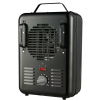
Around my area most people just used a 100 watt incandescent light bulb wired from the same circuit as the pump. Now that they are virtually impossible to find most are switching to small space heaters or heat lamps on thermostats.
 
When we bought our house there was a light bulb connected in the pump house. I was burned out, we never replaced it, and in the 30 years we've lived here (CT, where temps sometimes get down below 0°F) we never had a problem with it freezing. The pipes in a house are another matter; we leave a faucet dripping below 10°F.
 
Around my area most people just used a 100 watt incandescent light bulb wired from the same circuit as the pump. Now that they are virtually impossible to find most are switching to small space heaters or heat lamps on thermostats.

True that incandescent bulbs are almost impossible to find. Appliance bulbs work but they are only 40 watts so I put in a couple of them. But from what I'm reading this may not even be needed. But I'm a better safe than sorry kinda guy ...
 
You could certainly do the heat trace. We use that on water and chemical pipes where it gets cold enough. Put insulation over the pipe and wire. Still probably overkill.
 
They used to make mechanical, line voltage, low temperature thermostats. Not necessarily cheap. But they could be used to switch a small electric heater on at say 35 degrees. We used one with a wall heater in the bathroom of a club I belonged to, and it saved a significant amount of money compared to either leaving a small heater running 24x7 or a regular thermostat set down to the typical 50 or so degrees. Probably obvious, but the temperature drop to cost ratio isn't linear...even up here in Albany a building gets enough heat from the sun that it doesn't take much to bring it above freezing, and much less energy to maintain that than 50F.

Quite possibly overkill for your situation, no idea.
 
If you can source, scrounge, or steal one (ok not the last part), but early vintage coiled spring and mercury bulb switch thermostats can be tuned to about anything from -10F to a few hundred degrees F and can seemingly last for far longer than you would ever have to worry about in your lifetime.
 
My 3 well pumps are /were 240 volts so I’d double check before doing any wiring for 110v light or heat tape. I’ve had wells for 48 years with no supplemental heat (routinely in the teens at the house at 3,000 feet) but I suppose every installation is unique
 
I have a well pump and run a drop cord and a light/lamp or two in it when the temps get below freezing. I've looked at a couple of better ways to do this. Here's one:


Easy enough. Is there a better idea that I've missed? Is it a good idea to connect to the same power that feeds the pump and relay or do I need a separate electrical feed line for a heater? We don't get too many days below freezing but I like to be proactive ...
Didn’t read the link, but what you asked about “…a separate electrical feed line for a heater…” doesn’t ensure protection. Either breaker, the pump breaker or the separate one you use for the heater could trip. Or there could be a total power outage. Back up generator?? Hopefully it kicks in. Is this stuff in a shed protected from the wind? You could maybe burn some candles near the pipes when below freezing temps are expected. Or turn the pump off and drain the lines if possible.
 
I have my well pump, pressure tank etc in my basement and ran the water lines to the well 6’ deep (ground freezes to 4’ or less each year). It serves double duty, aside from not freezing, I can tell if there is a leak any where on the pressurized side (I can faintly hear the pump run. During the day it’s not noticeable, but at night when all is quite it should not be cycling on).
 
So ironically I just setup an incandescent bulb in my tiny well shed yesterday as a probably not necessary but just in case thing. The only bulb my local store had that was incandescent was a bug bulb (same as incandescent but yellow and meant for outdoors and is supposed to not attract bugs). My shed fortunately has a electrical outlet, so I added one of those $10 wifi outlets so I can just turn the bulb on remotely when needed, and since the outlet reports energy usage, I can tell when the bulb needs to be replaced.
 
I have a small pump house out in the barn. I use a 100w ceramic reptile heater controlled by a snap switch that comes on at 30 degrees and off at 40. In another somewhat larger automatic waterer cabinet that's out in the pasture, I use a digital temp controller with a relay hooked to a heating element I salvaged from an old automatic bread maker. I ran a buried power cable out, but you could use one leg of the pump relay.
 
What about the plugs/thermostats designed for roofing cables (used to prevent ice dams)?
 
I ran a buried power cable out, but you could use one leg of the pump relay.

I agree. I believe pulling 100 watts from the relay wiring won't be a concern and if using the heat tape referenced in my OP the load would be about 1/2 that much.
 
I worry about depending on an incandescent bulb which can burn out. I used a low wattage stick on pad for the pressure tank and pipe tape like that listed above.

I used a freeze thermostat to kick things on at about 40F so I don't have to think about it or waste electricity.
 
I use this in my insulated well house.

1765744096734.png

17 years and still heating fine.

The well house also serves as an emergency shelter and heat in case I lock myself out of the house.
 
Back
Top