Sounds like you are pretty familiar with the TBM record. But maybe missed some.
I did not include foreign accidents for either type, since the data is often spotty or missing... And I was looking at NTSB reports. Looks like you're using aviation-safety.net but I can't find a way to search on type (the type index doesn't have anything for the TBM)?
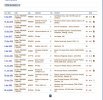
and 5 TBM 850 series fatals, not sure how many were G1000's but I think most. Here is what I have for the TBM9's and what ASN has. So the GX000 record in the TBM series has been a little spotty. Similar flight hours to the Piper M GX000's, but 4+ times the fatals.
Where are you getting flight hour data?
TBM 900, PP-LIG, 2 fatal 2/1/2016 Santa Catarina spatial D?
This is a great example of "not enough data to conclude anything at all."
N960LP 3/30/2024
TBM 960 N960LP, 2 fatal, 3/30/2024 Truckee, LOC
You listed that one twice... That's the 960 I referenced as well. I don't know how they managed to get around the protections other than a death grip on the yoke that included the AP DISC or simply overpowered the servos. Would have been fine if he just let go. Also, this same pilot in the same scenario in an M series would not have fared any better.
TBM 900, N900KN, 9/5/2014, port Antonio Jamaica, 2 fatal, pressurization issue
This is the one I referenced as well.
In addition to the foreign fatal, I was only looking at fatal accidents since that's what you'd mentioned before.
I do believe for reasons I mentioned above, the TBM requires more pilot. From the ground up it was built for speed. The Piper has always been built for the owner pilot, thus has more forgiving handling and more automation.
I do not accept these as true. The TBM was also built for the owner pilot. It flies like a big Mooney, which makes sense since it started its life as the Mooney 301.
For instance in the first TBM900 fatal, where the pilot accidentally or intentionally turned off the pressurization related to an erroneous CAS message, the plane depressurized with fatal consequences.
The CAS message was not erroneous, and the pilot did not turn off the pressurization. A sensor showed an overheat and shut off bleed air. I'm not sure what the first CAS message would be in that scenario because they fixed this issue before I started flying TBMs, but the suspicion is that the pilot did not clear the Master Caution/Master Warning when it happened so when the
CABIN PRESSURE CAS message came up, there was no new Master Warning and he didn't notice it. And since it was a slow depressurization, he may have already gotten stupid before the warning even came up. The fact that there was traffic below him and ATC only cleared him down to 250 also contributed, as that was the last instruction he was together enough to follow. Had he gotten an immediate descent to 10,000, or if he had declared an emergency in the first place, he'd likely be fine.
This does not happen in a Piper M.
It doesn't happen in a new TBM either. If
CABIN PRESSURE is annunciated, the pilot has 15 seconds to respond and do the emergency descent on their own. Otherwise, the plane will take over and initiate a descent to 15,000. If the pilot doesn't respond further within two minutes, the autoland function is activated and takes the plane to the ground.
So in the Piper M, had they turned off the pressurization, the cabin would have only bled down to 12,000 feet, which would have saved their lives.
That is, if none of those systems malfunctioned... And I believe the new Pipers likely have the exact same Garmin software for dealing with a cabin pressure emergency that the TBMs do, so again, this wouldn't happen in a newer plane.
There are a lot of things like this built into Pipers.
Lots built into the TBM as well, including some of the very same ones you mention. Automatic fuel tank switching, turning things off on the ground, etc.
Inertial separator isn't going to kill anyone, it's just going to cost money if you screw it up a lot. It also allows for cooler temps and increased performance. Six of one, half a dozen of the other if you ask me.