
Rebel Lord
Line Up and Wait
So brakes went out on the right side. Local Mx said the master cylinder is leaking internally. Is this something that can be fixed by swapping gaskets or does it need to be replaced? What’s the price tag for this repair?


Needs new internal seals, which means that all the seals in both cylinders are probably old and failing.So brakes went out on the right side. Local Mx said the master cylinder is leaking internally. Is this something that can be fixed by swapping gaskets or does it need to be replaced? What’s the price tag for this repair?
How much we talking here?Needs new internal seals, which means that all the seals in both cylinders are probably old and failing.
Welcome to the world of "cheap" old airplanes.
Depends on which master cylinder you have (Piper used the Gar-kenyon 17000 and a few different Cleveland models pretty interchangeably, and they take different seals), but on the order of $40 for the seal kit, plus labor for R&R, rebuild and bleeding. And in for a penny, in for a pound... what condition are the other ones in, when was the last time the hoses were replaced, what about the state of the o-rings in calipers, etc ... most of the time I've been asked to do this job, the brake hoses hadn't been changed since the factory, there is external leakage on the hand brake and other master cylinders, calipers are often leaking, etc.How much we talking here?


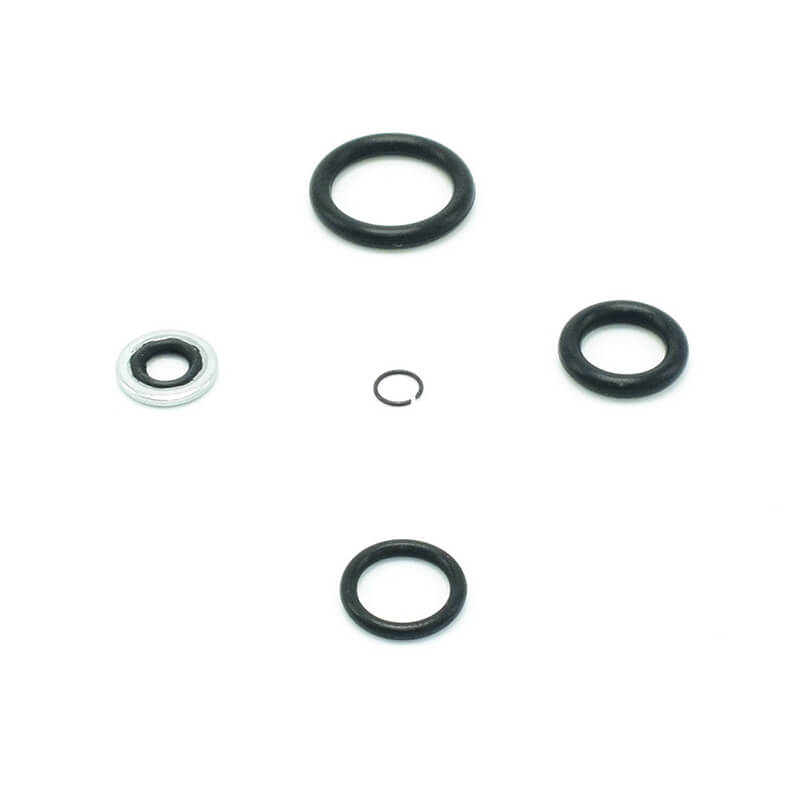


Ryan who posted above works with me on my plane so he covered about everything. I had to replace all my hoses which came to about 11 of them if I recall. I also had to rebuild each master of which there are 5 including the hand brake. I have dual brakes. I don’t remember exactly how much it cost but the key thing is to crawl up under there with your camera and take pictures of all your master cylinders with the part numbers before you order the kits. I had three Cleveland and two gar Kenyon but the kits weren’t that expensive at all. The 11 hoses I think ran between 4-5 hundred. The labor was free since I did it under supervision of Ryan. There was a lot of cussing involved for sure.paging @Timbeck2...
It's like those mystery surprise toy eggs. Could be a nickel of o-rings, or the whole thing is chewed up inside since nobody has ever looked at it since you were in diapers and it'll run you parts and labor and AOG time.
One path is to do things serially: take it apart, see what it needs, order parts, fix it, put it back together, bleed, parry, dodge, spin. With luck, you trade some time for money. Without luck, you fixed one part of a system, and then will be back later to fix the hoses, calipers...
Another path is to snag a good master cylinder off ebay aviation and swap, and do the hoses while you're at it. More money, less risk, less downtime overall. Maybe you can break even if the old unit can be overhauled.
You got away easy. I bled the brakes on a Seneca after all five masters were rebuilt. Same as Cherokee system. It took two of us a very long time over a couple of days. You need a pressure bleeder forcing the 5606 into the calipers, and have someone in the cockpit working the masters back and forth to expel all the air. Air gets trapped in them, and it also gets trapped in any high spot in the brake lines, especially due to the dihedral of the wing, with the brake line angled upward for a long ways before it descends to the wheel. Pushing the oil either direction is a pain because of that.and bled the brakes (4 hours).
I can do it in 5 minutes too. Bottom up. See above for the difference with a Piper.I can bleed brakes on a 150 in 5 mins. How do you do it, bottom up or top down?
You got away easy. I bled the brakes on a Seneca after all five masters were rebuilt. Same as Cherokee system. It took two of us a very long time over a couple of days. You need a pressure bleeder forcing the 5606 into the calipers, and have someone in the cockpit working the masters back and forth to expel all the air. Air gets trapped in them, and it also gets trapped in any high spot in the brake lines, especially due to the dihedral of the wing, with the brake line angled upward for a long ways before it descends to the wheel. Pushing the oil either direction is a pain because of that.
Piper used a lot of hose, too, instead of more aluminum tubing, and the compressibility of the rubber hose liner makes the brakes spongy to begin with. Any air makes it much worse.
I can do it in 5 minutes too. Bottom up. See above for the difference with a Piper.

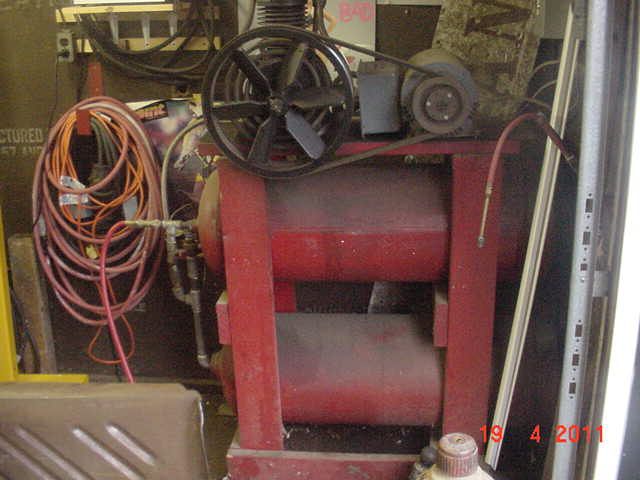
I Got this pressure bleeder from a auto body shop that was closing up in 1980 when my car was there unfinished. The owner said he thought the diaphragm was shot and was tossing it in the garbage. I opened it up and the diaphragm was fine, intact. There was a steel dish/ring that popped off the diaphragm that I snapped back on the diaphragm. Been using it ever since. I have overhauled it at least 3 times since then since most brake fluid is corrosive. The original diaphragm is still good today.You got away easy. I bled the brakes on a Seneca after all five masters were rebuilt. Same as Cherokee system. It took two of us a very long time over a couple of days. You need a pressure bleeder forcing the 5606 into the calipers, and have someone in the cockpit working the masters back and forth to expel all the air. Air gets trapped in them, and it also gets trapped in any high spot in the brake lines, especially due to the dihedral of the wing, with the brake line angled upward for a long ways before it descends to the wheel. Pushing the oil either direction is a pain because of that.
Piper used a lot of hose, too, instead of more aluminum tubing, and the compressibility of the rubber hose liner makes the brakes spongy to begin with. Any air makes it much worse.
I can do it in 5 minutes too. Bottom up. See above for the difference with a Piper.
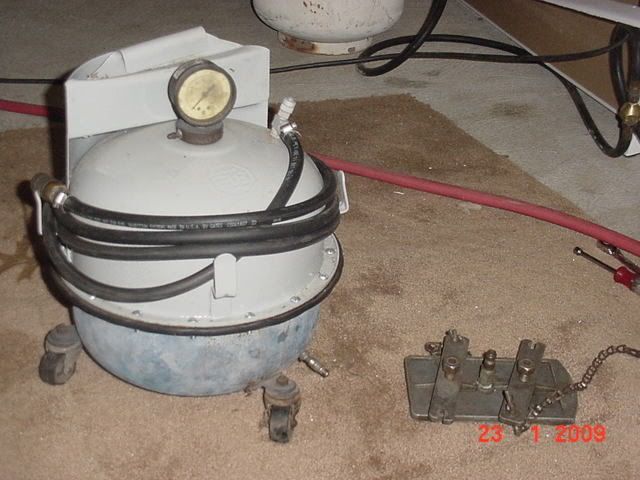
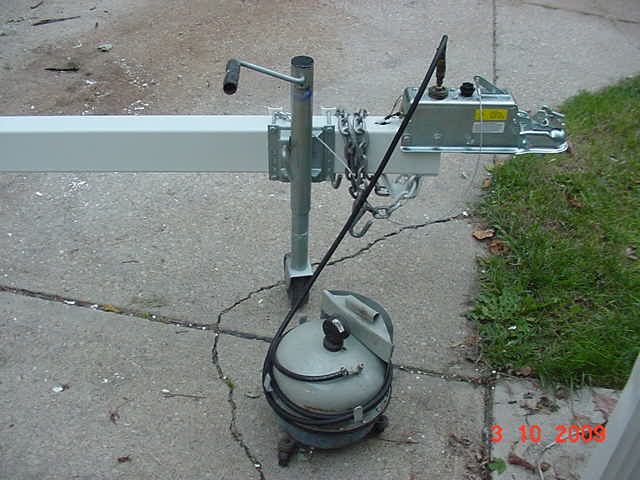


I made one from an old 25-pound propane tank. No diaphragm, so one has to watch that the fluid level doesn't get so low that you start pushing air into the system. Grrr. All that work...It is very useful tool and I have used it a lot in the last 40 years. I would not hesitate to clean it out and use it with 5606 if I had a piper.
Nice, I just got back from driving a propane tanker truck around town. I have several air tanks built out of propane tanks.I made one from an old 25-pound propane tank. No diaphragm, so one has to watch that the fluid level doesn't get so low that you start pushing air into the system. Grrr. All that work...
any suggestions on this? The maintenance manual talks about using the hand brake to pump it, but my Seneca IV doesn't have a handbrake, just a parking brake knob that activates a cam in the nose firewall.You got away easy. I bled the brakes on a Seneca after all five masters were rebuilt. Same as Cherokee system. It took two of us a very long time over a couple of days. You need a pressure bleeder forcing the 5606 into the calipers, and have someone in the cockpit working the masters back and forth to expel all the air. Air gets trapped in them, and it also gets trapped in any high spot in the brake lines, especially due to the dihedral of the wing, with the brake line angled upward for a long ways before it descends to the wheel. Pushing the oil either direction is a pain because of that.
Piper used a lot of hose, too, instead of more aluminum tubing, and the compressibility of the rubber hose liner makes the brakes spongy to begin with. Any air makes it much worse.
I can do it in 5 minutes too. Bottom up. See above for the difference with a Piper.
Best to let Piper mechanics do it. It's hard enough for those guys, never mind the owner. A pressure bleeder is almost mandatory.any suggestions on this? The maintenance manual talks about using the hand brake to pump it, but my Seneca IV doesn't have a handbrake, just a parking brake knob that activates a cam in the nose firewall.

The problem is that compared to most other brakes, the Pipers have their cylinders inverted. Long story short it makes it harder to get air out of it.Best to let Piper mechanics do it. It's hard enough for those guys, never mind the owner. A pressure bleeder is almost mandatory.
well "duh"- of course we'd like to know!The problem is that compared to most other brakes, the Pipers have their cylinders inverted. Long story short it makes it harder to get air out of it.
You can crack the lines, likely it won't get it firm. A pressure bleeder normally does not get the air out either. Even on conventional brakes it doesn't. A 172's pedals would be very firm even from a hand pump. Our DA-20s do not get firm just from a pressure bleeder, and a Piper will not get firm either.
If anyone is interested I'll share how we get Piper brakes firm...well, the firmest I've ever seen them at least.
Seriously, do I have to subscribe and pay for this premium content?well "duh"- of course we'd like to know!

And also among the cheapest and easiest to rebuild. Maybe $20 in o-rings and c clips. Once I rebuilt mine, I was embarrassed that I had ignored them for so long.Brake masters are probably the worst maintained major component in GA airplanes. When you rebuild one you’ll recognize how bad the other one is. Rebuild both sides.
Last time I did this I read online about some tricks and they worked. If you're doing one cylinder you'll likely need to bleed that side of both pedal sets, e.g. left on the pilot, left on the co-pilot since they share the same system. Figured that's known but just explicitly saying so.well "duh"- of course we'd like to know!
