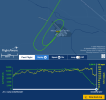
Hmm, being at 112 knots groundspeed and 450 feet above runway elevation crossing the threshold... It is not a great surprise that did not work out.
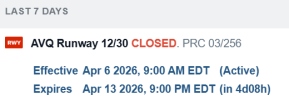
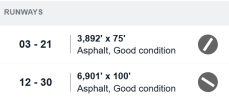
I have not checked the weather at the time of the accident, but the fact that he choose the shorter runway probably means that winds were favoring that one. Which might would increase his TAS, and would mean he was outside of flaps speed.
The accident was at 0010z
The wind was calm to light and variable, to favoring the north, per the METARs around that time.
Closest one:
KAVQ 090015Z AUTO 00000KT 10SM CLR 33/M04 A2980
An airport elevation of 2032 makes for a density altitude of ~4600’ at the surface in those conditions. That’d impart about 7% additional TAS to any given CAS. In a calm wind, 112 knots GS over the numbers would be about 104 indicated at that density altitude.
The ADS-B reported altitude of 2200’ over the numbers given a local altimeter of 29.80 could be closer to 2080’ absolute (and presumably indicated) altitude, but the resolution we see is in 100’ increments, so +- 50’ to that.
The runway 3 threshold is displaced 494’ for an LDA of 3398’. A two-box PAPI serves the runway, set at a 2.91° glidepath and a TCH of 53’.
With a TDZE of 2026 on that runway, the accident airplane may have crossed the threshold on the nominal glidepath at roughly the designed TCH (2026+53=2,079), but back to the +-50’ due to lack of resolution.
It also could be noted that the last pattern was fairly tight, downwind was not parallel - it converged and left a very tight base. It looks as if they turned about 1/2 mile final and overshot, which could have complicated things that followed.


 nypost.com