NFO jobs (RIO, WSO, etc..)

Brad W

En-Route
Joined
Nov 19, 2019
Messages
2,632
Location
NE Florida
Display Name
BLW2
Home Airfield
KSGJ, KHEG
OK, I was a Naval Flight Officer like Ward, in fact, Ward was an instructor at VT-86 in 88 when I was a student and I worked with him when I was stashed in Scheds after winging. We never flew together as he trained studs in the RIO track and I was the TN track. If you think an NFO flying as an integral part of the crew is not flying then you really don't understand multi-crew airplanes. I suppose you could say "Fly-in" but the airplane is not going flying without us and it's sure not going to perform the respective mission without us.

The media has pretty much no idea that there are people other than pilots so whether Ward told them pilot or they just assumed anyone with gold wings is a pilot I can't say but it's more common than not for the media to make that mistake.

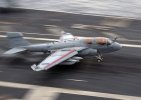
In the EA-6B I flew we were expected to have all the same knowledge as the left seat. We all took the same annual NATOPS evaluations (although as NFO's in the Prowler we also had to do a back seat weapons system NATOPS check the pilot didn't) and we all had instrument ratings and did instrument checks so we could qualify for dual piloted mins. NFO's are also expected to get the same Mission Commander, Functional Checkflight and later, Strike Lead quals as a pilot. Other than the actual flying you better have all the same knowledge as the Aviator.

If you think I didn't "fly" for my 2200 hours and multiple deployments that's fine but it's merely semantics and not reality.

Ward and I were both of the era that without perfect vision you were not going to go pilot and being an NFO was a great career. I agree, Ward is a bit tiresome in his "I know" but no worse than many of the other retired service guys with channels and occasionally he has interesting guests.

um, I've never understood him to misrepresent anything. If someone else did at a newspaper, well isn't that on that reporter...not on Ward?

Nice reply @Pugs !

and to add to the understanding of the crewed cockpit.... my understanding is that in the training group (RAG) the experienced RIOs would fly with the inexperienced pilots. My view of it is sort of like a CFI does during a checkout for us little bugsmasher pilots. I don't view @Pugs job to be a trivial thing to be dismissed at all. In fact, from what I can tell, in many ways it was the more difficult job.
@Pugs I've been thinking out this side conversation this afternoon, and was thinking that it could make an interesting discussion on it's own. I was mulling over several questions...

Seems like it's probably a pretty hard job, and it doesn't get the same glory as a pilot.

Do I have the correct, about an experienced RIO being paired with an inexperienced pilot, and all of that?

The other line of questioning I was mulling over is about the different roles an NFO might have. I know that there's some difference between a RIO and a WSO, but I'm not clear on what that is.... and then there's the guys in the back seats of larger planes. The EA-6 you mentioned for example. And then there's the guys in the back of something like a P-8 or the old P-3. Probably NFO crew in C-130's and other large aircraft too. How do those jobs look in comparison?..and the training tracks for them?
 
The S-3 was designed for two Aviators, front seat, one Flight Officer (back right) and a Aircrewman (back left).

By the time I came along we flew it one Aviator, two Flight Officers and the Aircrewman.

While NFOs, the guy in the front was called a COTAC (co tactical officer) the guy in the back was the TACCO (tactical officer).

The Mission Commander could be any of the three, and was a designation similar to Pilot in Command if you will. It was usually the guy in the back right.

The Aircrewman rate was AW, or Air Warfare Sensor Operator (SENSO), specializing in grams analysis, or deciphering frequency heard in the water. Also specialized in operating the ISAR radar, MAD boom and FLIR.

The only guy underutilized in the jet was me. The other guys were busy like one legged men in an ass kicking contest.
 
The other line of questioning I was mulling over is about the different roles an NFO might have. I know that there's some difference between a RIO and a WSO, but I'm not clear on what that is.... and then there's the guys in the back seats of larger planes. The EA-6 you mentioned for example. And then there's the guys in the back of something like a P-8 or the old P-3. Probably NFO crew in C-130's and other large aircraft too. How do those jobs look in comparison?..and the training tracks for them?
In my own experience I can only speak to the Prowler. Right front seat (Electronic Countermeasures Officer 1 aka ECMO 1) we did all the Nav (INS, GPS, Radar, TACAN) ran the USQ-113 VHF/UHF comms jammer (which was later used to jam IED triggers), did the HARM Missile designation and package validation, and the standard comms crypt and we did all the comms for the plane to the ship, ATC, E-2 AWACS whatever.

The two back seats (ECM 2 and 3) were functionally identical and we rotated among them so on missions we usually had one seat do the ESM and Jamming work and one do the HARM missile programming (which was not trivial). We both had oscilloscopes to listen to look at and listen to raw ESM to ensure what the computer was telling us was correct. We also had the HF radio (rarely used) and another UHF radio with separate crypto to talk to other ESM assets like the RJ or EP-3. Later we also flew with some terminals to allow us to pull down overhead SIGINT which was helpful when you had a long transit to the mission space.

The F/A-18G guys only have the two folks so I understand the system is much more automated and the pilot has to a lot more mission work. In the Prowler he was always the aircraft commander (and sometime the mission commander) and his job was to fly with very little actual mission work. The best ones cared though and made an effort to learn what we were doing in back.
 
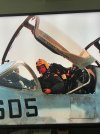
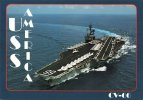
CV-66, AirWing 1, late 80’s checking in. Many NFOs made the transition to piloting, military or civilian.
 

Attachments

  • IMG_1546.jpeg
    IMG_1546.jpeg
    5.3 MB · Views: 10
  • IMG_1271.jpeg
    IMG_1271.jpeg
    507.7 KB · Views: 10
  • IMG_0164.jpeg
    IMG_0164.jpeg
    61.9 KB · Views: 10
Interesting convo. When I was a Junior at tOSU in 1979, I went into the Navy recruiting office, and looked into a program where you did part of basic between Jr and senior year, completed basic after senior year graduation, and then off to flight school. I think it was called AVROC. Despite scoring 9,9,9 on the prequal flying test, I was slated for NFO, WSO or RIO due to eyesight. BUT…. 3 LBs overweight for height. With the Navy on a big weight kick, they wanted to hold off on submitting paperwork until I lost the weight and could officially make weight. Over the next 6-8 weeks, I had offers relative to grad school, and the rest is history.
 
Then the door swung wide open during the buildup in the Reagan term(mid 80’s). There have been times when you could have walked above water & have a hard time getting in. ‘Class 18-85 marching into chow’.
 
NFO's are pretty good sticks in my experience.
 
Last edited:
Then the door swung wide open during the buildup in the Reagan term(mid 80’s). There have been times when you could have walked above water & have a hard time getting in. ‘Class 18-85 marching into chow’.
yeah, that's intersting to me. Hits home in a way. I graduated college December 1989. Was talking to recruiters and considering CG or Navy aviation. Chickened out though becasue by then...my understadning anyway.... was that they were downsizing the military and I figured the flight slots would probably go to academy grads...and at that point I'd never flown in a small plance, didn't know if I could hack it....and didn't want to commit to 6 years or whaver and get stuck in some job in the bowels of a ship that I really didn't want to do.
I've often wondered what would have been.
 
The F/A-18G guys only have the two folks so I understand the system is much more automated and the pilot has to a lot more mission work. In the Prowler he was always the aircraft commander (and sometime the mission commander) and his job was to fly with very little actual mission work. The best ones cared though and made an effort to learn what we were doing in back.

I’d say this is a pretty accurate description. Same as -B or any naval aircraft, the sole pilot onboard is always the aircraft commander. Mission commander is a shared qual though, and it can be an EWO, just like it could be an ECMO in the past. During dedicated AEA, yeah the pilot is more busy with the mission related stuff than the prowler single anchors were. It gets more spicy when you are both doing different things, think A/A and AEA at the same time. I’d say that’s the highest task loading, and somewhat like doing FAC(A) or RMC in the VFA world……lots of stuff going on, lots of comms, not much time for crew coordination, so you need to have a pretty good crew dynamic/perceive more with less talking. I’m sure the prowler was similar at times.
 
Back
Top