New lens or new camera

JOhnH

Touchdown! Greaser!
Joined
May 20, 2009
Messages
15,163
Location
Florida
Display Name
Right Seater
Home Airfield
KOMN
I don't know too much about cameras.

My wife has a Canon EOS30D, which in it's day was a pretty good DSLR. Her longest lens is a zoom 28x135, which used to be fine for her. But she has taken up bird watching and would really like a longer lens.

But when I look up longer lenses, the prices are amazing to this point and shoot kind of guy.

Some other bird watcher was telling me that he bought a simple camera with a huge MP rating so he can get shots of distant objects and crop the picture down to small distant objects. :dunno:

Her birthday is coming up and I would like to either get her a new lens or a new camera. What is the best I can do in the sub $1,000 range? (That price is just a starting point; I don't know if it is being cheap or extravagant).
 
For birds you need at least a 400mm lens and you want it to be bright (low aperture number, large diameter) because often you are shooting into shadows.. After my neck surgery I could no longer carry the weight of my old Nikkor 400-f2.8 EDIF lens, and it bummed me out because I like birds as well. I now use a Sony G 70-400 f4-5.6 lens on a cheap a33 body, 1/3rd the weight, and the electronic image stabilization gives me the same stability effect as the brighter lens in marginal and low light conditions.

You will not find what you want in an OEM lens for under $2000, however IME Sigma makes a very high quality aftermarket lens, and you can get the 120-400 around $1000.
http://www.amazon.com/Sigma-120-400...434804988&sr=8-1&keywords=Sigma+120-400+canon

If she wants to change bodies as well, Sigma makes it in most all mounts.
 
Last edited:
I don't know too much about cameras.

My wife has a Canon EOS30D, which in it's day was a pretty good DSLR. Her longest lens is a zoom 28x135, which used to be fine for her. But she has taken up bird watching and would really like a longer lens.

But when I look up longer lenses, the prices are amazing to this point and shoot kind of guy.

Some other bird watcher was telling me that he bought a simple camera with a huge MP rating so he can get shots of distant objects and crop the picture down to small distant objects. :dunno:

Her birthday is coming up and I would like to either get her a new lens or a new camera. What is the best I can do in the sub $1,000 range? (That price is just a starting point; I don't know if it is being cheap or extravagant).
I have a number of good lenses from sigma and tamron. There is also several previous Nikon bodies as well. You can always find upgrades. In my mind, it depends on how you use it. The pocket autos have great optical zooms which make them far lighter than a 35mm with a 600 mm lens.
She might like the Nikon P series for that reason.
Her call.
 
I'm your price range, the tamron, 150-600 is the best bang for buck with birding in mind.

Sent from my SCH-R970 using Tapatalk
 
I'm your price range, the tamron, 150-600 is the best bang for buck with birding in mind.

Sent from my SCH-R970 using Tapatalk

Kinda dark is the only problem with all the f 6.3s (Sigma optical quality is also superior to Tamron, and they have a 600 6.3 as well). With the the high quality images available on the digital bodies, I find that a bit shorter, faster, lens allows the cropping ability to end up with a better image on the same crop. You just can't replace light down the lens when it comes to image quality and saturation.
 
^ spot on answers.

And your friend using the big picture / crop method is going to end up with some lousy, blurry photos.

Taking a giant photo and cropping is no substitute for the reach of a long lens.
 
Then Tamron 150-600 is probably the best " bang for you buck" right now, as mentioned above.

Henning's reply is wrong now given newer cameras like the Canon 5D3 and even more so, the new 7D2 which have good noise characteristics even at high ISO. A brighter lens does help, but it also costs a lot more and is also a lot heavier if she carries it around. People get great shots even though they don't have a white f2.8 lens.

If she has a feeder set up, she can get great results with a 200 mm lens.

I also suggest looking at http://photography-on-the.net/forum/ . It is free to join and a good group with a good mix of amateurs and pros. They have a bird section so she can see what can be done.

To show how good modern camera are at hig ISO, this image of the northern lights from a passenger jet was ISO 51200 and came out pretty good. There is some noise but acceptable. https://flic.kr/p/saKbLa
 
Last edited:
Also, before you drop real money on glass, you might consider renting what you've got in mind. Try before you buy. Second, check sites like keh.com for used gear. I've bought thousands of dollars in gear from keh and find their ratings are very trustable, to the point of buying a 'good' lens that shows up pristine and nearly new.
 
Also, before you drop real money on glass, you might consider renting what you've got in mind. Try before you buy. Second, check sites like keh.com for used gear. I've bought thousands of dollars in gear from keh and find their ratings are very trustable, to the point of buying a 'good' lens that shows up pristine and nearly new.

For renting a lens, I find www.lensrental.com to be very good. Their blog is often worth reading too.
 
I don't know too much about cameras.

My wife has a Canon EOS30D, which in it's day was a pretty good DSLR. Her longest lens is a zoom 28x135, which used to be fine for her. But she has taken up bird watching and would really like a longer lens.

But when I look up longer lenses, the prices are amazing to this point and shoot kind of guy.

Some other bird watcher was telling me that he bought a simple camera with a huge MP rating so he can get shots of distant objects and crop the picture down to small distant objects. :dunno:

Her birthday is coming up and I would like to either get her a new lens or a new camera. What is the best I can do in the sub $1,000 range? (That price is just a starting point; I don't know if it is being cheap or extravagant).

You do need a longer lens, as Henning notes, 400 mm is about right. IIRC, that camera has a crop sensor, so a 300 mm lens will get you pretty close. You'll also want a good tripod or image stabilization with something that long.

Also, I think you'll find the results less than satisfactory using digital zoom/crop as opposed to optical zoom. Digital zoom also shows more of the noise and artifacts in the sensor system (as well as the lens), optical minimizes the camera artifact. Think of it like zooming a film negative in an enlarger - the grain increases as you zoom more.

Highly recommended to go the lens route. Even a 2x lens extender is better than digital zoom.

Also, I think the 30D has a crop sensor. A full-frame sensor will work better for digital zoom.

For birds you need at least a 400mm lens and you want it to be bright (low aperture number, large diameter) because often you are shooting into shadows.. After my neck surgery I could no longer carry the weight of my old Nikkor 400-f2.8 EDIF lens, and it bummed me out because I like birds as well. I now use a Sony G 70-400 f4-5.6 lens on a cheap a33 body, 1/3rd the weight, and the electronic image stabilization gives me the same stability effect as the brighter lens in marginal and low light conditions.

You will not find what you want in an OEM lens for under $2000, however IME Sigma makes a very high quality aftermarket lens, and you can get the 120-400 around $1000.
http://www.amazon.com/Sigma-120-400...434804988&sr=8-1&keywords=Sigma+120-400+canon

If she wants to change bodies as well, Sigma makes it in most all mounts.

An f4.0 lens will work well with the newer bodies - a number of pros have moved to the Canon 4.0L lenses. The new sensors are remarkably low-noise - I don't see real noise until I'm above about 3200 ISO on my 5D-III. The Canon 7D is noisier - it's obvious above 2500-3000 ISO. Makes ambient light much better for shooting, and allows the 4.0L lens.

BUT the 30D is an older sensor and probably will be too noisy at lower ISO ratings.

Also, before you drop real money on glass, you might consider renting what you've got in mind. Try before you buy. Second, check sites like keh.com for used gear. I've bought thousands of dollars in gear from keh and find their ratings are very trustable, to the point of buying a 'good' lens that shows up pristine and nearly new.

This.
 
I think the answer depends on if you ever want to see her lady parts again -- ever. :yesnod:

You know what you have to do....:rollercoaster:
 
You do need a longer lens, as Henning notes, 400 mm is about right. IIRC, that camera has a crop sensor, so a 300 mm lens will get you pretty close. You'll also want a good tripod or image stabilization with something that long.

Also, I think you'll find the results less than satisfactory using digital zoom/crop as opposed to optical zoom. Digital zoom also shows more of the noise and artifacts in the sensor system (as well as the lens), optical minimizes the camera artifact. Think of it like zooming a film negative in an enlarger - the grain increases as you zoom more.

Highly recommended to go the lens route. Even a 2x lens extender is better than digital zoom.

Also, I think the 30D has a crop sensor. A full-frame sensor will work better for digital zoom.


An f4.0 lens will work well with the newer bodies - a number of pros have moved to the Canon 4.0L lenses. The new sensors are remarkably low-noise - I don't see real noise until I'm above about 3200 ISO on my 5D-III. The Canon 7D is noisier - it's obvious above 2500-3000 ISO. Makes ambient light much better for shooting, and allows the 4.0L lens.

BUT the 30D is an older sensor and probably will be too noisy at lower ISO ratings.


This.

Comparing 5Dmk3 and 7D is a bit apples vs. oranges, its difficult to compare noise between FF and crop sensors.

What's needed in this case are big pixels. Talking about cropping from a big image is a bit.... bs :)

I'll pull a rabbit out of the hat, the answer for birds is: Sony A7S.
There's absolutely nothing in market at the moment that touches it for high-ISO performance. With this and the correct adapter, you can happily use the F4 or F5.6 slow lenses, and get very acceptable results. ISO25600 is still fully usable, and 51200 too.

I've been considering that as an upgrade body to put behind my G 70-400 that already gives acceptable results with the old cheap body I bought to try it with.
 
Having a super nice body with a **** lens is like buying a Barrett 50 cal and putting iron sights on it. Lower end body with nice glass is always going to yield better results.
 
Having a super nice body with a **** lens is like buying a Barrett 50 cal and putting iron sights on it. Lower end body with nice glass is always going to yield better results.

Exactly, I spent €2000 on the lens and €200 on the body. If you are never going to make big prints or displays, and just view them on iPads or monitors >21", there won't be any appreciable quality loss. Composition is far more important than a small difference in quality.
 
Last edited:
Having a super nice body with a **** lens is like buying a Barrett 50 cal and putting iron sights on it. Lower end body with nice glass is always going to yield better results.

As a general rule that is correct, but in this case a nice glass that works with a lower end body will cost 3-4000.

Going bird shooting with a f5.6 lens and a body that cannot render anything usable for anything above ISO1600 is just waste of time.
Price of glass jumps significantly when we need f2.8 and 300-400mm.

A7S is also great because you can step down the lenses. Pretty often the long lower end superzooms have awful image q fully open.
 
I've been considering that as an upgrade body to put behind my G 70-400 that already gives acceptable results with the old cheap body I bought to try it with.

I moved to A7 from a 5Dmk3 and 3-4 lenses with a red stripe. My camera equipment got so serious I never thought the occasion was serious enough to carry that with me.
Now I have my A7 and 35mm Zeiss with me almost everywhere, and shooting pictures is fun again.

I consider it an upgade :)
 
As a general rule that is correct, but in this case a nice glass that works with a lower end body will cost 3-4000.

Going bird shooting with a f5.6 lens and a body that cannot render anything usable for anything above ISO1600 is just waste of time.
Price of glass jumps significantly when we need f2.8 and 300-400mm.

A7S is also great because you can step down the lenses. Pretty often the long lower end superzooms have awful image q fully open.

Yeah, that's why buying cheap long lenses is something I don't do because I like shooting wide open or one stop down to control depth of field. The price on the big lenses isn't my problem with them, it's the weight.
 
Also, I think the 30D has a crop sensor. A full-frame sensor will work better for digital zoom.
Depends on the pixel density. The newer crop sensors really can be cropped more by quite a bit. They are beat by the new 5Ds (@ 50 MPixels), but that just came out.


An f4.0 lens will work well with the newer bodies - a number of pros have moved to the Canon 4.0L lenses. The new sensors are remarkably low-noise - I don't see real noise until I'm above about 3200 ISO on my 5D-III. The Canon 7D is noisier - it's obvious above 2500-3000 ISO. Makes ambient light much better for shooting, and allows the 4.0L lens.
The 7D is old. You can buy them, but it's been superseded by the 7D2 which is an entirely different camera.

Comparing 5Dmk3 and 7D is a bit apples vs. oranges, its difficult to compare noise between FF and crop sensors.

What's needed in this case are big pixels. Talking about cropping from a big image is a bit.... bs :)
Actually, lots of birders go with the crop sensor for the added "reach" they give. Again, the 7D is old. The 7D2 has a newer sensor, works great at high ISO.

I'll pull a rabbit out of the hat, the answer for birds is: Sony A7S.
There's absolutely nothing in market at the moment that touches it for high-ISO performance. With this and the correct adapter, you can happily use the F4 or F5.6 slow lenses, and get very acceptable results. ISO25600 is still fully usable, and 51200 too.
Nice camera, but I personally found the mirror actually protects the sensor from dust during lens changes. I got something in the camera once at Glacier park and it was just an annoyance because it was only on the mirror. Cleaned it up when I got to the hotel.

As a general rule that is correct, but in this case a nice glass that works with a lower end body will cost 3-4000.

Going bird shooting with a f5.6 lens and a body that cannot render anything usable for anything above ISO1600 is just waste of time.
Price of glass jumps significantly when we need f2.8 and 300-400mm.

A7S is also great because you can step down the lenses. Pretty often the long lower end superzooms have awful image q fully open.

I really don't find that to be true. I don't find anything wrong with these images using a $1000 Sigma 50-500 and a Canon Rebel:

Straight from the camera:


Another straight from the camera, with a 1.4x convertor added:
8808913279_f0995c8815_z.jpg

This was fairly late in the day too.


These are with the 7D2...
200 mm lens, earlier this year:
18807458179_551ef25bd2_z.jpg


Again, 200 mm lens (birds don't usually nest in the open where there is good light):
18993307475_bf21a28f5a_z.jpg


Here's that cheap Sigma again, same chicks almost fledged (taken yesterday):
18993239635_e0482033a5_z.jpg


I'd consider asking this question on a photography forum such as http://photography-on-the.net/ . Asking about cameras and lenses here is like asking about aircraft instruments on that site.
 
Sigma lenses aren't "cheap", but they certainly are more affordable than OEM. I find them to be a high quality lens.

The problem with asking on a photo board is the same problem as asking about buying an airplane here.:rofl:
 
Comparing 5Dmk3 and 7D is a bit apples vs. oranges, its difficult to compare noise between FF and crop sensors.

.

Which was, if you read my post, exactly the point. The camera in question -a 30D - is even older.

Depends on the pixel density. The newer crop sensors really can be cropped more by quite a bit. They are beat by the new 5Ds (@ 50 MPixels), but that just came out.


The 7D is old. You can buy them, but it's been superseded by the 7D2 which is an entirely different camera.

Also my point. If his wife is going to do digital zoom, she shouldn't do it with the existing camera and expect decent results.

Actually, lots of birders go with the crop sensor for the added "reach" they give. Again, the 7D is old. The 7D2 has a newer sensor, works great at high ISO.
.

Yes, the sensors continue to improve. I started with a Canon Rebel and hav progressed up the food chain. With the exception of the 7D -> 5D-III, which really are different by an order of magnitude, I never upgrade with each generation, I usually skip one. The sensors will continue to improve, even if it's not an order of magnitude from one gen to the next. In its time, the 7D was good, I still use mine for shooting video.

I get the "reach" thing. It can save a bit on the lens, though I am a strong believer in the full-frame sensors and large optical focal lengths. For a variety of reasons. What is interesting is the number of owners that don't realize just how much the micro-AF lens adjustment can improve focus accuracy. Stunningly so in some cases.
 
Nobody notices the the quality of the image if the composition is lame. A bit of noise in a powerful image goes completely unnoticed. Some of the most powerful images ever were shot on TriX and even pushed.
 
Sigma lenses aren't "cheap", but they certainly are more affordable than OEM. I find them to be a high quality lens.

The problem with asking on a photo board is the same problem as asking about buying an airplane here.:rofl:
Tamrons are pretty good too. The people that bought the "Tamzooka" 150-600 are quite happy with them. I got mine at $1000, which _is_ cheap for that capability. They certainly aren't a red-ring L lens. I feel I get good images with a cheap Canon Rebel XSi and the "Bigma" without paying $3000-4000 for a long lens.

At least, on the photo web board, the people that answer usually have some "skin" in the game. Likewise here, people have usually at least flown the plane they are pushing, with a few exceptions.
 
I get the "reach" thing. It can save a bit on the lens, though I am a strong believer in the full-frame sensors and large optical focal lengths. For a variety of reasons. What is interesting is the number of owners that don't realize just how much the micro-AF lens adjustment can improve focus accuracy. Stunningly so in some cases.
Given the same lens, the crop can often get a shot the FF can't. The FF people end up cropping in those cases. I'd love to stick a 600 mm on my cameras but aside from renting, it isn't happening. But if I did have a 600, I'd still put it on a crop camera.

About the MF adjustment, I intend to look into that. I can do it on the 7D2 and I suspect I can get just a little more out of it. I'm not quite seeing the details I see in some other shots with the same kit. The 18-200 seems OK though on this camera.
 
I have yet to be impressed with an AF system, I miss more shots due to it than it saves me.
 
I have yet to be impressed with an AF system, I miss more shots due to it than it saves me.

Then you aren't using it properly or it needs adjusting. Or your combination of settings cause blur. Except for the bear, all my shots above used AF. If something is moving fast, you aren't going to keep up with it. With a 500 mm lens, even with IS, it's going to be difficult to get a good image hand-held without blur even with the focus is spot-on at 1/100 sec. I consider myself lucky to have that northern light shot I linked to earlier come out so well, despite the slight motion blur. It was a 1 second exposure.
 
It's not blur, it's being able to whip over to a fast moving subject with a cluttered background and catching lock. I am hoping it's one of the things that upgrading the body will improve. I grew up shooting races and sporting events manual focus and got pretty good at it.
 
It's not blur, it's being able to whip over to a fast moving subject with a cluttered background and catching lock. I am hoping it's one of the things that upgrading the body will improve. I grew up shooting races and sporting events manual focus and got pretty good at it.

A better place to explain your problem is the link to he photography forum I posted... But in such a situation, I'd choose one autofocus point for the camera to use (even my XSi could do that), line that point on the object, and auto-focus that way. Now there isn't a background, since the autofocus point is on the object you want to image.

Birders will do this- compose the shot, select an autofocus point, and put that over the eye so that is in focus as the bird flies by. If you let the camera choose the autofocus point, it could be on the background, a wingtip, or another part of the bird. Some people just choose the center spot and line that up on the object leaving space around the object to make the composition by cropping out unwanted areas.
 
I'd consider asking this question on a photography forum such as http://photography-on-the.net/ . Asking about cameras and lenses here is like asking about aircraft instruments on that site.
I'd consider asking on another forum, but the LAST thing I need to do is find another forum to waste too much time on. POA already sucks all of my already insufficient free time. Besides, I haven't found any other sites with so many experts on so many subjects. :rofl:

They were great pictures by the way! Thanks for sharing them.
 
A better place to explain your problem is the link to he photography forum I posted... But in such a situation, I'd choose one autofocus point for the camera to use (even my XSi could do that), line that point on the object, and auto-focus that way. Now there isn't a background, since the autofocus point is on the object you want to image.

Birders will do this- compose the shot, select an autofocus point, and put that over the eye so that is in focus as the bird flies by. If you let the camera choose the autofocus point, it could be on the background, a wingtip, or another part of the bird. Some people just choose the center spot and line that up on the object leaving space around the object to make the composition by cropping out unwanted areas.

But I don't always know in advance what I want the AF point to be. Depending on the subject and situation, it can be any of the four goldens, and I typically don't have time to reprogram settings. The best thing I have found is to just use center spot and half click to lock then shift frame, but in a high speed situation, I often lose my composition, or if I slip off the shutter button, boom, it's lost.
 
I'd consider asking on another forum, but the LAST thing I need to do is find another forum to waste too much time on. POA already sucks all of my already insufficient free time. Besides, I haven't found any other sites with so many experts on so many subjects. :rofl:

They were great pictures by the way! Thanks for sharing them.

Thanks for the complements. But there are people that make me look like the total amateur that I am, that use similar equipment.

I understand about the time, but I'd still look at the bird images there or on www.flickr.com - I'd be surprised if they don't have bird sections too (the EXIF information is usually listed in both places) so you can see what equipment seems to be working for people. No need to take anyone's word for it here.

I agree about the experts here. There are some here who are experts on everything and have had more jobs than Mike Rowe :rolleyes2:
 
But I don't always know in advance what I want the AF point to be. Depending on the subject and situation, it can be any of the four goldens, and I typically don't have time to reprogram settings. The best thing I have found is to just use center spot and half click to lock then shift frame, but in a high speed situation, I often lose my composition, or if I slip off the shutter button, boom, it's lost.
Then you aren't using the camera enough and/or not scouting the location so you know where things are going to be happening so you can compose the shot ahead of time.

You said you did motor sports- the cars are constrained to a track of some kind. Even off-road, they use some sort of trail and don't go everywhere. They will even tend to move to a certain part of the track, so you set up your composition before they get there and set up your AF point as part of setting up your composition. Take the shots as they buzz through, then chimp your shot for the next lap. Or move to the next place you can see them and get set up again.

Most events...airshows, bike races, the Indy 500, are predictable this way but one has to do just a little homework to know where things will be happening to get the shot. Even birding is predictable. Large birds like to take off into the wind for the same reason we do so one can make an educated guess where to be given light and wind conditions to get a nice photo.

Also- about the half-click thing. Don't do it for these cases. Use back-button focusing. This separates the focusing from the metering and exposure. You can pre-focus, then take your finger off whatever button is used for focusing and click the shutter as you please. Or use the equivalent of AI-servo on your camera (focus on moving objects) and leave it pressed down, then press the shutter when you want.

This is my cheap $1000 lens again and Rebel XSi. I center-pointed on the cockpit, led him a little so he'd have some space to "fly into", and took the shot...
14523365790_f399b163cd_z.jpg


Edit- Panning shots also take a little practice too. I never got it quite right until this air-show. With Back-button-focus, I can also capture the object while wide on my zoom, zoom in while panning, and take the shot, I leave my finger on the focus button and an can take more shots as the car or plane or whatever goes by.
 
Last edited:
With an ugly building in the background by that time. Plus crashes never stay on the track.
 
It's not blur, it's being able to whip over to a fast moving subject with a cluttered background and catching lock. I am hoping it's one of the things that upgrading the body will improve. I grew up shooting races and sporting events manual focus and got pretty good at it.

With an ugly building in the background by that time. Plus crashes never stay on the track.
I chose that image precisely because it had the cluttered background you indicated you had trouble focusing against.

Using back-button focus and and a single AF point doesn't add any time to take the image. Since crashes follow the laws of physics (the debris doesn't instantly stop), you can still set up an off-center point ahead of time so the shot is composed so the debris has room to fly into. Besides, they try not to let crashes get very far from the track anymore, especially near the stands.

Let's see some of your shots?

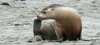
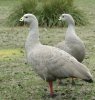
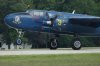
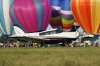
As I said, I can make it happen, just not at the speed I like. I didnt bring my photo computer and drive with me, but here's a few.

19 Thinker.jpg

68 Cape Barren Geese.jpg

DSC00922.jpg

DSC00770.JPG
 
As I said, I can make it happen, just not at the speed I like. I didnt bring my photo computer and drive with me, but here's a few.

View attachment 40099

View attachment 40100

View attachment 40101

View attachment 40102

You can make it happen IF you plan ahead, even just a little, and know your equipment so you can change it for changing conditions. Lots of people get great results from the auto focus in their camera. There's no reason you can't.

A lot of great wildlife shots (possibly most of the "great shots") didn't just happen- the photographer had enough time to get into some kind of position. Even if they didn't have that time, they still had the camera set for the conditions- some sort of general auto focus already configured, with the aperture and/or exposure time also set. If the exposure is reasonably close, it can be fixed in post-processing. They spend a lot of time studying animals so the photographer, like a hunter, knows how the critter will act in a given situation and can place their shot accordingly.

I like the shot with the balloons, best of the lot. The others....when shooting animals, focus on the eyes. The seal has the focus on the shoulder, the geese don't have the focus on the eyes either. One set of eyes should be in focus. I treat planes like animals or people and focus on the cockpit windows, the bomber had the focus on a nacelle. You did get some nice prop blur though.
 
Last edited:
You can make it happen IF you plan ahead, even just a little, and know your equipment so you can change it for changing conditions.

A lot of great wildlife shots (possibly most of the "great shots") didn't just happen- the photographer had enough time to get into some kind of position. Even if they didn't have that time, they still had the camera set for the conditions- some sort of general auto focus already configured, with the aperture and/or exposure time also set. If the exposure is reasonably close, it can be fixed in post-processing. They spend a lot of time studying animals so the photographer, like a hunter, knows how the critter will act in a given situation and can place their shot accordingly.

I like the shot with the balloons, best of the lot. The others....when shooting animals, focus on the eyes. The seal has the focus on the shoulder, the geese don't have the focus on the eyes either. One set of eyes should be in focus. I treat planes like animals or people and focus on the cockpit windows, the bomber had the focus on a nacelle. You did get some nice prop blur though.

Exactly, that is using freaking auto focus. By hand I can zip right on a sharp eye.
 
Exactly, that is using freaking auto focus. By hand I can zip right on a sharp eye.
No, it is not using auto focus correctly. My shots are all auto-focused. I set a point and lay it over the eye (if visible).
 
Back
Top