mogas potential??

Matthew

Touchdown! Greaser!
Joined
Apr 18, 2005
Messages
20,066
Location
kojc, kixd, k34
Display Name
Matthew
Home Airfield
K34
I don't use mogas, the planes I rent require avgas. But I've heard about people who do use it and have been having a tough time trying to find ethanol free gas.

The US gov'ment subisidy on ethanol expires today:

http://www.usatoday.com/money/indus...2-01-03/ethanol-subsidy-gas-prices/52355056/1

It got me wondering. We just finished a 1000+ mile car trip. Half of that trip was using 10% ethanol, and half with 100% gas. There were 2 things I noticed - the gas was about a nickel-or-so/gal more expensive, and we got better mileage. That's not really a surprise, but it was very noticable after 500+ miles.

There is one filling station near me that has 100% gas, and it's always a bit more expensive. If the loss of the ethanol subsidy causes the 10% blend to raise in price to the same, or nearly the same, price as 100% gas, do you think there will be any reason for ethanol blends anymore at all?
 
Even if it's not subsidized, the use of ethanol in gasoline is still mandated by the EPA.
 
Last edited:
The airplane i'm going to be flying frequently for the next 6 months to 1yr is a C152 with an autogas STC. Pure-gas.org helped me find a gas station in my neighborhood that has ethanol free 93 octane for $3.75. Hell yeah. 5 gallon cans and straining my back, here we come.
 

Yeah - I've used that before.

Still - if there is no price difference, and it's not an EPA thing (although it does seem to be a State thing), why would the suppliers bother at all? There has to be money involved somewhere...

I do know that in my metro area (Kansas City), there is some kind of summer/winter gas formulation that raises prices. It's pretty easy to see a 10-cent difference just by driving 20-30 miles out of town. One problem is that it seems like E10 is required on the MO side of the state line, and NOT on the KS side of the state line. I'm guessing that local suppliers don't want to have one truck deliver E10 on one side of the street and another with pure gas on the other side. So it looks like both sides end up with E10.

It'll be interesting to see what happens next.
 
Even if it's not subsidized, the use of ethanol in gasoline is still mandated by the EPA.

Really, then why can I go to certain gas stations and fill up on non-ethanol gas?
 
The airplane i'm going to be flying frequently for the next 6 months to 1yr is a C152 with an autogas STC. Pure-gas.org helped me find a gas station in my neighborhood that has ethanol free 93 octane for $3.75. Hell yeah. 5 gallon cans and straining my back, here we come.

$3.75 < $5.50 (!)

Plus with these low-compression engines 100LL clogs up the plugs with lead balls...

BUT -- make sure you FLY all that MOGAS through the system. For sitting, nothing beats 100LL except dry air.
 
Roger, Roger. I'm going to be flying my butt off in the upcoming months.

I've actually got my first flying related job, $30 an hour saturdays and sundays in january, plus a few hours of consulting during each week in Jan. Sucks that I am going to lose my weekends but the work is temporary, easy and fun, and I've decided that all proceeds are going directly to the flying budget. With the cheap gas, the plane is only going to cost me about $40-45 an hour to operate, maintenance and overhaul reserve included.

I also bought a fuel ethanol tester and I am going to be anal about testing the fuel for ethanol before putting it in the airplane.
 
Also, can anyone who uses mogas recommend a fuel can? For fueling a high wing plane, I thought the stop valves on these might be helpful.

I was thinking about buying two or three of these http://www.northerntool.com/shop/tools/product_200361053_200361053

I have a couple of old gas cans but I want to get some new ones for fuel quality reasons, also my old 5gal cans have small spouts and it takes forever to dispense 5 gal of fuel.

http://www.akbushwheel.com/index.php?option=com_rokquickcart&view=rokquickcart&Itemid=58

fuel_bag_sml.jpg
 
I use the Tractor Supply $8 model and a $2.99 siphon.

The can sits on top of the engine cowling. One or two squeezes of the siphon and fuel flows into the header tank.

I always make contact between me, the can, and ground before siphoning, but don't refuel this way immediately after flight.

I ground the can to the aircraft while fueling.
 
How do you do that?

I attached a wire with a clip on the end to the handle of the metal can, clip gets clipped to a bolt on the strut.
(the can sits on a foam mat on the wing when I transfer fuel)

In my case the plastic can is sitting on the painted aluminum cowling....

Un-grounded metal cans are the worst for static, followed by plastic cans.
Having a plastic can sit on the cowling may help, but I don't know how much.

http://www.cdc.gov/niosh/docs/98-111/pdfs/98-111.pdf
 
I don't see how I can ground the plastic can to the plane. Don't see it as much of an issue. I don't imagine fueling immediately after flight w a plastic can.

I just went by the station a few mins ago. Exxon 93 octane is 3.57 a gallon. I asked the attendant and he said it was non ethanol. My fuel tester is not here yet, so we'll see.
 
I like the siphon idea. Think it will work on top of the wing of a 152? Maybe if I use a piece of plastic (or metal) to make the can sit a few inches higher?
 
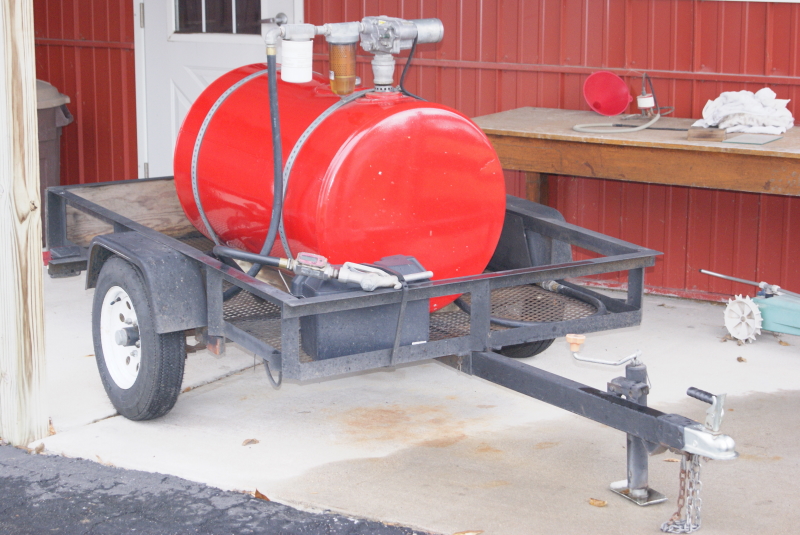
I burn 100% mogas, have for a decade now. Currently in my IO-540 and Rotax 912, and in other planes I have owned and flown. 0-360, 0320, 0-235, and many other Rotax 912s.

I have run about 7000 gallons through this 100 gal dual filter tank set up I built 15 years ago. I have saved well north of $10,000. Lifting 5 gallon cans is not fun.

fuel_tank.JPG
 
Last edited:
I don't see how I can ground the plastic can to the plane.

You can't.

Don't see it as much of an issue.

Purd near every time you won't have a problem.

I don't imagine fueling immediately after flight w a plastic can.
Static can be generated by the fuel flow though the nozzzle. But fires are rare.
 
Static can be generated by the fuel flow though the nozzzle. But fires are rare.

I guess the flow rate through my plastic siphon is about 8 gph (takes a while to empty the container).

I suppose flow rate increases static..?

I'm burning 3.6 GPH, so after an hour flight I refuel to about the same level.
 
You don't have to wait for a fuel tester.

Get a clear(ish) tube made out of something that doesn't react with gasoline. Glass is great but don't break it. Narrow/small is good since you want to see a vertical difference and not waste a bunch of fuel.

Put some small amount of water in it. Mark a line where water is. Add about three to five times the amount of water with fuel, shake. (No need to shake too wildly here... It'll just take longer to settle out. Just enough to mix.)

Let sit for a bit until water settles back out. Note water level.

If its higher than the line you marked, the water "trapped" (attached to) Ethanol in fuel and pulled it to the bottom. It's got Ethanol. Don't use it.

If it separates back out to same line, you've got gasoline that's Ethanol-free.

Since there's water in the tube, don't use it. ;)

I believe you'll find the "tester" is nothing more than a plastic tube with a cap.

They mark it with specific levels of water and fuel, and sometimes add crude lines for the percentage of Ethanol, but you don't care. Any Ethanol means you're not supposed to use it under any current STC.

You could do the whole test in a GATS jar if you feel like recovering the gas and are careful not to splash everywhere when "agitating"... But it's kinda too big. You'd have to use a lot of water and gas to get a good height on the jar to see the line.
 
BTW, I know several pilots that burn ethanol blended fuels with no issues. There is a fleet of RV 4 s that burn 100% ethanol. I think the problems are way over stated.
 
BTW, I know several pilots that burn ethanol blended fuels with no issues. There is a fleet of RV 4 s that burn 100% ethanol. I think the problems are way over stated.

Depends.

I have no problem with E-10 in my Rotax (with SAE spec fuel lines), but I do have a buddy that used aircraft spec fuel lines that ended up swelling shut resulting in an engine failure on takeoff.

Jabiru approves E-10 in some aircraft they make but not others based the specific resin used to make the fuel tanks (you can tell by the color).
 
I know the airports to get non-ethanol Mogas where I fly in MN.

There is one near my home airport, however it is 4 bucks a gallon and it's 87 octane. Stc calls for 91.

I'm going to try the tube test today
 
BTW, I know several pilots that burn ethanol blended fuels with no issues. There is a fleet of RV 4 s that burn 100% ethanol. I think the problems are way over stated.


Two things....

1- the fueling rig Geico shows in post 22 is very similar to mine.. I used a new 55 gal oil drum and the exact same pump and filter set up, and the fuel totalizer on his nozzle is the same one I use and it is deadly accurate.

2- When I built my experimental I incorporated all the compatable components in it to run straight 100LL. or auto fuel, or diesel, or ethanol or even methanol.... I have flown mine to 17,990 msl running 15 % Ethanol and 91 octane auto fuel with absolutely no signs of problems of vaporlock, detonation or fuel stavation... I personally don't like Ethanol laced gas , but it is an issue one needs to deal with, only ADM and the corn farmers love alky...:wink2:
 
Last edited:
Driving home yesterday I noticed gas prices went up - just like predicted.
 
Back
Top