
You are using an out of date browser. It may not display this or other websites correctly.
You should upgrade or use an alternative browser.
You should upgrade or use an alternative browser.
Military jets and FIKI and IMC
- Thread starter Tantalum
- Start date

Witmo
Pattern Altitude
- Joined
- Feb 19, 2006
- Messages
- 2,475
- Display Name
- Tim
- Home Airfield
- 5C1
It's been a while but as I recall, the only icing protection we had in the F-111 was inlet anti-ice and windscreen bleed air de-ice. I can't remember ever being in icing conditions for more than short periods. I don't remember if our regulations addressed flight in known icing but our Dash One (POH) probably said to exit icing conditions ASAP. We had to follow our own set of regulations and they were specific to our aircraft; the FARs on the whole do not apply to military aircraft although our regulations sometimes did mirror a FAR.

hindsight2020
Final Approach
Generally no, they are not equipped the way transport category aircraft are. Weather considerations have always been part of tactical employment, and that holds for adversary air assets. Beyond that, the discussion goes beyond what's worthy of this forum for OPSEC.
TAC air assets generally have pretty good thrust to weight, and generally capable of operating at altitudes where icing is not a concern.
Fighter aircraft are poor icing aircraft. Accretion rates get worse as a function of airspeed and the airflow disruption is worse for sharp airfoils due to contamination well past the boundary layer gradient inversion point. We have light rime icing forecast penetration as a limitation in the t38. It is probably the worst airplane to be in when it comes to icing resiliency. I consider it a day VFR aircraft from a mission perspective. It makes an excellent trainer in that regard, as it teaches a great deal of respect for weather. I could get away with a lot more with the slower, fat winged turboprop.

Velocity173
Touchdown! Greaser!
- Joined
- Jul 3, 2012
- Messages
- 16,369
- Display Name
- Velocity173
The Hornets that I worked in ATC didn’t have it. I believe it only has pitot & AoA heat, engine anti-ice and a windshield defogger. We had specific procedures to expedite their climb & descent in icing conditions. Also had a 350 kts below 10,000 ft waiver for them for icing. We pretty much looked the other way when it came to all fighters / attack aircraft and speed below 10,000 ft.
Last edited:

Cap'n Jack
Final Approach
Which sort of military jets? I'd assume the fighter type jets.
How about the transports? Do the ones derived from civilian jets keep the deicing?
How about the bombers?
How about the transports? Do the ones derived from civilian jets keep the deicing?
How about the bombers?

champ driver
Line Up and Wait
- Joined
- Jun 2, 2014
- Messages
- 927
- Location
- Minnesota
- Display Name
- Champ driver
- Home Airfield
- KANE Anoka County Airport

kgruber
Final Approach
- Joined
- Jan 3, 2007
- Messages
- 5,155
- Location
- Western Washington
- Display Name
- Skywag
- Home Airfield
- KPWT Bremerton National
I had a chief pilot who flew F-86 Sabres in Korea. He old me "ice." no problem.
Accelerate to 350 and it goes away.
Bob Greyelle......you still around? (how would you spell greyelle?)
Accelerate to 350 and it goes away.
Bob Greyelle......you still around? (how would you spell greyelle?)
champ driver
Line Up and Wait
- Joined
- Jun 2, 2014
- Messages
- 927
- Location
- Minnesota
- Display Name
- Champ driver
- Home Airfield
- KANE Anoka County Airport
I had a chief pilot who flew F-86 Sabres in Korea. He old me "ice." no problem.
Accelerate to 350 and it goes away.
The Sabreliner T-39, 40 and 60 models have the same leading edge slats as the F-86 Sabre. They're aerodynamically controlled by speed/AOA and springs. They automatically open at slow speeds for TO and landings, and they normally hang open on the ground.
There is no anti-ice/de-ice on the wings, and yet many of them operated in all kinds of weather.

Tantalum
Final Approach
- Joined
- Feb 22, 2017
- Messages
- 9,243
- Display Name
- San_Diego_Pilot
Also had a 350 kts below 10,000 ft waiver for them for icing. We pretty much looked the other way when it came to all fighters / attack aircraft and speed below 10,000 ft
Interesting, does it just sublimate the ice off? Or are you going so fast that it can never really nucleate onto the wings?Accelerate to 350 and it goes away.
Which sort of military jets? I'd assume the fighter type jets.
Sorry, yes, was thinking of F18, F15, those types.. Science channel had a special on carriers last night and some of the conditions they took off in from the boat looked pretty dicey and it made me wonder.. I assume bigger, slower planes like the B2, and civilian derived jets like the KC-135, KC-10, etc., kept their civilian icing systemsHow about the bombers?
hindsight2020
Final Approach
The "speed up to go away" is incorrect in the subsonic range. It makes it worse. You need to go slower to decrease total accretion area through an icing mass, not faster. Counter-intuitive as it may be.
The skin temperature required to reverse that dynamic is well north of 350KCAS. More like 600+KCAS at icing altitudes. F-111 had a skin temp indicator for instance. Not sure if the -105 did. SR-71 was another. Neither flew at those calibrated speeds at the altitudes where icing is a concern.
Bombers have the same icing equipment deficit as fighters, believe it or not. Airlift aircraft otoh are much closer to airliners when it comes to actual anti-icing equipment.
Velocity173
Touchdown! Greaser!
- Joined
- Jul 3, 2012
- Messages
- 16,369
- Display Name
- Velocity173
Interesting, does it just sublimate the ice off? Or are you going so fast that it can never really nucleate onto the wings?
Sorry, yes, was thinking of F18, F15, those types.. Science channel had a special on carriers last night and some of the conditions they took off in from the boat looked pretty dicey and it made me wonder.. I assume bigger, slower planes like the B2, and civilian derived jets like the KC-135, KC-10, etc., kept their civilian icing systems
Their EP in icing is to adjust speed to get their engine inlet temp to at least 5 C (10 C preferred). They also have a icing susceptibility chart with True Mach vs inlet temp and a statement referenced to wing leading edge & inlet thermal heating.
Our waiver also specified a min speed that the aircraft was susceptible due to increased AoA at slower speeds with icing on their LEX. Either way, sounds like for the Hornet, speed is their friend.
Last edited:

Cooter
Ejection Handle Pulled
- Joined
- Dec 2, 2015
- Messages
- 2,411
- Display Name
- Cooter
Fighter/bombers don’t have wing anti-ice other than the noted inlet and pitot heat.Interesting, does it just sublimate the ice off? Or are you going so fast that it can never really nucleate onto the wings?
Sorry, yes, was thinking of F18, F15, those types.. Science channel had a special on carriers last night and some of the conditions they took off in from the boat looked pretty dicey and it made me wonder.. I assume bigger, slower planes like the B2, and civilian derived jets like the KC-135, KC-10, etc., kept their civilian icing systems
TAT is notably above OAT at jet speeds and increases with speed. I’m not sure about hindsight’s data above, but I’m used to seeing TAT 8-10° above OAT in the 250-300 kt range. I’ve talked to some guys who will keep the speed up transiting visible moisture to avoid having the ice detection system register icing. I haven’t payed enough attention to see the correlation between speed and TAT to know if this is effective. I can say that I rarely picked up ice in fighters. The only time I did and it became an issue was at slow speed.

Red Air Rambo
Pre-takeoff checklist
F-16's were not FIKI and I don't know of any other fighters that were or are. Above 350kias it sublimated, we had a saying "Ice doesn't stick to speed".
Velocity173
Touchdown! Greaser!
- Joined
- Jul 3, 2012
- Messages
- 16,369
- Display Name
- Velocity173
F-16's were not FIKI and I don't know of any other fighters that were or are. Above 350kias it sublimated, we had a saying "Ice doesn't stick to speed".
Whoa! You haven’t been on in awhile. Still got your Riley Rocket?
Red Air Rambo
Pre-takeoff checklist
I'm not dead yet...lol I've been around, I just fly under the radar  and yes still married to the Skyrocket...the lineboy today acted like he'd seen a unicorn.
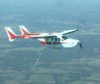
and yes still married to the Skyrocket...the lineboy today acted like he'd seen a unicorn.
Velocity173
Touchdown! Greaser!
- Joined
- Jul 3, 2012
- Messages
- 16,369
- Display Name
- Velocity173
I'm not dead yet...lol I've been around, I just fly under the radar
View attachment 71344
Oh man! Don’t know what it is but ever since I got my multi last year, I’ve been fantasizing about buying a P337. Saw one rotting on the flightline at FQD that I’d love to buy and restore.
Speaking of FIKI, is yours equipped?
Red Air Rambo
Pre-takeoff checklist
Equipped (boots, props, hot plate, ice light) but not certified, the story is that Cessna did not want to spend the money on the testing for the cert...the previous owner said it "would carry a load", I have not tried to see what that amount is... I view it as an aid to get out of icing and since I don't work for the military anymore I don't knowingly fly in it. lol Which leads me back to the original posters question...We flew in every kind of weather especially in war, I was even told point blank in Iraq "this is war, the regs go out the window". We never got ice on takeoff or climb to altitude because we were always faster than 350kias. The only time we would get ice was slowing for gear extension at 300kias and we would delay that until just prior to the faf...I landed with a couple inch's more than once. Officially we were not supposed to fly in reported icing conditions, but the commanders only considered it reported if another fighter reported it...brilliant isn't it?
I'm pretty much a fan of anything that fly's, but I would caution against buying anything rotting...restoration can be an expensive business. Some are doing it tho, Europeans flying around the alps. I was lucky to find a high country aircraft that spent its life between Nevada and Colorado. I'm in Tulsa if you ever want to fly one.
I'm pretty much a fan of anything that fly's, but I would caution against buying anything rotting...restoration can be an expensive business. Some are doing it tho, Europeans flying around the alps. I was lucky to find a high country aircraft that spent its life between Nevada and Colorado. I'm in Tulsa if you ever want to fly one.

woodchucker
Pattern Altitude
- Joined
- Sep 20, 2014
- Messages
- 1,836
- Display Name
- woodchucker
- Home Airfield
- KBTF
Equipped (boots, props, hot plate, ice light) but not certified, the story is that Cessna did not want to spend the money on the testing for the cert...the previous owner said it "would carry a load", I have not tried to see what that amount is... I view it as an aid to get out of icing and since I don't work for the military anymore I don't knowingly fly in it. lol Which leads me back to the original posters question...We flew in every kind of weather especially in war, I was even told point blank in Iraq "this is war, the regs go out the window". We never got ice on takeoff or climb to altitude because we were always faster than 350kias. The only time we would get ice was slowing for gear extension at 300kias and we would delay that until just prior to the faf...I landed with a couple inch's more than once. Officially we were not supposed to fly in reported icing conditions, but the commanders only considered it reported if another fighter reported it...brilliant isn't it?
I'm pretty much a fan of anything that fly's, but I would caution against buying anything rotting...restoration can be an expensive business. Some are doing it tho, Europeans flying around the alps. I was lucky to find a high country aircraft that spent its life between Nevada and Colorado. I'm in Tulsa if you ever want to fly one.
I’ve seen one of those flying out of KSLC a couple of times. This is my memory talking, but I seem to remember my CFI saying that you don’t need a multi rating to fly those since the engines are more or less inline with each other? Just curious on that.

Crashnburn
Pattern Altitude
My father probably helped build that plane!I'm not dead yet...lol I've been around, I just fly under the radar
View attachment 71344

Sluggo63
Pattern Altitude
- Joined
- Oct 9, 2013
- Messages
- 1,986
- Display Name
- Sluggo63
- Home Airfield
- KDVT
All the KC-135 had was engine anti ice. No wing anti-ice.I assume bigger, slower planes ... like the KC-135, KC-10, etc., kept their civilian icing systems
The only other thing on the KC-135/B707 that was heated for ice protection was the Q-inlet. The Q-inlet was on the lower tail and it looked like a beer can sticking out. Airflow into the inlet would provide artificial feel to the hydraulic rudder to prevent over-controlling at high speeds. The Q-inlet had a tendency to ice up, so it was heated to keep it ice free.
I'm sure the KC-10s had the same system that Douglas designed it with. Engines and wings.
Last edited:
Sluggo63
Pattern Altitude
- Joined
- Oct 9, 2013
- Messages
- 1,986
- Display Name
- Sluggo63
- Home Airfield
- KDVT
You would get a Multi-engine rating, with a centerline thrust restriction.I’ve seen one of those flying out of KSLC a couple of times. This is my memory talking, but I seem to remember my CFI saying that you don’t need a multi rating to fly those since the engines are more or less inline with each other? Just curious on that.
Velocity173
Touchdown! Greaser!
- Joined
- Jul 3, 2012
- Messages
- 16,369
- Display Name
- Velocity173
Equipped (boots, props, hot plate, ice light) but not certified, the story is that Cessna did not want to spend the money on the testing for the cert...the previous owner said it "would carry a load", I have not tried to see what that amount is... I view it as an aid to get out of icing and since I don't work for the military anymore I don't knowingly fly in it. lol Which leads me back to the original posters question...We flew in every kind of weather especially in war, I was even told point blank in Iraq "this is war, the regs go out the window". We never got ice on takeoff or climb to altitude because we were always faster than 350kias. The only time we would get ice was slowing for gear extension at 300kias and we would delay that until just prior to the faf...I landed with a couple inch's more than once. Officially we were not supposed to fly in reported icing conditions, but the commanders only considered it reported if another fighter reported it...brilliant isn't it?
I'm pretty much a fan of anything that fly's, but I would caution against buying anything rotting...restoration can be an expensive business. Some are doing it tho, Europeans flying around the alps. I was lucky to find a high country aircraft that spent its life between Nevada and Colorado. I'm in Tulsa if you ever want to fly one.
Read Viper Pilot years ago. Some of the stories from OIF of flying through a dust storms just to do a show of force were amazing.We were never directed that the rules went out the window but the chain command pretty much looked the other way when it came to pilots pushing regs. Personally seen our ops O pull the SWO outside and tell him to raise his forescast to above our min weather (700 / 2). Got a fog vid from that day that I hope doesn’t find its way onto the internet!

Yeah, no way I’ve got the cash to restore one. Just thought it was a bit sad to see two (C337, P337) with flat tires, glazed windshields, mold, etc sitting on the ramp. Saw a red & white for sale on Controller a few months back for I think $87K. Any issues in getting parts for a P337 these days?
Last edited:
Red Air Rambo
Pre-takeoff checklist
My wife bought me the book years ago but I never read it...I guess being there did not make me want to revisit it, but it makes a good coaster on my nightstand. The only pilot and plane our block 42 coalition lost was during a night takeoff into a sandstorm, spatial-D 500 kias into the ground while trying to radar lock his flight lead. The commanders at the time were really there to check a box on their resume for promotion so a lot of common sense went by the wayside in order to make the sortie count look good. There were times when the tower never saw us nor we them. Show of force missions during the sandstorms was pretty much a joke...below 10,000' you couldn't see anything, it was just to make noise.
I guess all airports of any size have there derelict aircraft which always makes me think how they should be flying again...it just gets to be too much when things start nesting. Parts are still readily available but have increased in price significantly since Textron took over...I'm sure that is true for the whole Cessna line. If you can find a Riley at least everything was rebuilt during the 90's.
I guess all airports of any size have there derelict aircraft which always makes me think how they should be flying again...it just gets to be too much when things start nesting. Parts are still readily available but have increased in price significantly since Textron took over...I'm sure that is true for the whole Cessna line. If you can find a Riley at least everything was rebuilt during the 90's.
Witmo
Pattern Altitude
- Joined
- Feb 19, 2006
- Messages
- 2,475
- Display Name
- Tim
- Home Airfield
- 5C1
If it has more than one engine, you need a multi rating. If you get your multi in an airplane with inline engines, your ticket will be restricted to center-line thrust or that's the way it was back when.I’ve seen one of those flying out of KSLC a couple of times. This is my memory talking, but I seem to remember my CFI saying that you don’t need a multi rating to fly those since the engines are more or less inline with each other? Just curious on that.
Tantalum
Final Approach
- Joined
- Feb 22, 2017
- Messages
- 9,243
- Display Name
- San_Diego_Pilot
I assume yes, but true for the V-22 as well? The props are connected with a shaft.. so.. what's the restriction based on that?If it has more than one engine, you need a multi rating
Cooter
Ejection Handle Pulled
- Joined
- Dec 2, 2015
- Messages
- 2,411
- Display Name
- Cooter
V-22 is powered lift, it’s a little bit different.I assume yes, but true for the V-22 as well? The props are connected with a shaft.. so.. what's the restriction based on that?

ZeroPapaGolf
Line Up and Wait
- Joined
- Jul 2, 2011
- Messages
- 647
- Display Name
- ZeroPapaGolf
- Home Airfield
- MGJ
I assume yes, but true for the V-22 as well? The props are connected with a shaft.. so.. what's the restriction based on that?
The V-22 is in the “powered lift” class, which, like all rotorcraft classes, makes no distinctions for number of engines.
Tantalum
Final Approach
- Joined
- Feb 22, 2017
- Messages
- 9,243
- Display Name
- San_Diego_Pilot
@Cooter and @ZeroPapaGolf thanks, so does that mean that short of a type rating a Robinson r22 and Chinook and v-22 are the same class?
ZeroPapaGolf
Line Up and Wait
- Joined
- Jul 2, 2011
- Messages
- 647
- Display Name
- ZeroPapaGolf
- Home Airfield
- MGJ
No, an R22 or Chinook are both helicopter class.@Cooter and @ZeroPapaGolf thanks, so does that mean that short of a type rating a Robinson r22 and Chinook and v-22 are the same class?
hindsight2020
Final Approach
Indeed, I can only speak for my wingless widowmaker. I don't know the specific airframe dynamics of more "blunt fighters".
The relationship between indicated temperature at the probes (TAT displays and OAT gonkulations by the ADC) is generally going to be an installation specific measurement of the RAM RISE, which is generally described in Kelvin (Celsius is 1-to-1, so C works just as well). That is the measurement of temperature increase by kinetic heating to a singularity point, or static pressure aka dynamic Psub-o=0. This is only true at a single point (line) in the wing leading edge camber, or similar interference junction(s) in the airframe. Anywhere else in the airframe and you're not heating it as much, by definition.
At any rate, I went ahead and charted the ram rise formula for a set of airspeed conditions.

Consider the icing band (rime-mixed-clear) goes from -20C to +2C. That means that accumulation in flight-critical areas (induction architecture, wings, flight controls) would have to rise a net 22C degrees worst case, in order to act as a bona fide natural anti-ice. This occurs around 400 KTAS, which is lower than my original 500-600 wag, but does not account for the fact that none of the aircraft surfaces that do not stop the flow to zero, are in fact being heated to such a degree. This is where the specific geometry of the fighter in question comes into play.
By the time you arrive at sonic and supersonic true airspeeds, then yes it is self-evident by the graph above that you are now in earnest using kinetic heating to defeat the icing band.
All that said, this is all to do about nothing. Fighters don't cruise in the icing altitudes for the vast majority of their profile. So they could hang by the min mach if they wanted to and it would still be too cold up there to get ice. I still contend I wouldn't go punching through a mass of SLD visible moisture at 350 true at 6-9K and expect to sublimate those gulps of supercooled water away. In the -38 at least, you'll shed ice from the lips and trash the turbojets, or at a minimum sandblast the nose cone and do the tap dance back home. Old timers in their polished F-86s and sexually objectifying bar sing-alongs probably didn't have to worry about my effin' monday morning quaterbacking bosses, so I digress.
BTW, I thought about the thread this morning and took a second to validate that graph in-flight today while doing circles around San Antonio shooting approaches in the goo. About +12 degrees ram rise TAT at 300KCAS (which is about same as True at 3-6K). So at least I got that going for me. I need to take a look at the TAT in the MOA one of these days while hitting the cans to 6.5 bills true
The relationship between indicated temperature at the probes (TAT displays and OAT gonkulations by the ADC) is generally going to be an installation specific measurement of the RAM RISE, which is generally described in Kelvin (Celsius is 1-to-1, so C works just as well). That is the measurement of temperature increase by kinetic heating to a singularity point, or static pressure aka dynamic Psub-o=0. This is only true at a single point (line) in the wing leading edge camber, or similar interference junction(s) in the airframe. Anywhere else in the airframe and you're not heating it as much, by definition.
At any rate, I went ahead and charted the ram rise formula for a set of airspeed conditions.
Consider the icing band (rime-mixed-clear) goes from -20C to +2C. That means that accumulation in flight-critical areas (induction architecture, wings, flight controls) would have to rise a net 22C degrees worst case, in order to act as a bona fide natural anti-ice. This occurs around 400 KTAS, which is lower than my original 500-600 wag, but does not account for the fact that none of the aircraft surfaces that do not stop the flow to zero, are in fact being heated to such a degree. This is where the specific geometry of the fighter in question comes into play.
By the time you arrive at sonic and supersonic true airspeeds, then yes it is self-evident by the graph above that you are now in earnest using kinetic heating to defeat the icing band.
All that said, this is all to do about nothing. Fighters don't cruise in the icing altitudes for the vast majority of their profile. So they could hang by the min mach if they wanted to and it would still be too cold up there to get ice. I still contend I wouldn't go punching through a mass of SLD visible moisture at 350 true at 6-9K and expect to sublimate those gulps of supercooled water away. In the -38 at least, you'll shed ice from the lips and trash the turbojets, or at a minimum sandblast the nose cone and do the tap dance back home. Old timers in their polished F-86s and sexually objectifying bar sing-alongs probably didn't have to worry about my effin' monday morning quaterbacking bosses, so I digress.
BTW, I thought about the thread this morning and took a second to validate that graph in-flight today while doing circles around San Antonio shooting approaches in the goo. About +12 degrees ram rise TAT at 300KCAS (which is about same as True at 3-6K). So at least I got that going for me. I need to take a look at the TAT in the MOA one of these days while hitting the cans to 6.5 bills true
Cooter
Ejection Handle Pulled
- Joined
- Dec 2, 2015
- Messages
- 2,411
- Display Name
- Cooter
Indeed, I can only speak for my wingless widowmaker. I don't know the specific airframe dynamics of more "blunt fighters".
The relationship between indicated temperature at the probes (TAT displays and OAT gonkulations by the ADC) is generally going to be an installation specific measurement of the RAM RISE, which is generally described in Kelvin (Celsius is 1-to-1, so C works just as well). That is the measurement of temperature increase by kinetic heating to a singularity point, or static pressure aka dynamic Psub-o=0. This is only true at a single point (line) in the wing leading edge camber, or similar interference junction(s) in the airframe. Anywhere else in the airframe and you're not heating it as much, by definition.
At any rate, I went ahead and charted the ram rise formula for a set of airspeed conditions.
View attachment 71392
Consider the icing band (rime-mixed-clear) goes from -20C to +2C. That means that accumulation in flight-critical areas (induction architecture, wings, flight controls) would have to rise a net 22C degrees worst case, in order to act as a bona fide natural anti-ice. This occurs around 400 KTAS, which is lower than my original 500-600 wag, but does not account for the fact that none of the aircraft surfaces that do not stop the flow to zero, are in fact being heated to such a degree. This is where the specific geometry of the fighter in question comes into play.
By the time you arrive at sonic and supersonic true airspeeds, then yes it is self-evident by the graph above that you are now in earnest using kinetic heating to defeat the icing band.
All that said, this is all to do about nothing. Fighters don't cruise in the icing altitudes for the vast majority of their profile. So they could hang by the min mach if they wanted to and it would still be too cold up there to get ice. I still contend I wouldn't go punching through a mass of SLD visible moisture at 350 true at 6-9K and expect to sublimate those gulps of supercooled water away. In the -38 at least, you'll shed ice from the lips and trash the turbojets, or at a minimum sandblast the nose cone and do the tap dance back home. Old timers in their polished F-86s and sexually objectifying bar sing-alongs probably didn't have to worry about my effin' monday morning quaterbacking bosses, so I digress.
BTW, I thought about the thread this morning and took a second to validate that graph in-flight today while doing circles around San Antonio shooting approaches in the goo. About +12 degrees ram rise TAT at 300KCAS (which is about same as True at 3-6K). So at least I got that going for me. I need to take a look at the TAT in the MOA one of these days while hitting the cans to 6.5 bills true
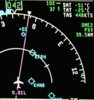
This seems to confirm the anecdotal data above. There was a noticeable difference in my experience with icing when I transitioned to slower aircraft, I hadn’t put much thought into why. It also confirms the concept of keeping the speed up to avoid ice detection. GA flying seems a little scarier now.
Here’s a snapshot of 26°TAT increase at almost 450kts, which fits the chart.

flyingcheesehead
Taxi to Parking
- Joined
- Feb 23, 2005
- Messages
- 28,184
- Location
- UQACY, WI
- Display Name
- iMooniac
- Home Airfield
- KUES/KMKE
Here's a random Saturday night curiosity question, are fighter jets FIKI?
No. FIKI is something the FAA gives an airplane, and the FAA doesn't certify military hardware.
Tantalum
Final Approach
- Joined
- Feb 22, 2017
- Messages
- 9,243
- Display Name
- San_Diego_Pilot
Okay, anti or deicing capabilities was more my question then.. it sounds like from the group that "no" - outside of some engine inlets and windshields things like wing, etc., are not heated or treated in any special way.. you just go fast and don't spend time in icing areasNo. FIKI is something the FAA gives an airplane, and the FAA doesn't certify military hardware.
Sluggo63
Pattern Altitude
- Joined
- Oct 9, 2013
- Messages
- 1,986
- Display Name
- Sluggo63
- Home Airfield
- KDVT
Didn’t realize you were at RND. I’m guessing you might have flown with my brother down there. 560th FTS. Retired a few years ago.Indeed, I can only speak for my wingless widowmaker. I don't know the specific airframe dynamics of more "blunt fighters".
The relationship between indicated temperature at the probes (TAT displays and OAT gonkulations by the ADC) is generally going to be an installation specific measurement of the RAM RISE, which is generally described in Kelvin (Celsius is 1-to-1, so C works just as well). That is the measurement of temperature increase by kinetic heating to a singularity point, or static pressure aka dynamic Psub-o=0. This is only true at a single point (line) in the wing leading edge camber, or similar interference junction(s) in the airframe. Anywhere else in the airframe and you're not heating it as much, by definition.
At any rate, I went ahead and charted the ram rise formula for a set of airspeed conditions.
View attachment 71392
Consider the icing band (rime-mixed-clear) goes from -20C to +2C. That means that accumulation in flight-critical areas (induction architecture, wings, flight controls) would have to rise a net 22C degrees worst case, in order to act as a bona fide natural anti-ice. This occurs around 400 KTAS, which is lower than my original 500-600 wag, but does not account for the fact that none of the aircraft surfaces that do not stop the flow to zero, are in fact being heated to such a degree. This is where the specific geometry of the fighter in question comes into play.
By the time you arrive at sonic and supersonic true airspeeds, then yes it is self-evident by the graph above that you are now in earnest using kinetic heating to defeat the icing band.
All that said, this is all to do about nothing. Fighters don't cruise in the icing altitudes for the vast majority of their profile. So they could hang by the min mach if they wanted to and it would still be too cold up there to get ice. I still contend I wouldn't go punching through a mass of SLD visible moisture at 350 true at 6-9K and expect to sublimate those gulps of supercooled water away. In the -38 at least, you'll shed ice from the lips and trash the turbojets, or at a minimum sandblast the nose cone and do the tap dance back home. Old timers in their polished F-86s and sexually objectifying bar sing-alongs probably didn't have to worry about my effin' monday morning quaterbacking bosses, so I digress.
BTW, I thought about the thread this morning and took a second to validate that graph in-flight today while doing circles around San Antonio shooting approaches in the goo. About +12 degrees ram rise TAT at 300KCAS (which is about same as True at 3-6K). So at least I got that going for me. I need to take a look at the TAT in the MOA one of these days while hitting the cans to 6.5 bills true
Velocity173
Touchdown! Greaser!
- Joined
- Jul 3, 2012
- Messages
- 16,369
- Display Name
- Velocity173
No. FIKI is something the FAA gives an airplane, and the FAA doesn't certify military hardware.
They don’t use FIKI but military aircraft are tested in icing conditions and if approved to fly in icing, will have it annotated in the limitations section of the flight manual.
Last edited:
hindsight2020
Final Approach
Everything is waiverable when they start shooting in your general direction