Thankfully no fatalities News Coverage

You are using an out of date browser. It may not display this or other websites correctly.
You should upgrade or use an alternative browser.
You should upgrade or use an alternative browser.
Medical Flight Down at Porterville
- Thread starter farmrjohn
- Start date

skyking3286
Line Up and Wait
- Joined
- Sep 29, 2012
- Messages
- 559
- Display Name
- skyking3286
One would assume this flight is on the house…


Kenny Taylor
Pre-takeoff checklist
- Joined
- Aug 25, 2021
- Messages
- 159
- Location
- Bakersfield, CA
- Display Name
- Kenny Taylor
- Home Airfield
- KBFL
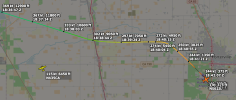
Way too fast on final. ADSB data shows him crossing the threshold around 240 kts and still moving 103 kts at the end of the runway.

bbchien
Touchdown! Greaser!
And 3900 ft is kinda short for a balanced field length….

Kenny Phillips
Final Approach
- Joined
- Jul 29, 2018
- Messages
- 6,572
- Display Name
- Kenny Phillips
So he got down to VREF just before going off the runway.Way too fast on final. ADSB data shows him crossing the threshold around 240 kts and still moving 103 kts at the end of the runway.

Flying Keys
Cleared for Takeoff
- Joined
- Jul 2, 2021
- Messages
- 1,027
- Display Name
- Flying Keys
Point of order - this was Porterville (KPTV), not Tulare (KTLR), though they’re both in Tulare County.

Let'sgoflying!
Touchdown! Greaser!
could this be an artifact?crossing the threshold around 240 kts
if not, it’s an omg moment.
I really can’t see losing 140kts in 1 mile -that runway would have been eaten up in seconds.
Kenny Taylor
Pre-takeoff checklist
- Joined
- Aug 25, 2021
- Messages
- 159
- Location
- Bakersfield, CA
- Display Name
- Kenny Taylor
- Home Airfield
- KBFL
Could be, but it jives with the overrun. If you look several frames back, he turned final at 270 kts and averaged about 3,000 fpm descent from that turn to the threshold. The ADSB track shows he hit 4,480 fpm descent at one point.

flyingcheesehead
Taxi to Parking
- Joined
- Feb 23, 2005
- Messages
- 28,184
- Location
- UQACY, WI
- Display Name
- iMooniac
- Home Airfield
- KUES/KMKE
Runway is 5960 feet, not 3900?And 3900 ft is kinda short for a balanced field length….
Flying Keys
Cleared for Takeoff
- Joined
- Jul 2, 2021
- Messages
- 1,027
- Display Name
- Flying Keys
Once again, I refer to the fact this was at Porterville, not Tulare. Thread title should be changed to reflect that.
Done.Once again, I refer to the fact this was at Porterville, not Tulare. Thread title should be changed to reflect that.
This appears to be another example of pilots trying to salvage a poor approach rather than going around.
flyingcheesehead
Taxi to Parking
- Joined
- Feb 23, 2005
- Messages
- 28,184
- Location
- UQACY, WI
- Display Name
- iMooniac
- Home Airfield
- KUES/KMKE
Stabilized approaches are a thing for a reason. Crossing the threshold at 240 is inexcusable. Looking at the playback, they were descending at around 4000 feet per minute and probably double a normal approach speed. Crazy.could this be an artifact?
if not, it’s an omg moment.
I really can’t see losing 140kts in 1 mile -that runway would have been eaten up in seconds.
ADS-B Exchange - track aircraft live
ADS-B Exchange - track aircraft live - aircraft flight history
 globe.adsbexchange.com

midwestpa24
Final Approach
Stabilized approaches are a thing for a reason. Crossing the threshold at 240 is inexcusable. Looking at the playback, they were descending at around 4000 feet per minute and probably double a normal approach speed. Crazy.
I guess the only excuse would be they were on fire and trying to get down in a hurry, but I doubt it. More likely ATC kept them high and dumped them onto the approach, and they didn't want to take a delay vector or hold to lose altitude.
You are pilot in command.
If the ATC puts you in an unflyable position, request a "fix".
A friend was inbound to Dulles in his Baron, and high. He requested a left 360 to dispose of altitude and speed, and was approved. He slowed to gear speed, 3 greens, standard rate turn, and the runway now looked fine, and he made a normal landing on the first quarter of the runway.
That is what the pilot flying should have done in this case.
I have also aborted an approach that had vectored me too high for the runway length. My go around messed up the towers traffic flow, and I was more carefully vectored to the longer runway for my next approach.
Last edited:
Flying Keys
Cleared for Takeoff
- Joined
- Jul 2, 2021
- Messages
- 1,027
- Display Name
- Flying Keys
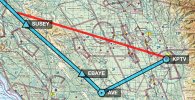
The filed route was CNDEL5.SUSEY EBAYE AVE
Between SUSEY and KPTV is Lemoore NAS and a complex of MOAs, which might make it difficult to file direct SUSEY-PTV below FL180, which they’d need to be in that airspace in order to land in Porterville with a reasonable angle (see below). So the original routing probably took that into account as it would have taken them around the MOAs to the south.
However, the flight turned just prior to SUSEY and went direct to KPTV. At the time of the turn, it was at 25,000’ and about 110NM from the field (direct). That shouldn’t have been a problem at the time as it works out to just a little over 2.1° descent angle required to the field. According to the ADS-B data, the altitude selector changed from 25,000’ to 20,000’ around the time of the turn, but the plane did not begin to descend for several minutes.
Where a nominal 3° glide angle intersects a 25,000 (-field elevation) cruise altitude is about 77nm away from the field. The plane did start descending at about that time. However, based on the reported groundspeed of ~440 knots, it would have required a roughly 2300 FPM descent, but they were only descending at around 1200 FPM.
The descent rate remained that way for another 25 miles or so, when it started to increase to a bit over 1800 FPM and the altitude selector went to 16,000. But with such a shallow descent, the angle and vertical speed required continued to increase. The airplane neither slowed down nor “goed” down at a rate that would have put them in a good position as they closed the distance to the field.
It could be a coincidence, but the plane did cross the border of the Lemoore B and C MOAs (which bisect the Naval Air Station itself) at almost exactly 18,000’. At this point, 43NM from the field, at 18,000’, it would have required almost a 4° descent angle to the field. This put them at a vertical deviation almost 4,000’ higher than a 3° path (assuming this was the desired angle, but knowing full well it may not be - just including this for reference).
At that point, the descent rate increased to about 2200 FPM, but the groundspeed was still 390. The vertical speed required for a 3° path at that groundspeed would have been about 2100, which they were close to doing, but still 4,000’ higher than the 3° path. At the actual 4° path, at that groundspeed, it would have required a vertical speed of closer to 2800 FPM.
Over the next 30-ish miles, the vertical speed wavered a few times, but averaged out to far lower than required and the deviation above a 3° path increased.
At 10NM from the field (not counting a little jog to line up), they were at 7600’, still 4,000’ above a nominal 3° path, closer to 7.2° required angle at this time, and still doing close to 300kts GS. This would have required 3800 FPM to get down, and they were doing nearly 3100 FPM.
We know the rest - it didn’t get much better.
The pic below shows the filed path in blue with the approximate path flown in red (minus the little maneuver to line up on final to runway 12). I used the VFR sectional to provide more context.
(Note: these calculations are purely for situational awareness and all figures are rough estimates based on ADS-B data)
Looking into what got them in trouble initially, a question to consider is why they descended so shallowly for a couple dozen miles after the nominal TOD. After that, with such a high vertical deviation, it becomes the old slow down/go down problem. Seems like plenty of time to come up with a solution, maneuver, etc, but who knows what other context is missing.
Between SUSEY and KPTV is Lemoore NAS and a complex of MOAs, which might make it difficult to file direct SUSEY-PTV below FL180, which they’d need to be in that airspace in order to land in Porterville with a reasonable angle (see below). So the original routing probably took that into account as it would have taken them around the MOAs to the south.
However, the flight turned just prior to SUSEY and went direct to KPTV. At the time of the turn, it was at 25,000’ and about 110NM from the field (direct). That shouldn’t have been a problem at the time as it works out to just a little over 2.1° descent angle required to the field. According to the ADS-B data, the altitude selector changed from 25,000’ to 20,000’ around the time of the turn, but the plane did not begin to descend for several minutes.
Where a nominal 3° glide angle intersects a 25,000 (-field elevation) cruise altitude is about 77nm away from the field. The plane did start descending at about that time. However, based on the reported groundspeed of ~440 knots, it would have required a roughly 2300 FPM descent, but they were only descending at around 1200 FPM.
The descent rate remained that way for another 25 miles or so, when it started to increase to a bit over 1800 FPM and the altitude selector went to 16,000. But with such a shallow descent, the angle and vertical speed required continued to increase. The airplane neither slowed down nor “goed” down at a rate that would have put them in a good position as they closed the distance to the field.
It could be a coincidence, but the plane did cross the border of the Lemoore B and C MOAs (which bisect the Naval Air Station itself) at almost exactly 18,000’. At this point, 43NM from the field, at 18,000’, it would have required almost a 4° descent angle to the field. This put them at a vertical deviation almost 4,000’ higher than a 3° path (assuming this was the desired angle, but knowing full well it may not be - just including this for reference).
At that point, the descent rate increased to about 2200 FPM, but the groundspeed was still 390. The vertical speed required for a 3° path at that groundspeed would have been about 2100, which they were close to doing, but still 4,000’ higher than the 3° path. At the actual 4° path, at that groundspeed, it would have required a vertical speed of closer to 2800 FPM.
Over the next 30-ish miles, the vertical speed wavered a few times, but averaged out to far lower than required and the deviation above a 3° path increased.
At 10NM from the field (not counting a little jog to line up), they were at 7600’, still 4,000’ above a nominal 3° path, closer to 7.2° required angle at this time, and still doing close to 300kts GS. This would have required 3800 FPM to get down, and they were doing nearly 3100 FPM.
We know the rest - it didn’t get much better.
The pic below shows the filed path in blue with the approximate path flown in red (minus the little maneuver to line up on final to runway 12). I used the VFR sectional to provide more context.
(Note: these calculations are purely for situational awareness and all figures are rough estimates based on ADS-B data)
Looking into what got them in trouble initially, a question to consider is why they descended so shallowly for a couple dozen miles after the nominal TOD. After that, with such a high vertical deviation, it becomes the old slow down/go down problem. Seems like plenty of time to come up with a solution, maneuver, etc, but who knows what other context is missing.
flyingcheesehead
Taxi to Parking
- Joined
- Feb 23, 2005
- Messages
- 28,184
- Location
- UQACY, WI
- Display Name
- iMooniac
- Home Airfield
- KUES/KMKE
You always get where you're going quicker if you don't go too fast. Sounds backwards, but in a jet, it's true.I guess the only excuse would be they were on fire and trying to get down in a hurry, but I doubt it. More likely ATC kept them high and dumped them onto the approach, and they didn't want to take a delay vector or hold to lose altitude.
Great analysis! I wonder what avionics/FMS they had, and whether they put in any altitudes or VNAV information.(Note: these calculations are purely for situational awareness and all figures are rough estimates based on ADS-B data)
Also, did the gear get ripped off during the runway excursion, or did they forget to put it down? It's sitting on its belly in the picture.

- Joined
- Mar 15, 2016
- Messages
- 5,585
- Display Name
- Ari
My grandfather often said, “As the old Russian used to say, ‘The slower you go, the sooner you’ll get there.’” Long after grandpa was gone, I learned that this is an actual Russian proverb. It’s apparently as true in a troika as in a tractor or a jet.You always get where you're going quicker if you don't go too fast. Sounds backwards, but in a jet, it's true.
Kenny Phillips
Final Approach
- Joined
- Jul 29, 2018
- Messages
- 6,572
- Display Name
- Kenny Phillips
Given that the excursion ended up several hundred yards off the runway, all vestiges of gear would have been wiped clean. I've not seen a good overhead view, but we'd likely be able to see bits and pieces along the way.You always get where you're going quicker if you don't go too fast. Sounds backwards, but in a jet, it's true.
Great analysis! I wonder what avionics/FMS they had, and whether they put in any altitudes or VNAV information.
Also, did the gear get ripped off during the runway excursion, or did they forget to put it down? It's sitting on its belly in the picture.
And then the doctors in the plane needed to go perform surgery ... there's a mental test.
bonefishpete
Cleared for Takeoff
- Joined
- Nov 10, 2024
- Messages
- 1,361
- Display Name
- Bonefishpete
Posted wrong thread
Last edited:

k9medic
Cleared for Takeoff
- Joined
- Sep 27, 2018
- Messages
- 1,075
- Display Name
- ATP-H, CMEL, CSEL, CFI/CFII Airplanes and Helicopters
- Home Airfield
- At an LZ near you
Just a note that a plane carrying doctors to another location to perform a surgery is just a part 135 flight. Not a medevac nor a medical flight.
Video/photos show one of the separated MLG on the ground. Given the hot approach, aircraft must have been near its max gear op or extension speed.Also, did the gear get ripped off during the runway excursion, or did they forget to put it down? It's sitting on its belly in the picture.
Let'sgoflying!
Touchdown! Greaser!
Copilot: “a little high, ref plus a hundred and twenty”
Pilot: “correcting, stable, landing”
lol
Pilot: “correcting, stable, landing”
lol
Kenny Phillips
Final Approach
- Joined
- Jul 29, 2018
- Messages
- 6,572
- Display Name
- Kenny Phillips
And it seems some Amazon (contracted) pilots use the same sort of logic, to an even worse outcome.Copilot: “a little high, ref plus a hundred and twenty”
Pilot: “correcting, stable, landing”
lol