
DavidWhite
Final Approach
Unclear if he still owns it.


excursioned? that's a new one for me.


Groundspeed was 106 knots on short (about 1/4 mile) final.Some talk about landing a bit short, breaking off a landing gear.

Groundspeed was 106 knots on short (about 1/4 mile) final.
Seems a little slow, no?And?
Seems a little slow, no?
And?
Not really. That's Ground speed. What were the winds aloft? How much head wind was there?
MMSL 102250Z 23010KT 10SM SKC 29/09 A2999 RMK CI
MMSL 102339Z 25013KT 10SM SKC 28/05 A2998 RMK INCURSION EN PISTA
Someone posted this on FB - https://www.facebook.com/share/1TaC7adR ... tid=wwXIfr
Crash at Cabo right after we landed. I didn’t see it, but saw the big dust cloud. The aircraft departed the runway after the gear left the plane. Everyone walked off a little shaken. Sounds like one pilots froze on the controls and were fighting each other for controls. Landed about a foot short and knocked the gear off.

Runway is 29
Crash at Cabo right after we landed. I didn’t see it, but saw the big dust cloud. The aircraft departed the runway after the gear left the plane. Everyone walked off a little shaken. Sounds like one pilots froze on the controls and were fighting each other for controls. Landed about a foot short and knocked the gear off.

Yea, those are surface winds. What was the wind aloft?
So even if the aloft winds were +10, the approach speed would have been 116. Depending on weight, that's not that low.
You’re right. Extrapolating and converting data from the same relative location (250-300’ AGL on a 1/4-1/2 mobile final) on a sample of four other approaches in the past month, that aircraft averages about 117-132 knots indicated. But that’s based on surface winds and an unknown Vref for the weight.
On the accident flight, the same methodology of conversion and extrapolation results in an estimated IAS of 104 at a similar location/altitude on the approach as the previous examples.
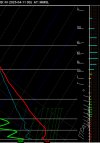
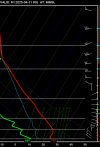
Sorry, I don’t have an exact wind aloft at 250’ AGL for Cabo. However, the forecast models (to be taken with a grain of salt) for that time did not show any significant speed or directional shear in the lowest hundred mb, but were several degrees off from the METAR.
NAM:
View attachment 139747
Or GFS, if you prefer:
View attachment 139748
Working the problem backwards - you’d need an additional 12 knots of headwind component at ~250’ AGL to get to the low end of the range of speeds indicated in the other examples. Not impossible by any means, just working the problem and showing what it would take to make it work. Also, the effect of weight on selected Vref will continue to be an unknown until the investigation completes.

“Came from together”Ummm...the gear wasn't "knocked off" the aircraft, it was "excursioned" from the aircraft.
Wasn’t that a Beatles song?“Came from together”

