Interesting Ice Buildup

Ted

Twin Engine Ted
Joined
Oct 9, 2007
Messages
30,130
Display Name
iFlyTwins
Home Airfield
KMKC
Friday night I took off after work and went to Iowa. I was staying at 6000 for most of the trip to minimize headwinds, but as I approached Lake Michigan the clouds started rising a bit. I had a feeling I was picking up some frost, but nothing on the windshield and nothing worth blowing the boots over, and couldn't see anything substantial with the de-ice light (which didn't help a lot when flying through a cloud, more produced a bunch of glare). I climbed up to 8000 as I figured it would be a better move to stay in VMC over the lake since not too many others were flying

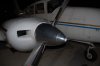
Landed at my fuel stop and, sure enough, had a little strip on the leading edges of the wings and tail, plus the little strip on the props. Thought it was interesting, so I hurried and took a few pictures after I was done fueling up.

Yesterday flew home, got a best ground speed of 208 kts in cruise. Ahh... tailwinds. :D
 

Attachments

  • DSC_0739.JPG
    DSC_0739.JPG
    1.6 MB · Views: 108
  • DSC_0742.JPG
    DSC_0742.JPG
    1.8 MB · Views: 118
  • DSC_0750.JPG
    DSC_0750.JPG
    1.6 MB · Views: 62
FWIW, the FAA changed its boot-operation recommendations several years ago and now recommends blowing the boots at the first sign of ice accumulation rather than waiting for it to become significant. They feel that the "bridging" phenomenon is not an issue with modern (i.e., late 20th century) boot systems.
 
FWIW, the FAA changed its boot-operation recommendations several years ago and now recommends blowing the boots at the first sign of ice accumulation rather than waiting for it to become significant. They feel that the "bridging" phenomenon is not an issue with modern (i.e., late 20th century) boot systems.

Yeah, I've read that, but so far my circa-1969 boot system seems to be pretty not-modern. Andrew might have different experience in his Matrix.
 
Yeah, I've read that, but so far my circa-1969 boot system seems to be pretty not-modern. Andrew might have different experience in his Matrix.

IME a narrow strip of frosty ice on the very front of the leading edge has virtually no effect on airfoil performance in cruising flight as it's in the stagnation zone where there isn't any air movement to be disrupted. That said, it wouldn't hurt to pop the boots with it there either other than the wear on the pumps. I would also attempt to remove it before flying an approach or landing because the stagnation zone moves to a lower point on the wing as you increase the AoA and that previously unimportant strip of roughness can have a significant effect on the airflow over the upper leading edge.
 
Yeah, I've read that, but so far my circa-1969 boot system seems to be pretty not-modern.
In terms of technology and operation, it's "modern" compared to the boots on DC-3's in the 1930's where that "bridging" issue was discovered.
 
Lance, thanks for the insight. Since I couldn't conclusively see that I had anything (and obviously it was pretty insignificant) I didn't blow the boots, for it, but had there been more I would have.
 
In terms of technology and operation, it's "modern" compared to the boots on DC-3's in the 1930's where that "bridging" issue was discovered.

Yeah, in the aviation world (avionics excepted) "modern" means within the last half century or so.
 
FWIW, the FAA changed its boot-operation recommendations several years ago and now recommends blowing the boots at the first sign of ice accumulation rather than waiting for it to become significant. They feel that the "bridging" phenomenon is not an issue with modern (i.e., late 20th century) boot systems.

Yeah, yeah, yeah. I am not convinced.
 
Yeah, yeah, yeah. I am not convinced.

+1

I only picked up ice a handful of times when I was flying the 421 but I can say that no two times were alike and there were a few times where the boots just broke a solid layer of ice into solid strips of ice with little cracks between them.
 
Shut up, Ted. What the FAA says is fact, and they are never, ever, ever wrong. EVER!!!!


I have also never experienced ice bridging in my Comanche, therefore it must not exist.
 
Last edited:
Just a side note, Dick Collins agrees with Ted. Of course he goes a bit deeper into it and explains that the FAA order is airframe specific and didn't apply to his 210.

IMNSHO, Sporty's videos are mediocre at best but after spending so many hours on 'em I feel that I should call Dick and Robl by their first names.:D
 
+1

I only picked up ice a handful of times when I was flying the 421 but I can say that no two times were alike and there were a few times where the boots just broke a solid layer of ice into solid strips of ice with little cracks between them.

I've seen the same thing on my Baron, especially when the boots weren't very clean. But when the boots deflate, new ice fills in the gaps and just as much breaks off on the next cycle. Bridging is supposed to be when the ice forms an impenetrable layer over the tops of the inflated bladder sections and I have a hard time seeing how that could happen when the ice isn't accumulating really fast. And if it's moderate to severe, you'll probably have a sufficiently thick layer by the time the next cycle rolls around (manually or automatically). It also seems plausible that if you let it build up too much the ice layer would be too strong to break up but I've never seen that happen either. Bottom line is the ice rarely goes away completely when the boots inflate regardless of how much you let it build before inflation. I do believe that if you let it build up to a half inch thick, a greater percentage of the ice will come off than if you cycle earlier but I also believe the residual ice amounts will be about the same in either case. IOW after waiting to cycle, it just looks like it works better.
 
Lance, as usual a very insightful and educational post. Thanks for the info.
 
Back
Top