Insurance PITA

Tom-D

Taxi to Parking
Joined
Feb 23, 2005
Messages
34,740
Display Name
Tom-D
while at the northwest aviation trade show I stop by the Regal insurance booth and asked for a quote for getting the F-24 back in the air for the summer.

I got the quote today by E-Mail. they want 10 hours with an instructor, and 10 more solo before Pax, at $3200.

I replied.

Those are not the terms we discussed at the show, If I must run bare for 20 hours I might as well run bare all year because I don't fly it that much in a year anyway..

There is no CFIs that know how to fly the 24 anyway. So it's not possible to comply

I will be renewing with my old company,

thanks for the troubles

Now, am I free to ask a different company for a quote?

You bet, let a couple brokers shop it for you.
 
You bet, let a couple brokers shop it for you.
You're free to shop it yourself among the insurers, but you only get one broker at a time. No broker will assist you if they find out you already have one working for you, and they will find out when the insurer they contact tells them they're the second broker to ask for a quote on that aircraft.

As for "running bare" for 20 hours, you don't have to do that. The policy will cover you during those 10 hours with a CFI, and your 10 solo hours thereafter. You'll only be "running bare" if you fly it without the CFI before the 10 training hours are complete, or with passengers before your 10 solo hours are complete.

Finally, regarding CFI's, I'm willing to bet that if you check in the right places, you'll find CFI's acceptable to the insurer to give you that training. It may be expensive, but I'm sure they exist.

With an aircraft like th F-24 I expect that would set off alarms with any carrier when a second broker asks for a qoute, with a more common aircraft they will never know if you don't give them the tail number.

As for running bare I think what Tom was getting at is that there are no F-24 Current CFIs out there to fly the 10 hours with him.
 
With an aircraft like th F-24 I expect that would set off alarms with any carrier when a second broker asks for a qoute, with a more common aircraft they will never know if you don't give them the tail number.
IIRC, brokers ask for N-numbers, and so do insurers. Even if they don't, throw in aircraft make/model/year, location, age, licenses, experience, etc., and I think they'll figure it out pretty fast.

As for running bare I think what Tom was getting at is that there are no F-24 Current CFIs out there to fly the 10 hours with him.
I don't think Tom said the insurer required that the instructor be "current" in F-24's, just "10 hours with an instructor." I'm sure there are plenty of experienced TW instructors out there whom the insurer would accept. The fact that Tom doesn't think there are any CFI's who know how to fly F-24's is another story entirely.
 
It's easy to obtain a quote without a tail number. When asked, I often (honestly) respond with "we don't know yet, we're looking at several in the same price range and need the information for the acquisition planning budget." I'm not suggesting that the specialty insurers who deal with antiques won't know that the number of 24's is very limited, but the exact ID isn't a pre-req for obtaining a quote.

A "broker of record" notification to the carrier may be necessary if another broker is engaged to obtain quotes from carriers that have already quoted the risk or are aware that it is being shopped.
IIRC, brokers ask for N-numbers, and so do insurers. Even if they don't, throw in aircraft make/model/year, location, age, licenses, experience, etc., and I think they'll figure it out pretty fast.

I don't think Tom said the insurer required that the instructor be "current" in F-24's, just "10 hours with an instructor." I'm sure there are plenty of experienced TW instructors out there whom the insurer would accept. The fact that Tom doesn't think there are any CFI's who know how to fly F-24's is another story entirely.
 
My F-24 Checkout consisted of 4 takeoffs and landings.
I would love to do 10 hours with him, but would have to get him down to Boise or me up there.

Brian
CFIIG/ASEL
 
I don't think Tom said the insurer required that the instructor be "current" in F-24's, just "10 hours with an instructor." I'm sure there are plenty of experienced TW instructors out there whom the insurer would accept. The fact that Tom doesn't think there are any CFI's who know how to fly F-24's is another story entirely.

I'm sure that there are CFI's around that would love to set the right seat for 10 hours, but to me it's a matter of trust.

wouldn't you think it would be better if the CFI knew the 24 and was able to get me out of trouble if .......happens?

I don't know any one who could.
 
I'm sure that there are CFI's around that would love to set the right seat for 10 hours, but to me it's a matter of trust.

wouldn't you think it would be better if the CFI knew the 24 and was able to get me out of trouble if .......happens?

I don't know any one who could.

Then youre not looking hard enough - there are plenty of great tail wheel instructors out there that you could learn a lot from. If I recall correctly you've ground looped it more then once so I would say your instructor free technique isn't working out for you.
 
There are some GREAT instructors out there. Like everything, you may have to shop a bit and get some referrals, but there are some very talented CFIs out there. I just went through this on the KA C90 I purchased. I found a great fella and we still chat about stuff. Some things, we learned together as the systems and equipment can be just a bit different on models and years, but he was excellent and practical on the flying skills. He's a DE on the Falcon jet with a lot of KA time. Moreover, he's a lot like me; studies things, good instrument skills and always trying to improve.

I wouldn't look at it as something you 'have' to do. I'd look at it as a great chance to learn from and with an good instructor and go find them.
I have over 1,000 hours in the 58P and must do recurrent training each year. I fought that a bit for awhile, but soon learned there's always more to learn about the plane and flying. I just had to find someone to share the adventure with that was knowledgeable and approached things in a manner in which I could learn and improve the most.

Best,

Dave
 
Or would want to?
I'm sure that there are CFI's around that would love to set the right seat for 10 hours, but to me it's a matter of trust.

wouldn't you think it would be better if the CFI knew the 24 and was able to get me out of trouble if .......happens?

I don't know any one who could.
 
Then youre not looking hard enough - there are plenty of great tail wheel instructors out there that you could learn a lot from. If I recall correctly you've ground looped it more then once so I would say your instructor free technique isn't working out for you.

All the problems that caused those ground loops are fixed, Have you ever flown a tail wheeled aircraft that had a grabbing brake?

And remember no damage occurred during any of those incidences.

This is the first landing in this aircraft after 8 years of not flying it.

http://www.youtube.com/watch?v=xOhuH8X4Wm0
 
How many readers here would trust that aircraft to a CFI with 350 hours 10 in a tail wheel?

what would you require of a CFI before you allowed them to take control of your F-24 ?
 
It's easy to obtain a quote without a tail number. When asked, I often (honestly) respond with "we don't know yet, we're looking at several in the same price range and need the information for the acquisition planning budget." I'm not suggesting that the specialty insurers who deal with antiques won't know that the number of 24's is very limited, but the exact ID isn't a pre-req for obtaining a quote.

A "broker of record" notification to the carrier may be necessary if another broker is engaged to obtain quotes from carriers that have already quoted the risk or are aware that it is being shopped.


Exactly my experience!
 
How many readers here would trust that aircraft to a CFI with 350 hours 10 in a tail wheel?
I wouldn't trust any CFI with any amount of TT with only 10 hrs in a tailwheel regardless of the type of tailwheel aircraft I needed him or her for.
 
How many readers here would trust that aircraft to a CFI with 350 hours 10 in a tail wheel?

what would you require of a CFI before you allowed them to take control of your F-24 ?
To the first question, NO.

To the second question, he doesn't have to take control, it's legally just dual. I'd do the same thing the first time I flew with a customer in his Cessna 170 - read all the material I could find on the aircraft's flight characteristics, make sure I studied the numbers, and went up to altitude for some slow flight and stalls before coming back in for landing practice. If you have a feel for how much rudder the plane needs in various attitudes, it shouldn't be TOO big of a deal.
His previous instructor hadn't done a lot of reading specific to the aircraft, and I was able to fix a few bad habits / holdovers from his training within the first two hours.

Ryan

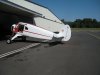
You do understand that this aircraft was just put back together after being transported with the wings off and has not been flown since an engine overhaul?

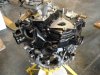
and it's not a standard F-24, but has been upgraded to a 165 Warner.

you will need to figure out what all the speeds are on the first go.
 

Attachments

  • fuselage outside .jpg
    fuselage outside .jpg
    212.5 KB · Views: 11
  • engine lower end.jpg
    engine lower end.jpg
    218.1 KB · Views: 10
Last edited:
I don't know any one who could.
Where have you looked to expand your knowledge in that area? Or are you just griping because none have magically appeared in Oak Harbor and said, "Hey, I hear you need an instructor with a whole bunch of F-24 experience?"

The fact is that the sort of requirements you were quoted are becoming more and more standard for antique and tailwheel aircraft simply because the insurers are tired of the loss rates they're seeing without them. If your insurance currently costs an arm and a leg without such a requirement, you see the available alternative. The choice is yours -- pay a big premium, or find a qualified instructor.

We went through that in the Grumman community many years ago because the landing accident rate in the first 15 hours without proper training was unacceptable to insurers, so they stopped insuring those with less than 15 hours in type. The AYA responded by creating its Pilot Familiarization Program and designating CFI's with Grumman experience to administer it. Now, insurers waive that 15-in-type requirement for those who complete the PFP, which takes most folks half a day or so to complete -- a lot cheaper and easier than flying 15 hours "bare." The AYA has a list of 50 or 60 instructors around the country who can provide that training.

Of course, it may cost you a pretty penny to get such an instructor to you, and to perform the necessary test flight with the modification you have installed (I'm pretty sure the FAA would say the biigger engine "may have appreciably changed its flight characteristics or substantially affected its operation in flight") and then fly 10 hours with you. That leaves you with the choice of paying for the training or paying for the higher insurance premium.

Me? I figure the training has more benefit in the long run, but I also have experience with trainees who were convinced they had nothing to learn from an instructor, in which case you might do the instructor a favor by spending the money on higher insurance costs instead of training.
 
Last edited:
Where have you looked to expand your knowledge in that area? Or are you just griping because none have magically appeared in Oak Harbor and said, "Hey, I hear you need an instructor with a whole bunch of F-24 experience?"

The fact is that the sort of requirements you were quoted are becoming more and more standard for antique and tailwheel aircraft simply because the insurers are tired of the loss rates they're seeing without them. If your insurance currently costs an arm and a leg without such a requirement, you see the available alternative. The choice is yours -- pay a big premium, or find a qualified instructor.

Of course, it may cost you a pretty penny to get such an instructor to you, and to perform the necessary test flight with the modification you have installed (I'm pretty sure the FAA would say the biigger engine "may have appreciably changed its flight characteristics or substantially affected its operation in flight") and then fly 10 hours with you. That leaves you with the choice of paying for the training or paying for the higher insurance premium.

Me? I figure the training has more benefit in the long run, but I also have experience with trainees who were convinced they had nothing to learn from an instructor, in which case you might do the instructor a favor by spending the money on higher insurance costs instead of training.

How about the Fairchild type club?

Believe it or not I do know all the flight schools and most of the independent CFIs this isn't that big of an area.

higher cost, not really my previous company is $1325 to renew the policy after 5 years with them.

I asked Regal for a quote to see If I could do better, because some one here mentioned that insurance costs had come down.
 
Was the same hull value used for both the $1300 quote and the $3,100 quote?
How about the Fairchild type club?

Believe it or not I do know all the flight schools and most of the independent CFIs this isn't that big of an area.

higher cost, not really my previous company is $1325 to renew the policy after 5 years with them.

I asked Regal for a quote to see If I could do better, because some one here mentioned that insurance costs had come down.
 
Of course, it may cost you a pretty penny to get such an instructor to you, and to perform the necessary test flight with the modification you have installed (I'm pretty sure the FAA would say the biigger engine "may have appreciably changed its flight characteristics or substantially affected its operation in flight") and then fly 10 hours with you.
Actually the engine STC upgrade was completed in 1988, so the required test flight time is well behind us. but as mentioned any one looking at the F-24 flight numbers and then thinking they were good to go would be quite surprised.
 
A question for the CFIs

during this 10 hour period for insurance purposes, would a CFII that does not hold a medical work?

I am current to act as PIC in type to carry pax.
 
Y'all assume that all brokers are tapping the same few underwriters and to the best of my understanding that is no longer the market dynamic.
 
The total market (number of underwriting carriers or fronting companies) has rought tripled, but those that will write the specialty markets is basically unchanged.

Y'all assume that all brokers are tapping the same few underwriters and to the best of my understanding that is no longer the market dynamic.
 
during this 10 hour period for insurance purposes, would a CFII that does not hold a medical work?
Whether or not the instructor is required to have a medical (i.e., act as PIC) if you're FAA-legal to act as PIC with a passenger is a question for the insurer, not an instructor. However, someone who holds only an Instrument rating on his/her CFI certificate is prohibited by the FAR's from giving flight training of any kind. The instructor would have to hold an Airplane Single Engine rating on his/her CFI certificate to give you flight training in your F-24.
 
The total market (number of underwriting carriers or fronting companies) has rought tripled, but those that will write the specialty markets is basically unchanged.
...and I guarantee they will figure out what's happening if they get two requests from two different brokers for a Fairchild 24 based in Oaki Harbor WA.
 
You do understand that this aircraft was just put back together after being transported with the wings off and has not been flown since an engine overhaul?

and it's not a standard F-24, but has been upgraded to a 165 Warner.

you will need to figure out what all the speeds are on the first go.
So even an F-24 CFI might not be "up to speed" is what that tells me, kind of like my CFI friend down at Cannon that just made a bunch of mods (STOL kit and more) to his 170. All the more reason to take it up to altitude and nail down some numbers.

Ryan
 
Whether or not the instructor is required to have a medical (i.e., act as PIC) if you're FAA-legal to act as PIC with a passenger is a question for the insurer, not an instructor. However, someone who holds only an Instrument rating on his/her CFI certificate is prohibited by the FAR's from giving flight training of any kind. The instructor would have to hold an Airplane Single Engine rating on his/her CFI certificate to give you flight training in your F-24.

An old friend (you may know him Capt Field)(A6 type) has no medical any more. He's a joy to fly with and knows the F-24, I'd haul his butt around any day.
 
An old friend (you may know him Capt Field)(A6 type) has no medical any more. He's a joy to fly with and knows the F-24, I'd haul his butt around any day.
If he has a valid CFI ticket with ASE rating, perhaps the insurer will be happy with him doing this while you are acting as PIC. Won't hurt to ask.

And no, I don't remember a CAPT Field (although he was probably LT Field or even ENS Field when I was in the A-6).
 
So even an F-24 CFI might not be "up to speed" is what that tells me, kind of like my CFI friend down at Cannon that just made a bunch of mods (STOL kit and more) to his 170. All the more reason to take it up to altitude and nail down some numbers.

Ryan

You catch on quick. :) It's not an aircraft that I would put a kid in specially when they have no skin in the game.
 
If he has a valid CFI ticket with ASE rating, perhaps the insurer will be happy with him doing this while you are acting as PIC. Won't hurt to ask.

And no, I don't remember a CAPT Field (although he was probably LT Field or even ENS Field when I was in the A-6).

He has a CFII, ATP, ME/L&SEA, and never was denied a medical, he knew he wouldn't pass.

He came to Whidbey as a CDR, transiting from A4s was VA52, 96, and 128's CO before he retired at 32 years. that was about 2 years before me he then became Harbor Air's chief pilot, until that went belly up in 02.

And yes I am current in SEL, but not in IFR conditions. which we will never be in anyway.
 
You catch on quick. :) It's not an aircraft that I would put a kid in specially when they have no skin in the game.
I got asked to ferry an RV-6A for a new owner by a fellow CFI. Everything sounded great and I agreed to help out. Found out 300 miles later, in the middle of OK, that it had a new (used) engine installation that hadn't been flight tested yet... We made it to Ohio just fine, but I wished I had negotiated a little more on the price since I ended up essentially flight testing it. The Dynon airspeed indicator and the steam gauge didn't agree with each other, either.

Ryan
Take a lesson in that. don't be in a hurry to make a mistake, do your home work. did you review the maintenance records? Why didn't you know how old the engine was ?
 
Last edited:
You catch on quick. :) It's not an aircraft that I would put a kid in specially when they have no skin in the game.
What is the point in saying a "kid". There are "kid" tailwheel pilots that could fly circles around you and there are pilots older than you that would crash instantly.
 
What is the point in saying a "kid". There are "kid" tailwheel pilots that could fly circles around you and there are pilots older than you that would crash instantly.

Never take offense at being young.

In this occupation it's a case of getting smart early or dying young.

I was young once upon a time, I made a lot of mistakes then too, I simply don't want that type of mistake made in my aircraft. So, sorting out those who would or wouldn't becomes a hassle that I do not want to contend with.
The age of the pilot has little to do with their ability. I teach plenty of "old" people how to fly.
 
Take a lesson in that. don't be in a hurry to make a mistake, do your home work. did you review the maintenance records? Why didn't you know how old the engine was ?
We did review the maintenance records and I took my time looking at things before flying the aircraft several hours later. I just didn't get enough information prior to heading out. The engine actually turned out to be fine. It was a Lycoming with about 700 hours on it, just new to the airplane.

Ryan
 
He has a CFII, ATP, ME/L&SEA, and never was denied a medical, he knew he wouldn't pass.
OK, I gather from that he has a CFI-ASME-IA. But is his CFI ticket still valid, i.e., has he kept renewing it? If so, run it past the insurer.

He came to Whidbey as a CDR, transiting from A4s was VA52, 96, and 128's CO before he retired at 32 years. that was about 2 years before me
When was that? I went through 128 in 1973-74 and was a Knightrider 1974-77.
 
OK, I gather from that he has a CFI-ASME-IA. But is his CFI ticket still valid, i.e., has he kept renewing it? If so, run it past the insurer.

That I'm not sure of.

was that? I went through 128 in 1973-74 and was a Knightrider 1974-77.

He was active in the VA community then. I don't know dates of which command he was in when. he would have retired 79/80 time frame.
 
I heard the quote from Nation Air today, $1410.00, 1 million smooth. $55k on hull, no required training.

Webe goodtogo.
 
Back
Top