Heart Rate vs. Flight

I’d be interested to see the heart rate when you hear the “uhh, cessna piper, no, white and green cessna 172 is 11.2 nautical miles east, west, no northeast….Cessna is 11 nautical miles southwest going to overfly the field at 500’ over pattern altitude and fly out 3 miles to do a teardrop entry to the crosswind, uh downwind to runway 16 uh runway 34 final call until I start the teardrop, west palm beach traffic uh lantana traffic” call
 
I’d be interested to see the heart rate when you hear the “uhh, cessna piper, no, white and green cessna 172 is 11.2 nautical miles east, west, no northeast….Cessna is 11 nautical miles southwest going to overfly the field at 500’ over pattern altitude and fly out 3 miles to do a teardrop entry to the crosswind, uh downwind to runway 16 uh runway 34 final call until I start the teardrop, west palm beach traffic uh lantana traffic” call
You left out ATITAPA, meow, left final, six seven 23 skidoo.

GeorgeC,
over
 
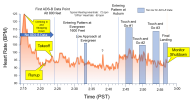
Got a "Smart Watch" that records heart rate. Have ADS-B out in my airplane that records where I'm at. Occurred to me to try to correlate the two....
The forum software will only allow me to like this once. This is awesome, Ron. Thank you very much.

Nauga,
carpe data
 
On mine you'd see spikes every time I turn my head and the sound of the engine changes very slightly. It's been over two years since I had to put my airplane down due to a partial engine failure and I'm still overly vigilant. The GI 275 EIS helps though, as it reassures me that nothing has changed.
 
Very cool! If you're flying a PA-28, the spike at 2:39 is probably when you switched tanks. Happens to me, and I don't have a heart monitor.
 
you must really be stress buckling up.
Yes, it's something that needs explaining.

The Fly Baby (for me) has a nice comfortable cockpit...when you're seated. It does take me a lot of work to get there, though. I need the cockpit to be a couple of inches longer, but it just isn't possible.

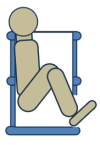
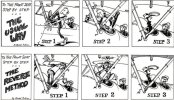
A quick explanation: Getting into the cockpit is like lowering yourself down into an oil drum with a hole cut near the bottom for your legs to stick out. Easy enough to get in....if you didn't have to stick your legs forward to reach the rudder pedals. Note, in this illustration, that you've got no room to push your legs forward to get out the hole.
1778829201534.png
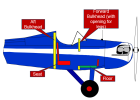
So let's take a look and see how the analogy works on my Fly Baby. My seat rests against the aft cockpit bulkhead; the forward cockpit bulkhead has the instrument panel above, a gap for one's legs, and a thin section below.

1778829279278.png
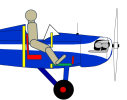
So here's what happens when I slide into the cockpit. As I slide down, the seat back pushes me slightly forward. This tries to shove my knees INTO the bulkhead.
1778829557960.png
Obviously, I *can* get in, but it takes some wiggling and careful adjustment during the slow slide downward. This is made even more complex in that both my knees are in bad, bad shape. I have a power seat that lifts me OUT of the cockpit, but it's of no help going in.

It doesn't take any leg strength getting into the cockpit; it's mostly trying to get the legs into the forward tunnel while the arms do a "parallel bars" sort of exercise.

One aspect is that I jam my back hard into the seat back on the way down, the maximize room. Unfortunately, this usually causes the seat back to grab my jacket...and often my shirt...and pull them upward as I slide down. This means my bare back makes contact with the seat...kind of uncomfortable in cooler weather.... :)

There isn't much room to reach behind to tuck the shirt and coat back down, but I wiggle left and right and usually manage it. Again, reflected in the heart rate data.

So it takes a bit of work to get me into place, and that's why my heart rate rises on that portion of the data. Again, though, once I'm in, it's comfortable. Getting out is a bit of an exercise, but I have a sort of "stirrup" in the bottom of the cockpit floor to brace my legs against. Between that and the lift seat, it's much easier.

And yes, every year I verify that I can STILL get out if the lift seat doesn't work.....

BTW, the two bulkheads are positioned where they are based on the spars of the wings. The wing spars actually get pinned to these bulkheads, so moving a bulkhead isn't an option. But if the bulkheads were just two inches or so further apart, it'd be a breeze.

Ron Wanttaja

 
My standard passenger briefing for my PA-28 is "There is no graceful way to enter or exit a Cherokee. As long as you're not hanging on the door, whatever you need to do is fine." :D
 
Tower to N12345, I have a phone number for you to call, advise when ready to copy. :p
 
Did you have taco bell for lunch and not sure if you could trust a fart? Then have a moment of panic before realizing you were safe...for now.
 
Last edited:
Ron gets max POA points for an outstanding nerd-snipe. I record a lot of data on every flight but until Ron started this thread it never occurred to me to look at physiological data. That spun off a couple of meta-snipes on getting a higher sample rate on heart rate data and a previously unnoticed latency issue with one box that gets logged, but I got it all worked out and finally have some data to look at.
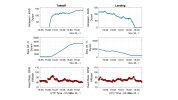
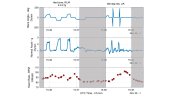
I went up last week and did some moderate maneuvering just to get the needles moving. Airplane is an RV-4 (taildragger):

TOL.jpeg
maneuvering.jpeg
Results are pretty much what you'd expect in general but I'm a data geek so I gotta look. I'm pleasantly surprised as I admit I expected the average heart rate to be a bit higher. I'm also a little surprised at how sharp the peaks are, and that the peak on takeoff is higher than on landing, when the crosswind was higher on landing. I also expected the rate during the turns to be higher than during rolls, since my g-tolerance is not what it used to be and the turns last longer than the rolls.

The 'Nov 30' tag is an artifact of not having the date in the time code.
I didn't include it here but my peak rate was when I had to push the airplane away from the fuel pumps after the flight. :rolleyes:

Anyway, make of it what you will. It's another place to look for answers, but I don't yet know what the questions are. 1E+6 thanks to @wanttaja for the idea.

Nauga,
and the pulse of aviation
 
I should compare flying with driving on the beltway.
 
Yes, it's something that needs explaining.

The Fly Baby (for me) has a nice comfortable cockpit...when you're seated. It does take me a lot of work to get there, though. I need the cockpit to be a couple of inches longer, but it just isn't possible.

A quick explanation: Getting into the cockpit is like lowering yourself down into an oil drum with a hole cut near the bottom for your legs to stick out. Easy enough to get in....if you didn't have to stick your legs forward to reach the rudder pedals. Note, in this illustration, that you've got no room to push your legs forward to get out the hole.
View attachment 152051
So let's take a look and see how the analogy works on my Fly Baby. My seat rests against the aft cockpit bulkhead; the forward cockpit bulkhead has the instrument panel above, a gap for one's legs, and a thin section below.

View attachment 152052
So here's what happens when I slide into the cockpit. As I slide down, the seat back pushes me slightly forward. This tries to shove my knees INTO the bulkhead.
View attachment 152053
Obviously, I *can* get in, but it takes some wiggling and careful adjustment during the slow slide downward. This is made even more complex in that both my knees are in bad, bad shape. I have a power seat that lifts me OUT of the cockpit, but it's of no help going in.

It doesn't take any leg strength getting into the cockpit; it's mostly trying to get the legs into the forward tunnel while the arms do a "parallel bars" sort of exercise.

One aspect is that I jam my back hard into the seat back on the way down, the maximize room. Unfortunately, this usually causes the seat back to grab my jacket...and often my shirt...and pull them upward as I slide down. This means my bare back makes contact with the seat...kind of uncomfortable in cooler weather.... :)

There isn't much room to reach behind to tuck the shirt and coat back down, but I wiggle left and right and usually manage it. Again, reflected in the heart rate data.

So it takes a bit of work to get me into place, and that's why my heart rate rises on that portion of the data. Again, though, once I'm in, it's comfortable. Getting out is a bit of an exercise, but I have a sort of "stirrup" in the bottom of the cockpit floor to brace my legs against. Between that and the lift seat, it's much easier.

And yes, every year I verify that I can STILL get out if the lift seat doesn't work.....

BTW, the two bulkheads are positioned where they are based on the spars of the wings. The wing spars actually get pinned to these bulkheads, so moving a bulkhead isn't an option. But if the bulkheads were just two inches or so further apart, it'd be a breeze.

Ron Wanttaja
That kinda looks like me in a C-150.
 
I also expected the rate during the turns to be higher than during rolls, since my g-tolerance is not what it used to be and the turns last longer than the rolls.

Is your data sufficient to differentiate HR during the negative G portion of the roll?
 
If you can get up on the wing, the Navion isn't too hard, and while you can step in to the rear footwell and back over the into a front seat, it's often easier to:

 
Is your data sufficient to differentiate HR during the negative G portion of the roll?
It should be if and when I try it under negative g. Min normal accel was around 0.5g and that was brief. I didn't say they were pretty rolls :p

Nauga,
and a little bunt bradycardia - maybe later
 
I should compare flying with driving on the beltway.
I flew my friend to Boston one cold turbulent February. We’re remarked about the heart rates as reflected in the heart monitors we v wear. For me it was very high rates flying there, even higher during the drive into Boston proper, much lower during lunch and the drive back to the airport and then lowest during the flight home except for the landing.
 
I gotta borrow one of them things and try it in the -38 with a pre-solo or baby form student. Maybe the VA can give me credit...ah who are we kidding. "This post was deemed to be non-service connected, thank you for your service and go ______ yourself". :rofl:
 
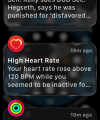
Those heart-rate monitors are good for other things, too. I flew commercial from PHX to SLC (got lazy and didn't want to fly my own plane) and when I got to Phoenix before the flight, I went to the bar for a beer and burger. Two guys eventually sat to my left and right and we all 3 started chatting casually. I got this alert on my watch when they both got excited that they agreed the earth was flat and we'd never been to the moon.

incoming-8D61980F-75F8-41F6-B2DE-66D6726B7D37.PNG
 
Uh… prolly break the thing rolling in behind the boat on a moonless night…

Don’t miss that. Miss lots about those days, but not that.
 
Back
Top