Grumman TBM-3 down Terre Haute Regional

skyking3286

Line Up and Wait
Joined
Sep 29, 2012
Messages
559
Display Name
skyking3286
Grumman TBM-3 involved with two other planes in the flight. Apparently circled the field twice before mishap according to video in the story below. On it's back, with injuries.

 
Last edited:

The plane was flying from Clermont County Airport in Batavia, Ohio. In that suburban village east of Cincinnati, the Tri-State Warbird Museum owns the plane. The museum’s website says it was preparing for the TBM Avenger Reunion on Saturday and Sunday at Illinois Valley Regional Airport in Peru, Illinois.
 
Hard to imagine it would circle twice without anyone on the ground pulling out a phone…
 
This is a head scratcher. It was pretty windy in the area. Flightaware track looks like a standard overhead break to land. Somehow they didn't make the runway. When I first saw the photos it looked like it happened taxiing in with the wings folded, but where they ended up was definitely not a taxi accident.

That particular TBM is the one that killed a guy at OSH in 2006 (taxi accident where it chopped up an RV in front of it).

So will it fly again?
 
So will it fly again?
No telling. TBM's aren't *that* valuable, so restoring one from a pretty bad crash (airframe, prop, engine damage) might put you upside down in value. There should (may?) be airframes in storage that would be cheaper to restore than a damaged example. TBM's were used in quantity in Canada as firefighting aircraft, so there are quite a few surviving airframes.
 
*OFFICIAL PRESS RELEASE*
At approximately 1:50 p.m. on May 15, a World War II-era Grumman TBM Avenger aircraft crashed while attempting to land at Terre Haute Regional Airport. The aircraft was one of three traveling in formation from the Cincinnati area. The flight plan included a stop in Terre Haute to meet fellow participants before proceeding to the TBM Reunion in Peru, Indiana.
The first aircraft, a Grumman HU-16 Albatross, landed safely and cleared the runway. The second aircraft — the TBM Avenger — landed short of the runway, breached the airport perimeter fence, and flipped over, coming to rest upside down. The third aircraft, a North American T-6 Texan, was diverted by the control tower and landed safely at Sullivan County Airport.
Emergency response teams from Terre Haute Regional Airport’s Aircraft Rescue and Firefighting (ARFF) unit and Hoosier Aviation were on scene in under three minutes. The passenger had already exited the aircraft with minor injuries. The pilot remained trapped in the inverted aircraft. Responders successfully extracted the pilot and turned off the aircraft’s master switch to prevent further danger.
The pilot was airlifted via Lifeline to an Indianapolis hospital. The passenger did not require hospitalization. Family members of both individuals have been notified.
Thanks to the fast response and coordination of ARFF and Hoosier Aviation, fire was prevented through the immediate deployment of foam as a fire-retardant barrier.
“I’m incredibly proud of my ARFF team, Hoosier Aviation, the 181st, Terre Haute City Fire and Police Departments, Vigo County EMA, and all other first responders who came together for a successful outcome. A lot of prayers were answered today, and the collaborative training we put in with all of these entities made all the difference,” said Craig Maschino, Executive Director of THRA
A secure perimeter was established and maintained by the 181st Intelligence Wing and the Terre Haute Police Department. The Federal Aviation Administration (FAA) has arrived on site and is leading the ongoing investigation. The scene remains restricted to all unauthorized personnel. No names are being released at this time, and none of the aircraft involved were piloted by Terre Haute residents.
The FAA is reviewing aircraft conditions, the airfield, and all personnel involved. Investigations of this nature may take several months to complete. No speculation will be made about the cause of the accident.
Once the investigation is complete, cleanup of the aircraft and any environmental mitigation will be conducted under FAA guidance.

 
No telling. TBM's aren't *that* valuable, so restoring one from a pretty bad crash (airframe, prop, engine damage) might put you upside down in value. There should (may?) be airframes in storage that would be cheaper to restore than a damaged example. TBM's were used in quantity in Canada as firefighting aircraft, so there are quite a few surviving airframes.
Pretty much. I suspect this one will be more useful as a parts bird to keep or get others back into the air.

Damage looks pretty bad. And for the wings to fold on their own during the crash....there are some structures that have to be pretty messed up internally.
 
I got an eMail from the President of my Local Warbirds Squadron that said it was an Engine Failure on final.

We have meetings periodically at the Tri-State Warbird Museum. Last week we got a brief on the Albatross they recently acquired and was in the flight.
 
No telling. TBM's aren't *that* valuable, so restoring one from a pretty bad crash (airframe, prop, engine damage) might put you upside down in value. There should (may?) be airframes in storage that would be cheaper to restore than a damaged example. TBM's were used in quantity in Canada as firefighting aircraft, so there are quite a few surviving airframes.

Sometimes, I wish I had a time-machine.
 
I got an eMail from the President of my Local Warbirds Squadron that said it was an Engine Failure on final.

We have meetings periodically at the Tri-State Warbird Museum. Last week we got a brief on the Albatross they recently acquired and was in the flight.
That's what I've heard from someone who knows the pilot. Lost power on base. As strong as the winds were, I'm not surprised they ended up short.

Sounds like the pilot is getting released from hospital today.
 
Press release from the museum: As many of our followers are likely aware, our TBM Avenger was involved in an incident this afternoon at Terre Haute Regional Airport en route to the TBM Avenger Reunion. First and foremost, both pilot and passenger are safe. The pilot suffered minor injuries and was taken to the hospital out of an abundance of caution. Please be patient with us as we process this unfortunate event and determine next steps.
 
Glad it sounds like everyone is going to be OK.

Weather at 1pm at that field. Time, wind, vis, ceiling, temp, dp I believe.
1513:53 SE 13 G 22 10.00Partly CloudySCT0328673.987.17067%9429.641003.1

source:
 
No telling. TBM's aren't *that* valuable, so restoring one from a pretty bad crash (airframe, prop, engine damage) might put you upside down in value. There should (may?) be airframes in storage that would be cheaper to restore than a damaged example. TBM's were used in quantity in Canada as firefighting aircraft, so there are quite a few surviving airframes.
Here's a LINK for a list of surviving TBM Avengers, less one of course...
 
Can you imagine flying one loaded up with depth charges off the 474 ft long flight deck of a Casablanca class CVE?
I'd be more concerned with the landing.
 
I'd be most concerned about flying 30' off the deck or whatever, and headed into Japanese AA guns that have almost 0 chance of getting either the elevation or azimuth wrong. We didn't have suicide aircraft by name, but those were maybe the closest we ever came to it. If they'd have had proximity fuses, nobody would have come back from those flights, and if my understanding is right most didn't anyway.
 
Can you imagine flying one loaded up with depth charges off the 474 ft long flight deck of a Casablanca class CVE?
At least that class had one catapult but no idea how much it was used or how much wind over the deck they could normally get.
 
I'd be most concerned about flying 30' off the deck or whatever, and headed into Japanese AA guns that have almost 0 chance of getting either the elevation or azimuth wrong. We didn't have suicide aircraft by name, but those were maybe the closest we ever came to it. If they'd have had proximity fuses, nobody would have come back from those flights, and if my understanding is right most didn't anyway.

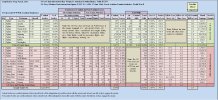
This chart doesn't present a loss rate per sortie, but if you look at the loss percentage per sortie it was only 1.56% overall. So, by far, "most" TBM/TBF aircraft returned from their combat missions.


WW2 Kills and Losses.jpg
 
I'd be most concerned about flying 30' off the deck or whatever, and headed into Japanese AA guns that have almost 0 chance of getting either the elevation or azimuth wrong. We didn't have suicide aircraft by name, but those were maybe the closest we ever came to it. If they'd have had proximity fuses, nobody would have come back from those flights, and if my understanding is right most didn't anyway.
Issue for TBF/TBMs was fighters rather than AA fire. They faired fairly well in shore bombing roles and against surface ships, but against carriers with air support, they didn't have much success. Dive bombers or submarines (once there Navy solved the torpedo problem) were the only effective method of dispatching an aircraft carrier.

Everyone likes to badmouth TBDs but forget that the brand new TBFs launched from Midway Island suffered the same fate as their carrier launched squadron mates.
 
I was thinking of Midway. The statistics are interesting, and much better than I'd have expected, but am I correct that a combat sortie is counted as combat even if there's no engagement? Because it's still a dangerous thing to do. But a sortie where you're flying a torpedo run against the side of a carrier or cruiser is different than being launched but not being able to engage anything.
 
I was thinking of Midway. The statistics are interesting, and much better than I'd have expected, but am I correct that a combat sortie is counted as combat even if there's no engagement? Because it's still a dangerous thing to do. But a sortie where you're flying a torpedo run against the side of a carrier or cruiser is different than being launched but not being able to engage anything.
I think that you are recalling the record of the carrier-based TBD Devastators who suffered heavy losses. One squadron (VT-8) lost 10 aircraft and 29 of 30 aircrew in a single attack. Midway was the Avenger's first battle, but only 5 were present, all were based at Midway itself, and 4 survived.

To be fair, the USN plan was to have multiple TBD and SBD squadrons carry out an "anvil" attack from both forward quarters. That way the defenders would have to split AA gunfire and fighters. But the attack was uncoordinated, so the TBDs which attacked first were annihilated. However, the IJN showed poor self-control and left no high fighter cover and no AAA scanning and aiming high when the SBDs began their attack.

Replaying General Sickles III Corps in the Peach Orchard at Gettysburg, being vulnerable and taking heavy losses proved to advantage the US. As, in response, the opposing force moved themselves out of a superior position.
 
Last edited:
Issue for TBF/TBMs was fighters rather than AA fire.
I think you've got it backwards. After Midway, I've seen a stat (couldn't find it in a brief search) that TBM/F's were never (rarely?) lost to fighters. Fundamentally, TBM's didn't really take part in the early Solomon's or New Guinea campaigns, so by the time they truly entered combat, the US had superiority and the TBM's didn't face much of an aerial threat.
 
Issue for TBF/TBMs was fighters rather than AA fire. They faired fairly well in shore bombing roles and against surface ships, but against carriers with air support, they didn't have much success. Dive bombers or submarines (once there Navy solved the torpedo problem) were the only effective method of dispatching an aircraft carrier.

Everyone likes to badmouth TBDs but forget that the brand new TBFs launched from Midway Island suffered the same fate as their carrier launched squadron mates.
Fun Fact: Which U.S. built fighter has the highest number of kills in WW2? The Bell P-37 P-39 Aircobra.
 
Last edited:
I think that you are recalling the record of the carrier-based TBD Devastators who suffered heavy losses. One squadron (VT-8) lost 10 aircraft and 29 of 30 aircrew in a single attack. Midway was the Avenger's first battle, but only 5 were present, all were based at Midway itself, and 4 survived.
Fun fact - The TBF det at Midway was also VT-8. Ensign George Gay was often portrayed as the lone survivor of VT-8 but I met Capt (ret) Bert Earnest at the NAS Whidbey O'club one time and he introduced himself as "the other lone survivor" as he flew out of Midway. https://www.usni.org/magazines/naval-history-magazine/2001/june/lone-avenger
 
P-39 Airacobra, and only due to Soviet Union operations. Its kill ratio was less impressive.

Nauga,
tied
vvs.jpg
My point being that a M-20, although a great airplane for its intended mission, may not fare well as a crop duster (and good luck getting three passengers in a Shawnee). That isn't because either is a lesser airplane. The USAAF and the VVS used the Aircobra to great effect at low altitude. Utility is the sum of the design, doctrine, training of the operators, ability to supply consumables, maintenance, and command structure. It was said Bear Bryant could take his'n and beat your'n, then take your'n and beat his'n.
 
I think you've got it backwards. After Midway, I've seen a stat (couldn't find it in a brief search) that TBM/F's were never (rarely?) lost to fighters. Fundamentally, TBM's didn't really take part in the early Solomon's or New Guinea campaigns, so by the time they truly entered combat, the US had superiority and the TBM's didn't face much of an aerial threat.
The data is right there in that big spreadsheet I posted in #23.

422 lost to AAA and 47 lost to air-to-air.
 
I think that you are recalling the record of the carrier-based TBD Devastators who suffered heavy losses. One squadron (VT-8) lost 10 aircraft and 29 of 30 aircrew in a single attack. Midway was the Avenger's first battle, but only 5 were present, all were based at Midway itself, and 4 survived.
Other way around. 4 of the 5 VT-8 TBFs were shot down without scoring a hit. Only one made it back to Midway with pilot and radio operator still alive (turret gunner killed) and that one wrecked on landing (it was shot to hell).
 
I'd be most concerned about flying 30' off the deck or whatever, and headed into Japanese AA guns that have almost 0 chance of getting either the elevation or azimuth wrong. We didn't have suicide aircraft by name, but those were maybe the closest we ever came to it. If they'd have had proximity fuses, nobody would have come back from those flights, and if my understanding is right most didn't anyway.
Brewster F2A Buffalo raises his hand.
Though the Finns made it work.
 
Brewster F2A Buffalo raises his hand.
Though the Finns made it work.
Colder denser air in Mikkeli than Manilla. And the Finns didn't have as much weight on board. I recall reading somewhere that the Dutch found that by only carrying a half-fuel load and half-ammo load (in the outer wings) they could match the maneuvering ability of the Oscars they faced.
 
Brewster F2A Buffalo raises his hand.
Though the Finns made it work.
I think the F2A was scapegoated. Its performance was as good or better than everything but the Zero in the early Pacific war. It was faster than Nates and Oscars and had fairly comparable spec's otherwise. Yet the results didn't reflect the type's advantages (or at minimum parity) in Malaya or Singapore. At Midway, it faced the best of the best flying Zeros. The Zero was a modestly better fighter in almost every metric and was piloted by (at that time) much more experienced pilots using better tactics. The biggest issue was the F2A didn't have a single "better" performance characteristic, so once a Zero got behind you, there was no known go-to maneuver to escape. I dunno if the "keep your speed up and roll right" tactic learned from Koga's zero would have been successful.
 
Actually have listened to stories from my Dad doing just that.
It's a real shame that CVE-55 isn't moored on the lake as a museum ship, with a FM-4 and a TBM, near the submarine that her task force captured.
 
My Dad flew off the USS Bairoko CVE-115. He did two deployments. One flying the TBM and one in a Grumman AF, the largest single engine piston carrier aircraft, off the smallest carriers. :D
 
Back
Top