glider tailwheel endorsement necessary?

Salty

Touchdown! Greaser!
Joined
Dec 21, 2016
Messages
15,130
Location
FL
Display Name
Salty
Do you need an endorsement to fly a glider with a tailwheel?

I trained and got my rating in two wheel gliders that technically were tail draggers. But I didn't get a tailwheel endorsement. They don't have the ground loop issues that a real tail dragger would because of not having main gear in front of the CG.

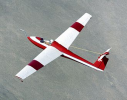
So, do I need an endorsement to fly this glider?
Xenos_5296_on_clouds-20.jpg
 
Not unless there’s a reg besides 61.31 that requires it.

But how do they not have the main gear in front of the CG?
It always confuses me that a glider is not an airplane. 61.31 (i) is only applicable to airplanes, not gliders.

Some do, some don't. Some do depending on how much you shift your weight. Bottom line, having the tire on the centerline reduces the moment of inertia and makes it easier to control than having normal main gear.
 
Some do, some don't. Some do depending on how much you shift your weight. Bottom line, having the tire on the centerline reduces the moment of inertia and makes it easier to control than having normal main gear.
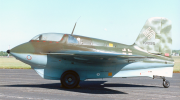
They’re not technically taildraggers. (The one in the picture you posted it a taildragger.)
 
They’re not technically taildraggers.
If your point is that if the CG is in front of the main gear, then technically it can't be a tail dragger, then I am forced to agree. Not sure if that's what your point was.
 
If your point is that if the CG is in front of the main gear, then technically it can't be a tail dragger, then I am forced to agree. Not sure if that's what your point was.
The entire CG envelope is in front of the main gear. It’s not a taildragger even when the tail is resting on the ground.
 
The entire CG envelope is in front of the main gear. It’s not a taildragger even when the tail is resting on the ground.
How can you say that globally? Perhaps true of "most" or "common".
 
Not without doing research. Unless you consider the one in my OP. ;)
I don’t consider the one in your OP. It doesn’t have the main wheel on the centerline, and the CG is unlikely to ever be in front of the main wheels.
 
I don’t consider the one in your OP. It doesn’t have the main wheel on the centerline, and the CG is unlikely to ever be in front of the main wheels.
I was just yanking your chain.
 
How can you say that globally? Perhaps true of "most" or "common".
"On the ground it [the glider] is tail down when empty, and nose down with pilot in the seat. When pilot gets out he should keep his weight on the side of the cockpit until he is in a position to lower the tail gently to the ground."

(The last paragraph under LANDING in the POH for the Schweizer 1-23, 1-26, 2-33, and possibly others.)
 
"On the ground it [the glider] is tail down when empty, and nose down with pilot in the seat. When pilot gets out he should keep his weight on the side of the cockpit until he is in a position to lower the tail gently to the ground."

(The last paragraph under landing in the POH for the Schweizer 1-23, 1-26, 2-33, and possibly others.)
There are some AS gliders that sit with the tail on the ground, but they have the CG behind the main gear and aren't common trainers.
 
There are some AS gliders that sit with the tail on the ground, but they have the CG behind the main gear and aren't common trainers.
I've never flown one*, but my understanding is that the 1-36's** main wheel is in front of the CoG at GW.

* If anyone wants to lend me one I promise to fly it a lot and provide complete reports.
** Definitely not a training glider.
 
That's not a glider. It's designed to fly with an engine. You need TW endorsement but not glider rating.
 
Sometimes things pique my interest and I just need to know "why" so I found a copy of an SGS 1-36 POH.

They were actually offered in two flavors* 36903-1 "forward wheel position" and 36903-3 "aft wheel position". The position of the former's main makes it a "tail-dragger". It's main is 11 ft 3.8 in behind datum and forward of the empty gliders CoG. It has a different takeoff procedure and one additional landing task than the latter, whose main is 12 ft 11.5 in behind datum and aft of the empty CoG.

Reading between the lines, the -1 offers slightly better aerodynamics because it lacks a nose skid.

*Not including NASAs singular 1-36 which had a horizontal stabilizer that could pivot 70 degrees (leading edge down).
1747763025186.png
 
I always thought my Pipistrel Taurus, 2 mains and a tail wheel with the CG behind the mains, was a tail dragger. It was a self-launch but not a cruiser. Not designed or recommended for continuous flight behind the engine like the Zimango or whatever they are.
 
That's not a glider. It's designed to fly with an engine. You need TW endorsement but not glider rating.
If anything with an engine is not a glider, then what is 14 CFR 61.31(j)(1)(iii) all about? And what about all the talk of powered gliders in AC 21.17-2A?
 
Gliders are not airplanes. They can’t be anything besides a glider. It’s a singular title for all of them things.
For certificated aircraft in the US, the certification tells a owner / pilot / mechanic what a "zug" is. Being bureaucrats they do not think like you or I. Nor is what you or I think of the least significance to them. But, Will Rodgers is surrounded by many disillusioned El ingenioso hidalgo Don Quixote de la Manchas looking for giants to fight.

Heck, once upon a time you could buy a kit from Schweizer (or others) and build your own glider. You filled out an affidavit that you followed the factory instructions, and it was certificated standard category. 114 SGS 1-26As, including one that I have flown, were constructed this way.
 
Last edited:
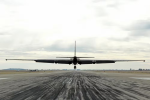
I wonder if you need the endorsement for the U-2. It's more of a unicycle than a tail dragger.

Years ago, when a former U-2 pilot wanted to fly my plane, I told him my insurance required 25 hours of retract time and inquired if the wheels fall off your plane, does that count as a retract?
 
I wonder if you need the endorsement for the U-2. It's more of a unicycle than a tail dragger.

Years ago, when a former U-2 pilot wanted to fly my plane, I told him my insurance required 25 hours of retract time and inquired if the wheels fall off your plane, does that count as a retract?
That would be a lot of fun to fly.
1747838878553.png
Does anyone have the phone number for The War Assets Administration or the Reconstruction Finance Corporation? I read U-2s are being phased out in favor of (censored). They sold surplus L-4 Cubs for $500 in 1946. With inflation that's $9,200 today. Maybe I can get a deal! :)
 
If anything with an engine is not a glider, then what is 14 CFR 61.31(j)(1)(iii) all about? And what about all the talk of powered gliders in AC 21.17-2A?
That doesn't specify that self launch is due to an engine.
RC gliders can use, basically, a slingshot. No reason that couldn't be used full scale.
 
once upon a time you could buy a kit from Schweizer (or others) and build your own glider. You filled out an affidavit that you followed the factory instructions, and it was certificated standard category. 114 SGS 1-26As, including one that I have flown, were constructed this way.
yes my 1-26C was a kit built standard certificate glider. #294. Actually the only difference between the 1-26B and the 1-26C. The 1-26B was assembled in the factory, the 1-26C was assembled from a kit.

Brian
 
yes my 1-26C was a kit built standard certificate glider. #294. Actually the only difference between the 1-26B and the 1-26C. The 1-26B was assembled in the factory, the 1-26C was assembled from a kit.

Brian
Think of how lucky us pilots are that the FAA saved us from those deathtrap 1-26C's falling out of the sky. :rolleyes:
 
That would be a ground-launch method, like winching.
There is no definition in 1.1 or self-launch or ground-launch. If no one else is required (whether a winch, or an engine) couldn't both fall under self-launching?
 
There is no definition in 1.1 or self-launch or ground-launch. If no one else is required (whether a winch, or an engine) couldn't both fall under self-launching?
“No one else required” would be a self-launching pilot, not a self-launching glider.
 
There is no definition in 1.1 or self-launch or ground-launch. If no one else is required (whether a winch, or an engine) couldn't both fall under self-launching?
Does such a method exist?

Regardless the FAR lists three categories of launch methods and simply requires appropriate instruction for each category. If you think that the instruction for launching with a slingshot would be most like the instruction needed for launching with an engine rather than a winch or other ground-based methods, then I disagree.
I'm just saying it doesn't specify engine, so the regulation isn't limited to motorgliders.
 
Back
Top