Frederick MD Tower opening May 1

poadeleted20

Deleted
Joined
Apr 8, 2005
Messages
31,250
FYI...
All –

As you know, we have a target opening date of May 1st for the Tower. The Tower frequency will be 132.400, ground frequency will be 121.975, ATIS l AWOS 124.875. The operating hours are scheduled to be 7:00 a.m. to 9 p.m.
- 7 days a week. After 9 p.m. the airfield reverts back to CTAF operations on frequency 132.400 (not 122.725). All pilot controlled lighting will operate on 132.400 after the Tower closes for the night. For safety purposes, the FBO will continue to monitor the 122.725 frequency for the next (6) months to alert any traffic not operating on the new 132.400 frequency.

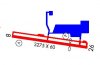
I have also attached an exhibit which indicates the movement area boundaries for the airfield. We have attempted to keep this as simple as possible (blue indicates free movement, before entering the red you must contact the ground controller). We are working on getting the boundary markings painted by May 1st, however; if we can’t meet the deadline, there will be temporary signage at all of the boundary areas.

AOPA will be rescheduling our Towered Operations Seminar for April 24th, probably around 7 p.m. at the FSK Holiday Inn. AOPA will be sending out a formal announcement shortly. The Tower Manager (Todd Johnson), along with all of the new controllers will be attending the event. It will be a great time to meet your new Tower staff.

Please pass along all of this information and if you have any questions - ASK!

Kevin Daugherty, AAE
Airport Manager
City of Frederick l Frederick Municipal Airport
(301) 600 - 1423
(301) 600 - 2262 (FAX)
 

Attachments

I'll take the over on the number of pilots that don't contact tower and land broadcasting on CTAF.
 
As a reference point, the last person who arrived at Salisbury MD talking on the old CTAF (UNICOM) did so about five years after the tower went into operation -- with a six-year-old sectional. :sigh:
 
Nice! I'll have to hop over there once I'm back in the area. I've been wondering when this was going to happen for a while.
 
I flew into State College for the Alabama-Penn State football game this year and the tower had only been open three weeks. To give you an idea of the amount of traffic that day, I was held in Atlanta for an hour and a half for a ground stop, got vectored 35 miles past the airport for sequence, and heard several aircraft that had been holding for 45 minutes to an hour.

The New York center frequency was so busy, you couldn't get a word in edgewise, when a guy in a Baron asks, "Hey New York, I know they have a new tower, but my charts and GPS aren't updated yet, could you give me the frequency for the weather, and while your at it, you might as well give me the tower and ground freqs too." The controller almost had an aneurism.

Then, after we had been cleared for the visual by approach, and then cleared to land by the tower, we were wondering why neither of them had pointed out the traffic below us on the TCAS. We finally saw that the traffic was a Military helicopter that we were overtaking and would beat to the airport. As we were turning of the runway, we heard the tower ask, "Helicopter on short final, please say your tail number." to no response. He made a low pass down the runway and continued out of the area. They were trying to contact him in CTAF when we shut down.

Doesn't anybody check NOTAMS?
 
Despite my just getting used to non-tower communications, I'm excited to have the tower open. As a student this will be a great learning experience for me. Plus, FDK gets pretty crowded on the weekend with a number of people doing a number of different things. I think this will help organize the traffic flow a little better.
 
I agree that it will be a good learning experience for you. I learned at a Class D, and it really helped my communication skills. It was a bit of a learning curve, however, once I moved to a non-towered field. Prolly not as much as going the other way though.

I was also based at a non-towered field that became towered, (KTFG) so I know what happens to the "un-informed". We had a few guys barge into the pattern creating mayhem, and several busting the adjacent Class B due to the redesigned airspace.
 
Wonder how many more expanded P40 & SFRA busts there will be from pilots looking to avoid the Class D. That can be a pretty narrow piece of airspace.
 
It is a super narrow piece of airspace. The practice area I usually fly in is not big at all. If you aren't paying attention, you will end up flying with F-16s within a few minutes.
 
I gotta compliment them on their separation of the entire ramp area as a non-movement area. Really you only contact ground when you're about to enter a parallel taxiway to one of the runways.
 
Last edited:
I gotta complement them on their separation of the entire ramp area as a non-movement area. Really you only contact ground when you're about to enter a parallel taxiway to one of the runways.

What does that make complete? :rolleyes:
 
I gotta compliment them on their separation of the entire ramp area as a non-movement area. Really you only contact ground when you're about to enter a parallel taxiway to one of the runways.
During the year that the temporary tower was in operation at KVUO, everything other than the runway, the parallel taxiway and the intersections connecting them, was non-movement area. No "ground control" was necessary.
 

Attachments

  • nonmovement.jpg
    nonmovement.jpg
    9.2 KB · Views: 12
Wonder how many more expanded P40 & SFRA busts there will be from pilots looking to avoid the Class D. That can be a pretty narrow piece of airspace.

There is no reason to bust P40 because of a class D. If you are above it, no need to talk to them, if you have to go accross you call them up.
 
I gotta compliment them on their separation of the entire ramp area as a non-movement area. Really you only contact ground when you're about to enter a parallel taxiway to one of the runways.
From a regulatory standpoint, that's true, but FAA guidance suggests calling ground before taxi if you intend to enter the movement area. And I'm pretty sure you'll get a small lecture from them if you go all the way to that point before you call.
 
I was also based at a non-towered field that became towered, (KTFG) so I know what happens to the "un-informed". We had a few guys barge into the pattern creating mayhem, and several busting the adjacent Class B due to the redesigned airspace.

The Class B busts continue to this day. ;) You hear them chastise someone almost every time you go over there when there's more than one aircraft in the pattern.

(Except of course when our exceptional PoAers based there are doing Young Eagles hops on Saturdays.) ;)

"You see that road below you? That's the edge of the Bravo airspace. You need to turn before that road."

(Same phraseology works for Imboden Road on the West side and whatever that road is on the north boundary too.) ;) ;) ;)
 
From a regulatory standpoint, that's true, but FAA guidance suggests calling ground before taxi if you intend to enter the movement area. And I'm pretty sure you'll get a small lecture from them if you go all the way to that point before you call.

Neither KAPA not KFTG care. As long as you don't enter the controlled area prior to calling, you're fine. And they can't see you in most of the uncontrolled area anyway. Bad sight lines.

In fact KAPA has published that they'd really rather not hear from you until you've taxied from Area Hotel to the Charlie 3 run-up area (or wherever else you like) and completed your run-up. But KAPA now has permanent "special" operations in that regard.

The entire "taxiway" along 10/28 is mostly not visible from the Tower and is considered "ramp". Even though it's got a centerline and is painted to look like a taxiway EXCEPT for there being no solid-dashed combo line indicating a controlled area.

KAPA ATIS phraseology is this:

"Centennial Special Procedures are in effect: All aircraft advise Ground of your direction of flight. All aircraft advise Ground if a run-up is required. All aircraft notify Ground when ready for departure for sequence to the hold line."

You do NOT leave the run-up box and proceed to the hold-short line on your own. They want the option to leapfrog you with jet traffic that doesn't need a run-up and especially the heavy numbers of Lifeguard callsigns in and out daily.

My normal op now is to taxi from our hangar area (where the tower can't see me and often says radios are weak anyway) in Area Hotel to the large open empty parking area South of the tower, complete a run-up, and then call ground, "Centennial Ground, Skylane 127 Niner Mike, ramp abeam Charlie 2, taxi for takeoff, southeast departure, run-up complete, information India."

From there depending on wind I'll either get, "Taxi via the ramp to Runway 10", or "Taxi via Alpha to runway 17/35".

Later you'll get "Skylane 79 Mike, at the hold line, monitor Tower.", as they hand the flight strip to the Local Controller.

This unloads the Local Controller significantly.

If you call saying you require a run-up, your taxi clearance will either be to the "north run-up area", "south run-up area" or if those are full, "Charlie 1 run-up area" which is a congested corner and also listed as a "Hot Spot" and IMHO a bad place for run-ups.

The Charlie 1 area is considered a temporary solution according to the Tower Manager.

They're making the north and south run-up areas larger and the north run-up area will be painted in such a way that you can taxi IN to it from the ramp and self-service fuel pump area but past it onto Taxiway Alpha will be controlled.

These new run-up areas are due to the fact that a strangely high number of pilots upon hearing "monitor tower" we're taxiing straight out onto 17L/35R from their run-ups. A freakishly high number.

The new painted run-up pads give a definitive place to tell pilots to taxi to. Previously it was "taxi via Alpha to 35R" and they got nailed by the inspection team for that phraseology. With no definitive "place" to send aircraft, the special procedure to stay with Ground and big call the Tower until handed off was confusing people.

They're not on the taxiway chart yet. If you're following along on yours, the Hot Spot at A1 is now the "north run-up pad" and the pullout near A16 is the "south run-up pad". Or they can tell you to run up at the pad at A18 in VMC. (That pad is beyond the ILS Hold line which is inbetween A16 and A18 and also not depicted. It'll be nice if after all the new concrete is poured and lines painted that our venerable taxi diagram gets some much needed updates for non-locals who have no idea where this stuff is located yet.)

Anyway. That's the fun here. But to the original topic. Neither tower cares when you call them from the non-movement uncontrolled areas, as long as you stop before entering one.
 
As a reference point, the last person who arrived at Salisbury MD talking on the old CTAF (UNICOM) did so about five years after the tower went into operation -- with a six-year-old sectional. :sigh:
Wouldnt making the new tower frequency the same as the old CTAF preclude something like this from happening?
 
Wouldnt making the new tower frequency the same as the old CTAF preclude something like this from happening?

The CTAF is shared by other airports in the region, and it wouldn't be appropriate to assign that frequency to a a tower.
 
Ha. I can just imagine a Tower Frequency on 122.8 or 122.9.
 
The CTAF is shared by other airports in the region, and it wouldn't be appropriate to assign that frequency to a a tower.
That's right, there are only a handful of unique CTAF frequencies. Using off-duty tower freq's as the CTAF is one thing, but taking a CTAF for a tower freq doesnt make sense.:idea:
 
I can't wait! I am sick of idling 15 minutes on the ground waiting for a clearance and release.

The tower may or may not change that, unless they get a full fledged 'IFR tower', they still have to call for clearance and release.
 
The tower may or may not change that, unless they get a full fledged 'IFR tower', they still have to call for clearance and release.
While that's true, the process is going on in the background while you're taxiing and running up, and you don't get that "hold for realease, advise when number one ready to depart [and then we'll start working on making a hole for you]" business. Coordination out of other non-radar towers in the area such as Easton, Hagerstown, and Salisbury is far smoother and more expeditious than the Potomac Clearance RCO routine at Gaithersburg, Culpeper, and (until May 1) Frederick (although even that is way better than doing it by phone). In fact, Salisbury Tower often already has my release when I call ready for takeoff.
 
While that's true, the process is going on in the background while you're taxiing and running up, and you don't get that "hold for realease, advise when number one ready to depart [and then we'll start working on making a hole for you]" business. Coordination out of other non-radar towers in the area such as Easton, Hagerstown, and Salisbury is far smoother and more expeditious than the Potomac Clearance RCO routine at Gaithersburg, Culpeper, and (until May 1) Frederick (although even that is way better than doing it by phone). In fact, Salisbury Tower often already has my release when I call ready for takeoff.

While HEF is pretty good, it's very frequent "hold for release" (cue the jeopardy tick-tock music) depending on IAD. I would expect FDK to be the same.

I find OKV to be very expeditious, and JYO to be very slow.
 
Ha. I can just imagine a Tower Frequency on 122.8 or 122.9.

ACTUALLY... the reason 122.9 is now called MULTICOM instead of UNICOM is that the FAA actually DOES use it from time to time for temporary towers/ATC.

Or at least they reserve the right to do so. They typically won't re-task a UNICOM, but MULTICOM is fair game for them, if they need it.

Been involved in a thread on a private mailing list talkin' about that frequency. It had been formerly used significantly in the past for SAR training, quite often.

That authorization for ground stations on 122.9 for that particular purpose, apparently never existed. Aeronautical station use for SAR was dropped by the NTIA/FAA/FCC about four or five years ago, but wasn't widely disseminated OTHER than the name change in FAA documentation...

So it's generally been being ignored -- mostly by accident and lack of anyone pointing it out in a significantly watched forum for SAR folks.

In fact, it's still so widely used, it showed up in the NIFOG book, one of the rare useful items to come out of DHS.

http://www.dhs.gov/files/publications/gc_1297699887997.shtm

So there you have all the boring info you ever wanted on one of the multitude of uses for 122.9 -- ain't it exciting? :) :dunno:
 
As a reference point, the last person who arrived at Salisbury MD talking on the old CTAF (UNICOM) did so about five years after the tower went into operation -- with a six-year-old sectional. :sigh:
I wonder what the look on his face was when he saw the tower on landing?
 
I wonder what the look on his face was when he saw the tower on landing?
Can't speak to that, but I can tell you about the look on his face when he walked into the FBO and was told the tower wanted him to call. :eek: "Tower? There's a tower here?"
 
Back
Top