Matthew
Touchdown! Greaser!
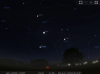
Some high haze but a good view of the crescent moon, Venus next to it, Jupiter up and off to the left. Above the eastern horizon is Saturn.


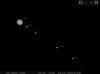
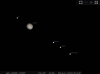
Good view of the Jupiters moons too. Sharp eye can spot the 4 big ones even on a 7x50 binocular.


The hard part is stabilizing the binoculars.


Good info. To add to what you said: Venus as an "evening star" is most favorably situated for evening viewing during late winter and spring, such as back in 2012 in the months before the transit that was publicized everywhere. This is because it is east of the Sun in the sky when it's an evening star, and since the motion of the Earth around the Sun causes the Sun and planets to seem to move eastward among the stars, that means Venus follows a similar path to that of the Sun a few months in the future. Since the Sun is moving higher in the sky during late winter and spring, Venus will be higher in the sky than the Sun as well. The reverse is true for Venus as a morning star. When Venus is a morning star, it is best seen during late summer and fall months.If you know where to look, you can spot Venus in daytime. Your eye will naturally filter it out unless you focus right on it, much like spotting distant lighted traffic in daytime. It can be seen in crescent phase most easily during the day. Always observe from within shadow for safety, both for you and whatever equipment.
 Maybe tonight.