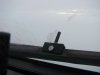
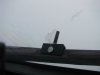
Ever doubt that ice accreates on on the smallest surface first?

Teller1900

En-Route
Joined
Aug 4, 2007
Messages
3,644
Location
Denver, CO
Display Name
I am a dad!
Home Airfield
DEN
Here's proof: our "ice detector probe." It's just a little piece of plastic on the windshield wiper, but it appears to be one of the first places on the entire plane that ice builds appreciably. This was when we were level at 16,000 feet over DC yesterday...ice season is coming quickly!
 

Attachments

  • IMG_0717.JPG
    IMG_0717.JPG
    2.6 MB · Views: 143
  • IMG_0718.JPG
    IMG_0718.JPG
    2.7 MB · Views: 99
You'd figure theuy would come up with a more elegant method of attaching this device on a multi million dollar aircraft. To me that almost looks like something Red Green would cobble together.
 
Last edited:
You'd figure theuy would come up with a more elegant method of attaching this device on a multi million dollar aircraft. To me that almost looks like something Red Green would cobble together.

The link is 404, but I do enjoy Red Green! We actually have multiple ice detectors; both wipers have these with a dedicated light that we can turn on to see if we're picking up ice at night.

Then we also have two of the expensive, fancy ones on the side of the plane, under the standby pitot tube. They're about three inch long, one inch diameter metal rods that vibrate at extremely high frequency. If the vibration is slowed, they're automatically heated until the vibration is back to normal, then the heat is turned off. If the vibration slows again (ice building up) it displays an "Ice Detected" message on one of our screens.

Guess which system usually works first, though :rolleyes:.

LOL- and guess which one never breaks, requires no service, and cost peanuts compared to thousands. :wink2:

Those wiper probes are nothin' fancy, but hey- at least it's a rated bolt. :lol:
 
It did its job! Sometimes the simplest of instruments are the most effective.
 
Here's proof: our "ice detector probe." It's just a little piece of plastic on the windshield wiper, but it appears to be one of the first places on the entire plane that ice builds appreciably. This was when we were level at 16,000 feet over DC yesterday...ice season is coming quickly!

Well, mebbe if you took that stick off you wouldn't have a place for ice to stick to! :rofl:
 
On the B727 we use the bolt protruding from the windshield wipers. Works very well.

Similar to the 1900. The bolt that attached the wiper to the plane was the easiest way to see ice on the aircraft, especially at night, in clear ice, or in the middle of a boot cycle. I'd imagine that's doubly true on something like the 727 that probably has a pretty limited view of the wing (not to mention a heated wing that I'm guessing isn't too conducive to icing). They just engineered an actual piece of plastic for it on this plane.
 
Well, mebbe if you took that stick off you wouldn't have a place for ice to stick to! :rofl:

All that engineering power, and they didn't think of that!!! All winter flying problems solved! :cornut:
 
It did its job! Sometimes the simplest of instruments are the most effective.

:yes:

Very cool picture, Matt. And yes, icing season is coming quickly. So much for flying the Mooney in IMC. :(

When the bolt starts picking up ice, do you blow the boots on the wings, or what? Do you watch airspeed for an indication?
 
:yes:

Very cool picture, Matt. And yes, icing season is coming quickly. So much for flying the Mooney in IMC. :(

When the bolt starts picking up ice, do you blow the boots on the wings, or what? Do you watch airspeed for an indication?

You can still fly the Mooney in IMC, you just have to take it farther south!

Generally we hope to stay well enough ahead of the ice that we won't see changes in the airspeed. Both the Beech and the Q have so much excess power, it really takes a lot of ice to make them slow down. I only ever saw it once in the Beech, and lets just say...that was A LOT of ice!

On the Beech, the bolt wasn't intentional, it just so happened to be a good way to draw your eye out to the wing to see if the boots needed to be cycled. The engine anti-ice came on at TAT +5C or less in visible moisture, then we'd just blow the boots whenever it looked like they needed it.

On the Q, we just turn the boots on either fast or slow cycle whenever a) the SAT is +10C or less in visible moisture, b) the "Ice Detected" message appears on the ED (engine display) screen, or c) we see appreciable ice on the wing or the windshield ice detector. It handles the rest from there.
 
Back
Top