Cessna 182p tank siphoning

MikeLima

Pre-Flight
Joined
Dec 7, 2015
Messages
92
Location
Missouri
Display Name
MikeLima
What are the possible causes for the left tank to drain into the right tank when fuel selector is set on both... to the point where right tank fills to overflowing? Happens when flying, not sitting.

Thought the first time must have left the right cap loose but apparently that wasn't it. Fuel will feed from both tanks if selected individually. Could the fuel bladder being partially disconnected from filler tube cause this?

ML

There is a vent interconnect between the tanks. It is normal until the fuel levels are about 60% in both tanks.
 
I used to fly a 182 that did the same thing. Turns out when parked on a slightly sloped ramp the fuel would go from the uphill tank to the bottom hill tank. I just turned the fuel valve off and put a BIG note on the flight can and the yoke.
 
I just turned the fuel valve off and put a BIG note on the flight can and the yoke.
Not sure about all 182s but the late model legacy aircrafts (P,Q &R) cross feed in the off position. You need to put the fuel selector to either the right or left position to prevent cross feeding.
 
If it is blowing out of the cap and off the back of the wing, you need new rubber gaskets in your caps. It is a cheap fix, I had the same issue in my J model. Also, your vent tube might need adjusting. Mine still cross feeds every flight.
 
Very common an know issue...I fly switching 50% on R and 50% on BOTH....don't think I have ever flown on L tank to keep draw balanced.

Problem is in how the venting system is deigned, but other problems like poorly sealed caps can amplify the problem.
 
Cessna Pilot's Assn has an excellent paper on why this happens, and fixes.

And you can chase them for the rest of your life and they'll still do it.

Things to check:
- Cap seals
- Vent line check valve
- Vent tube EXACTLY located in reference to the strut as per the Cessna SB on the topic

And a few other things.

Thing is, and someone mentioned it above -- there's a cross over vent about 2/3 of the way up the tanks, and it doesn't matter what you do with the selector valve... if the airplane is at all off of level or the pressure from the only air vent (left side) is higher by a tiny bit than it should be, or the moon is waxing gibbous... fuel will push from left to right until the cross over vent line is below the fuel.
 
I learned this week that MacFarlane makes a vent line with an upward and then downward bend in it. Doesn't help the tank to tank transfer but does help the common siphoning overboard problem. And like a lot of their gadgets, fixes things Cessna did wrong. :)
 
I learned this week that MacFarlane makes a vent line with an upward and then downward bend in it. Doesn't help the tank to tank transfer but does help the common siphoning overboard problem. And like a lot of their gadgets, fixes things Cessna did wrong. :)
The oldest 180s (and 170s) had the tank vent on the top of the cabin roof near the left side (170's in the center). It stuck straight up and curved forward, and fed the air into that vent crossover line. Siphoning from one side to the other was impossible, though a small flow across was still possible if parked on a lateral slant and the tanks were full enough. No big deal if the cap seals were OK. No underwing vent for fuel to run out of, either. It had the old problem of being subject to icing or bug-clogging, but worked better than the later venting systems. Adding vented caps as per AD 79-10-14R1 fixes that.

You can see the vent sticking up on this one:

N180BG-10L.jpg
 
I have a 1982 skyline that while flying at 6500’ far in New Jersey, I noticed in the right fuel vent misty fuel coming out. I landed and found out I was losing close to 4 1/2 gallons per hour over my normal fuel burn…. My fuel flow gauge was showing normal that I was using 11 1/2 gallons per hour. When I did the math I was using 15 1/2 gallons per hour.. I was nervous about what I was seeing, so I made a fuel stop and found that I only had 8 gallons left in the tank and another hour and a half to fly which usually I’ll make a full tank with fuel left over… I had a shop in Florida look at it and they said they cleared a clog in the right wing vent tube… something‘s going on does anybody else have that problem?
 
I have a 1982 skyline that while flying at 6500’ far in New Jersey, I noticed in the right fuel vent misty fuel coming out. I landed and found out I was losing close to 4 1/2 gallons per hour over my normal fuel burn…. My fuel flow gauge was showing normal that I was using 11 1/2 gallons per hour. When I did the math I was using 15 1/2 gallons per hour.. I was nervous about what I was seeing, so I made a fuel stop and found that I only had 8 gallons left in the tank and another hour and a half to fly which usually I’ll make a full tank with fuel left over… I had a shop in Florida look at it and they said they cleared a clog in the right wing vent tube… something‘s going on does anybody else have that problem?
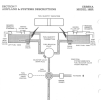
You should have a copy of the airplane's POH in that airplane. It's a 182R. If you look at section 7 you will find this:
1777396762975.png

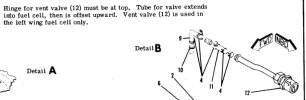
Both fuel vents have check valves on them, inside the tank. They are designed with a tiny hole in the poppet so that air can enter the tank quickly, but only exit slowly. This is to prevent losing much fuel. If the stem of that vent is not rotated to the upward position in the tank, the check valve is immersed in fuel for a longer period. If the poppet's hinges is gunked up or corroded, it will not swing shut and you can lose vast amounts of fuel. This is an inspection item outlined in the inspection check sheets in Chapter 2 of the Service manual, with details in Chapter 12, all of which most mechanics ignore altogether.
1777397869295.png

Mistake there, above: That vent valve is used in BOTH tanks in the 182R. Go back to the first diagram from the POH.

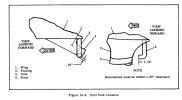
Now, if the fuel vent's inlet is not positioned correctly behind the strut as per the Service Manual, the tank gets incorrect pressures and suction could be pulling fuel out of the tank. If the vented fuel cap has a blocked vent, the suction could cause the bladder to collapse, with the bottom pulling upward and forcing more fuel out the vent. As the fuel exits and the bladder pulls up more, the fuel sender's float is also raised, giving falsely high fuel gauge indications. This can also happen if the fuel cap's gasket is shot.
1777397254811.png

Front and side views of the vent location. It's pretty fussy. This location is intended to minimize icing of the tube, but it also affects tank pressures.

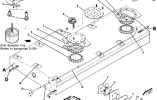
The crossover vent tubes in this arrangement are long and are suspended from the roof of the bladder by small straps. They extend all the way across the tank to the outboard end, where there is some airspace even when the tanks are full. If those straps fail, the tube falls into the fuel and can easily transfer large amounts across to the other tank. This applies only to the long-range tanks.

Item 15 is the long crossover vent tube. "B" is the vent fed by the underwing vent, with the check valve on its inside end:
1777397727457.png


Time to get the mechanics to open that service manual and inspect the whole system properly.

 
Just beware if you start tugging on the bladder nipples they may break if the rubber bladders are old then your in for a bladder replacement.
 
Found this once:

Check out Dan’s drawing of the system. On some s/n ( long range) the small

vent line in the tank has plastic tubing extending to the outboard side of

the tank. This tubing is supposed to be supported by loops in the top of the

bladder. Now if the tubing NOT put through the loops it will hang down

into the fuel. And this will provide a nice path to the other tank which

will then fill or overflow.
 
Big thanks for that informative reply. …Well, that’s a lot of information to digest .. and thank you so much for that… I alsoinspected the slip rings in the gas cap and they look pretty dried and brittle.I ordered two new ones… do you think just switching the gas caps will make a difference?
 
Big thanks for that informative reply. …Well, that’s a lot of information to digest .. and thank you so much for that… I alsoinspected the slip rings in the gas cap and they look pretty dried and brittle.I ordered two new ones… do you think just switching the gas caps will make a difference?
They might help, but the rest of the tanks and vents needs checking, too. That airplane is 44 years old, and stuff happens with age.
 
182? Wet Wings or Bladders?
What’s better?
They both have their drawbacks. Like everything else in aviation, there are compromises. The old 182s (up to 1986) had bladders. The restarts ('96-on) have integral tanks (wet wings). Bladders get old and brittle and degrade. Burning Mogas containing ethanol sure doesn't help. The sealants in the integral tanks also ages. It's been 30 years now but I haven't heard any horror stories yet.

Those bladders had a bad habit of wrinkling, making ridges in the bladder floor that would trap water and keep it from reaching the sump drain. Those airplanes also started out with flush fuel caps whose seals were often not maintained, and water got into the tanks way too easily. An AD addressed this, and Cessna had a kit to relocate the drains to pull the wrinkles out, but in old bladders that had stiffened those wrinkles would not comply. One had to rock the wings violently to get the water to migrate to the drain. They had another kit to replace the flush caps with the raised caps found on smaller Cessnas.

The integral tanks have five drain points for each tank, to get all the water that gets trapped behind the internal skin stiffeners in the tank. I have seen complaints on POA about all those drains, but if the complainers saw the inside of the tank, they'd stop complaining.
 
Dan actually stated the issue at the end of his earlier post. And if item 15

( tubing ) is not suspended by the loops in the LEFT tank it will be immersed

in fuel. A positive pressure from the Vent will cause fuel to transfer to the

RIGHT. Caps can get pricey but seals are cheap. Do you have “Killer Caps”?
 
They might help, but the rest of the tanks and vents needs checking, too. That airplane is 44 years old, and stuff happens with age.
I did switch the caps this morning and I went up for exactly 1 hour from start up to landing and then re-parked… I marked an R on the right and an L on the left to make sure I got everything right got up to 3500 feet and was cruising true air speed 142 to 145. Everything seemed to be working fine came down and re-stick the tanks and my fuel burn was 14 gallons in one hour.. that’s including startup, taxi, takeoff, and land and park back in the same exact spot and then stick the tanks… the slip rings and New rubber rings are gonna come tomorrow… I’ll change them and switch them back and see how it goes…
 
What are the possible causes for the left tank to drain into the right tank when fuel selector is set on both... to the point where right tank fills to overflowing? Happens when flying, not sitting.

Thought the first time must have left the right cap loose but apparently that wasn't it. Fuel will feed from both tanks if selected individually. Could the fuel bladder being partially disconnected from filler tube cause this?

ML

Most likely it’s a cross-feed issue. When on “both,” fuel is flowing unevenly and transferring from left to right. Common causes are a bad or sticking fuel selector valve, venting problem on one tank (blocked or restricted vent), or a check valve not sealing. If the left tank isn’t venting right, it’ll push fuel over to the right tank in flight. The bladder/filler tube could contribute if it’s leaking air or not sealing, but start with the vents and selector valve first.
 
Back
Top