Brake Problems - Grumman Traveler

francisco collazos

Line Up and Wait
Joined
Jun 11, 2021
Messages
650
Display Name
ciscovet
Hey everyone and thanks in advanced for your help. We have been fighting with brake issues in our club1972 Traveler for about a year now. The left brakes just do not work very well. Seems like they do not grip very well, there's also been times when they let go and need to be pumped for them to function. THey need to be bled multiple times so it makes sense to me that there's a leak somewhere. We already have replaced the master cylinder and just recently all the rubber hoses on the brake system. I don't particularly like to just go around replacing parts willy nilly but that's how it's been. Seems like there needs to be a way to check to see where the leaks are coming from. I haven't seen any brake fluid in the cabin and my suspicion is there's probably a crack some where in the metal tubing small enough to maybe leak with vibration. Any ideas where to look? I am going to speak to the members about possibly taking it to a grumman specific spot since our mechanic likes to just go around replacing parts. Last time we had a mag problem and we pretty much replaced everything only to find out the rebuilt mag was the problem, which could have been pointed out in the beginning by slipping in another mag but I digress.
 
Seals inside the caliper, any junction flare fitting, o rings in the actuators. Lots of places to look. How about the right side actuators, have they been looked at?
 
Hey everyone and thanks in advanced for your help. We have been fighting with brake issues in our club1972 Traveler for about a year now. The left brakes just do not work very well. Seems like they do not grip very well, there's also been times when they let go and need to be pumped for them to function. THey need to be bled multiple times so it makes sense to me that there's a leak somewhere. We already have replaced the master cylinder and just recently all the rubber hoses on the brake system. I don't particularly like to just go around replacing parts willy nilly but that's how it's been. Seems like there needs to be a way to check to see where the leaks are coming from. I haven't seen any brake fluid in the cabin and my suspicion is there's probably a crack some where in the metal tubing small enough to maybe leak with vibration. Any ideas where to look? I am going to speak to the members about possibly taking it to a grumman specific spot since our mechanic likes to just go around replacing parts. Last time we had a mag problem and we pretty much replaced everything only to find out the rebuilt mag was the problem, which could have been pointed out in the beginning by slipping in another mag but I digress.
Try posting on the GOPA Facebook page or on the Grumman Gang. Several Grumman AnPs on them can point you in the right direction.
 
Thanks you guys, supposedly it's fixed but we will see.

So I guess it's still not functioning properly. I'm going to go out there on thursday. Any specific things I should look for?
 
Last edited:
Sounds like those calipers have solid metal lines to them, at least for the last foot or two. When some mechanic removed that left caliper at some time, maybe for a tire change, He pushed the caliper out of the way and bent the line doing that. now that line has a bend in it that puts pressure on the caliper, pushing it outward toward the wheel and forcing the piston in somewhat. The next time you use the brakes, the left's master cylinder has to push that piston out again and take up the space between the linings and disc and taking extra pumping. Not a leak at all, just a bent line that pushes the caliper and maybe twists it a bit as well.

Been there, seen it and fixed it more than once.
 
If the Traveler AA-5 is as finicky as a Cherokee PA-28 to brake bleed, perhaps it's not being done correctly.
If the AA-5 has an hydraulic parking brake, has that been bled as well?
 
Hey everyone and thanks in advanced for your help. We have been fighting with brake issues in our club1972 Traveler for about a year now. The left brakes just do not work very well. Seems like they do not grip very well, there's also been times when they let go and need to be pumped for them to function. THey need to be bled multiple times so it makes sense to me that there's a leak somewhere. We already have replaced the master cylinder and just recently all the rubber hoses on the brake system. I don't particularly like to just go around replacing parts willy nilly but that's how it's been. Seems like there needs to be a way to check to see where the leaks are coming from. I haven't seen any brake fluid in the cabin and my suspicion is there's probably a crack some where in the metal tubing small enough to maybe leak with vibration. Any ideas where to look? I am going to speak to the members about possibly taking it to a grumman specific spot since our mechanic likes to just go around replacing parts. Last time we had a mag problem and we pretty much replaced everything only to find out the rebuilt mag was the problem, which could have been pointed out in the beginning by slipping in another mag but I digress.
This is a really simple system. Maybe a new AP is in order.
 
Last edited:
Does the reservoir need topping up on a regular basis? If the fluid is being depleted then it’s a leak somewhere. If the fluid is staying in the system and never needs servicing, then it’s a bypass possibly caused by worn seals. Troubleshooting a bypass is not too hard but can be time consuming. Cheaper than loading the parts cannon though.
 
Non aircraft specific comments:

Flex somewhere between the disk and the caliper (e.g. spindle) can bump the pads further away from the disk than they should be - first application of brakes results in a low pedal, second push is better.

Bleeding brakes helps if there is air somewhere in the system and you get the air out. Bleed slowly and an air bubble can remain if there is a high point in the brake lines.

Leaks will result in the fluid level dropping in the master cylinder. I assume that checking the level is as much a PITA on your ride as it is on mine.

It ain't rocket surgery, but little details matter.
 
Overhauling the master cylinders is comprised of two o-rings each, and the calipers require one o-ring each. It's one of the least expensive "overhauls" you can do on an aircraft. As in tens of dollars total for parts.

If you've done this and have a pervasive leak, look for 5606 by the torque tube. Get a smaller guy under the panel to really inspect the hard lines on the firewall. They can develop pinhole leaks from chafing. You can replace the entire line, but AC 43 okays splicing in new hard line to replace the damaged section. It's differential steering, though— don't put up with bad brakes.
 
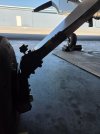
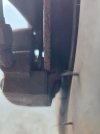
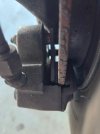
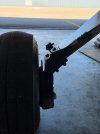
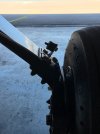
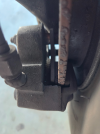
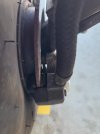
Hey guys we'll the left side brake is still not functioning properly. Seems like it's still losing pressure. So I just happened to look at both calipers. I noted something on the left side. Now I'm no mechanic nit o was wondering if this is normal. The left side has a rubber hose connection the metal brake line to the caliper. The right side does not. I don't see that in the brake schematic. I wonder if the rubber tube expands compared to the metal one under pressure. Any comments?
 

Attachments

  • 20261016_104515.jpg
    20261016_104515.jpg
    1.2 MB · Views: 18
  • 20261016_104430.jpg
    20261016_104430.jpg
    820.5 KB · Views: 17
  • 20261016_104435.jpg
    20261016_104435.jpg
    1.2 MB · Views: 18
  • 20261016_104527.jpg
    20261016_104527.jpg
    1.2 MB · Views: 17
  • 20261016_104541.jpg
    20261016_104541.jpg
    993.4 KB · Views: 17
The photos are hard to see, but I get what you're talking about. The issue is that the way the hard lines are connected tends to hold the floating portion of the caliper rigidly. If there is any stress on it, it will cause the linings on that side to drag, which can cost you several knots in cruise. Ok, not really, but it makes noise and wears them prematurely.

I would have to read AC 43 to confirm, but the rubber section in a hydraulic phase is probably not legal. I would repair it properly, and at the same time "overhaul" the calipers and master cylinders. The overhaul consists of cleaning them and replacing a handful of o-rings. With torqued B-nuts, non corroded tubes (no pinholes, which absolutely can happen), and good seals inside the cylinders, these brakes should not be soft.

A lot of accidents in Grummans are sadly on the ground, and your brakes are your last hope of steering. I'd make sure that system is solid. You can probably save some money by volunteering to remove the cotter pins on the pedals and cylinders to get them out for your mechanic. Best of luck.
 
1792197726968.png

Looks like poor maintenance to me.

That inboard brake lining is worn on a taper and is cooked and crumbling at its outer edge. There is crud all around the caliper piston that does not belong there. I think the brake pad assembly is sticking on its retaining pins when it should be loose and mobile, causing the tapering and overheating of the lining.

The hydraulic hose would only be a problem if its rubber liner was swollen by the use of an incorrect hydraulic fluid. Plenty of airplanes use a hydraulic hose in that spot, to avoid the hard line from putting pressure on the caliper that can cause problems.
 
View attachment 155743

Looks like poor maintenance to me.

That inboard brake lining is worn on a taper and is cooked and crumbling at its outer edge. There is crud all around the caliper piston that does not belong there. I think the brake pad assembly is sticking on its retaining pins when it should be loose and mobile, causing the tapering and overheating of the lining.

The hydraulic hose would only be a problem if its rubber liner was swollen by the use of an incorrect hydraulic fluid. Plenty of airplanes use a hydraulic hose in that spot, to avoid the hard line from putting pressure on the caliper that can cause problems.
I agree that the mechanic should have cleaned and inspected the brake system. If those two pegs are corroded and stuck in the torque plate the brakes will act like there's air in the lines.
 
I have a buddy with a Grumman with a similar problem. It was fine on the right side. I suggested he pump 5606 up from the bottom. He ended up with a pressure pot to bleed the brakes according to some Grumman specific instructions.

DM me and I can put you in touch with him. He is an I/A.
 
Hint: purchase a new PN specific Rotor and linings. Don't make your IA reinstall (porbably) junk and your repair will last much longer with new parts.
 
Back
Top