MauleSkinner
Touchdown! Greaser!
You mean like using pterodactyl fuel in a brontosaurus?Like I said, I wouldn't do it myself, but I'm probably overly paranoid about that stuff since I used to run these things on dynos.

You're not THAT old, Ted!

You mean like using pterodactyl fuel in a brontosaurus?Like I said, I wouldn't do it myself, but I'm probably overly paranoid about that stuff since I used to run these things on dynos.

You mean like using pterodactyl fuel in a brontosaurus?
You're not THAT old, Ted!

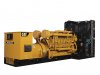
Just get one of these and sell power to your friends.
View attachment 67624

I like it. They seem to get a bit spendy, though...

Power in the distribution grid normally comes as three phase 480v, and the two phase legs will usually be split between housing blocks to even the load. Three hots = 480V, two hots = 240V, and hot to neutral = 110V.

This is incorrect. Residential distribution power is usually two or three wire 7200 volt and transformed to two wire 240 volt with a neutral for service laterals to homes. One leg of the 240 volt service and a neutral produce 120 volts for household receptacle and lighting loads. Ovens, dryers, and A/C units use 240 volts.
Three phase 480 from utilities is a delta configuration, and has no neutral. The voltage between any two phases is 480 volts, not 240. Three phase 480 delta is primarily used to power motor loads like air handlers and chillers or manufacturing plants. It has to be run through a 480 delta/480 wye transformer to produce a neutral.
One phase of 480 wye paired with a neutral results in 277 volts, not 110. Most commercial office building lighting is 277 volt, which is just about the only thing it's used for. All buildings served with 480 delta have a 480D/208Y transformer for receptacle loads. One leg of 208Y and a neutral produce 120 volts.
Presumably, he (RJM62) is feeding two-phase 220V from the generator to the main feed, hence the distribution between 220 and 110 should take care of itself in the breaker box. With the appropriate interlock, and wired correctly it should be safe.
Nice job! Almost makes me want to get my hands dirty again.All done and load-tested. Works great. Basically, it will power anything in the house -- just not all simultaneously.
Here are some more pictures.
Here's the junction of the Romex to the THWN. You have to use wire rated for wet areas in an exterior conduit. I chose THWN because it's less bulky than UF-2. It's also THHN rated, so I technically could have gotten away with 8-gauge from the junction box to the generator inlet. But I used 6-gauge anyway (except for the ground, which is 10-gauge) for a bit of extra safety margin and future-proofing.


I have to label this box.

Next picture is the backfeed breaker.

Next picture is the contraption to affix the backfeed breaker to the panel. This is required by code, presumably because the backfeed breaker becomes the "main" when in use. The label is also required by code.

The next picture is the interlock switch installed. It's a simple device. It physically prevents the backfeed and main breakers from being energized at the same time. That makes it impossible to energize the power company's lines (and possibly electrocute a lineman) from your generator. The labels are required by code.

And here's the little generator powering the house.

As I mentioned, with this setup, I can power anything in the house. I just can't power everything at the same time. It's a good setup if you have enough common sense to manually manage your power use.
Rich

Nice job! Almost makes me want to get my hands dirty again.


The idea is the door will generally be plugged into the generator receptacle. Power goes out, I'll unplug it from there and plug it into a generator.
(this was an idea a friend had to avoid needing a rather expensive transfer switch)
The door has 3 wires running to it: two "hots" and a ground, no neutral. I'm wiring to the generator outlet/plug which generally assumes a neutral.
Question: could this cause any problem for the generator, when it doesn't sense a neutral? If so, could a cheater adapter that bonds neutral and ground at the generator help without undue risk?
Thanks in advance.
That would be my only concern as well. What voltage is the control circuit. For example, our original motor control cabinets consisted of both 480VAC 3-phase for the motor contactors, as well as 120VDC for the control circuits. The relay coils were DC, fed by a 125VDC system that included a series of backup batteries and a 125VDC charger. This has all been upgraded and replaced over the last decade with Siemens solid state equipment.Many portable generators already bond neutral and ground, so as long as the cord is grounded or the generator frame is grounded all should be well. Even if not then it still shouldn't be a problem as the motor would already have to be properly isolated to use 240V without a neutral, unless the control circuitry is 120v and using the ground as a neutral that would be bad(tm). The generator shouldn't care. (Which reminds me I need to look at my hangar door and see what I can do there.)
Redbird said:We are supplied three 13KV feeders from Con-Ed in NYC and three from PSE&G in NJ, (six feeders in total), which we step down to 480/277 and 208/120 here at the facility.
Multiple 3-phase transformers in various locations throughout.
This gives us ample redundancy to keep the 84 fans running and the tunnel lit during a loss of power from either supplier. The only time we've lost all six feeders since I've been here, was during hurricane Sandy!

Industrial and airport power isn't residential. Sure, when I was in facilities at an Army Base and at the State University we had 13KV lines that we'd step down to 277/480 or 120/208, But you ain't going to see that in a residential neighborhood most likely and hardly germane to anything with regard to residential backup generators.
Are you saying this thread went off topic?
That never happens here.
Good idea to take a close look at the manual and any print available before proceeding. The other possibility that comes to mind is, there could be a small 240V transformer enclosed, lowering the control circuit voltage to 24V (or another reduced value).Thank you to both chartbundle and redtail.
I will look at the installation manual and actual install to see if there’s 120v supplied independent of the 220v.
That would make things a little more complicated, requiring a second cord to provide the 120v. But all I’m doing here is rerouting the 3-wire combo supplying the 220v to the main panel.
But something I had not considered, so thanks again to you both.
True.Industrial and airport power isn't residential. Sure, when I was in facilities at an Army Base and at the State University we had 13KV lines that we'd step down to 277/480 or 120/208, But you ain't going to see that in a residential neighborhood most likely and hardly germane to anything with regard to residential backup generators.
I've seen a few pretty flamboyant things at the high tension sides of things over the year, only one of which I was directly responsible.
Good idea to take a close look at the manual and any print available before proceeding.

I’m back at the property and will look.
Examining the physical installation, it appears the only power in is the two hots and the ground. There is also the single dual breaker at the breaker box marked “bifold door”, though it might be possible that 120v could be piggy-backed onto another circuit. I suppose I could verify that by turning off all the breakers other than the one for the door and confirming it still works.
I’ll report back once I check the manual.


Yeah when you mentioned the 4160, I thought it would be an interesting tidbit to share with fellow aviators who happened to be discussing electricity and probably never give thought to something we all use. However, I should have started a separate thread.I enjoyed the detour. I didn't know large airport lighting was powered in that fashion. I knew it was 4160, but not the details, especially the constant current source. The image in your post was great.

The journey begins.... MEP803a mil genset. Military-rated at 10kw, this one load-tested at 14kw continuous for 4 hours, prior to purchase. No capable generator receptacles I can find (50 amp max so far), so probably will have to hard-wire it directly to the generator breaker (125 amp) inside the main breaker box. Woohoo!
Blessed by the military for both diesel and JP8 (jet fuel, baby!)
Jim
The $4k includes him coming over to install the remote start kit when it arrives. (There are both an auto-start and remote start modules for the gens available...around $450 each. Didn't want to pay for the automatic transfer switch that auto-start would require when I already have a manual TS).

No one seems to have asked about this so...what are you powering to need a 80KVA generator?!I've got an 80KVA generator
No one seems to have asked about this so...what are you powering to need a 80KVA generator?!
The screwball engineers punted on my instructions of separating the essential circuits to a separate panel to be fed with the ATS, and just spec'd the big generator.No one seems to have asked about this so...what are you powering to need a 80KVA generator?!