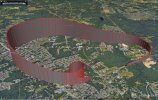
Another skydiving aircraft accident, in NJ this time.

This is in my neck of the woods. Conflicting reports if it landed or not. The plane took off, reached 3000 ft, and turned back for the field. Unclear if they made it back to field or not. It’s a 3500 runway so unless he came in very high and overshot, I’m guessing ended up short of the runway
 
Took off, turned around, 360 to lose altitude and fell short
 

Attachments

  • IMG_0664.jpeg
    IMG_0664.jpeg
    200.4 KB · Views: 45
This is weird, it looks like the plane never slowed to best glide or anything, just lost altitude at speed
 

Attachments

  • IMG_0665.png
    IMG_0665.png
    304.8 KB · Views: 27
This is in my neck of the woods. Conflicting reports if it landed or not. The plane took off, reached 3000 ft, and turned back for the field. Unclear if they made it back to field or not. It’s a 3500 runway so unless he came in very high and overshot, I’m guessing ended up short of the runway
One would think that the only occupant upon landing would be the pilot, but it seems not. Perhaps the actual AGL was much lower.
 
One would think that the only occupant upon landing would be the pilot, but it seems not. Perhaps the actual AGL was much lower.
3000' is pretty close to the minimum altitude to deploy if you're already in freefall. That's as high as this plane got. Even if the they decided to start out, it's unlikely they could have safely gotten 13 people out before it got way low.
 
Looks like everyone survived but a few with critical injuries. Pilot reported engine trouble on ctaf.. unclear why it doesn’t show the plane slowing to a best glide but I guess a planewith 15 people best glide is a lot higher than normally used to seeing
 
3000' is pretty close to the minimum altitude to deploy if you're already in freefall. That's as high as this plane got. Even if the they decided to start out, it's unlikely they could have safely gotten 13 people out before it got way low.
3000 feet is where you'd put out jumpers on static line, which immediately opens the parachute. I wouldn't think anyone with a freefall rig would consider going out that low.
 
>>3000' is pretty close to the minimum altitude to deploy if you're already in freefall. That's as high as this plane got. Even if the they decided to start out, it's unlikely they could have safely gotten 13 people out before it got way low.<<
3000 feet is where you'd put out jumpers on static line, which immediately opens the parachute. I wouldn't think anyone with a freefall rig would consider going out that low.

How many jumps have you two made?

I know you don't know it, but you, and many other non-jumpers here, when discussing Skydiving accidents sound exactly like ignorant 'townies' talking about those little airplanes and airport noise.

I've been a Skydiving Instructor and Parachute Rigger for over fifty years. And thousands of times I've put out loads of student skydivers at 2800-feet on static lines then followed the last one out with my 'modern' free fall rig. According to you guys I should be dead. LoL!

And I've made several emergency jumps. My lowest was from six-hundred feet. You guys don't understand 'relative wind' as it applies to Skydiving. Nor do you understand the huge difference between passing through 3000-feet at terminal velocity free fall speeds, and leaving an aircraft on jump run at 3000-feet.

I know they've changed it, but it used to say 'Airman' on our certificates, but the joke among skydivers is when pilots get a little 'air' on themselves, like when a door or window pops open on take-off, they panic and way too often wind up crashing.

Anyway, I'm not getting on you, as I understand without being experienced jumpers you don't know anything at all about parachuting. And I know there are other experienced jumpers on this board as they occasionally pop up in threads like this. Just like I'm doing now.

I severely doubt the initial information that the aircraft reached 3000-feet because if it had - there wouldn't have been anybody in the plane when it landed except the pilot. Once you reach a thousand feet in the climb, you can jump, if you have to. And there really is no lower limit for getting out in case of an inflight fire, or other catastrophic in-flight emergency. The old saying in those situations is, "Better to jump and try - rather than stay and fry." It's also a lot easier for the pilot to crash land off-airport with an aircraft that's empty rather than full.

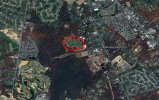
The photo is the Drop Zone at Cross Keys, I don't know which direction they took off in, but either way the options for a straight ahead crash landing is limited. The area I outlined in red is where the jumpers land, and that's probably the area the pilot was turning for when they came down. Skydivers only wear their seat belts until reaching a 1000-feet. If they had gotten that high some of the jumpers would have probably exited. So whatever happened I'd guess happened around five hundred feet. High enough to attempt the turn but not much time for anything else.

>>it's unlikely [at 3000-feet] they could have safely gotten 13 people out before it got way low<<

Oh gawd!

fdgfdgdgfd.jpg
 
It that track is correct the pilot really screwed the pooch with the last 360. He should have just slipped it like heck.
 
Took off, turned around, 360 to lose altitude and fell short
Well that's frustrating. If high, a figure-8 pattern off the end of the runway is a better option than a 360. Turning your back on the runway at 1,500' wasn't a good plan.
 
>>3000' is pretty close to the minimum altitude to deploy if you're already in freefall. That's as high as this plane got. Even if the they decided to start out, it's unlikely they could have safely gotten 13 people out before it got way low.<<


How many jumps have you two made?

I know you don't know it, but you, and many other non-jumpers here, when discussing Skydiving accidents sound exactly like ignorant 'townies' talking about those little airplanes and airport noise.

I've been a Skydiving Instructor and Parachute Rigger for over fifty years. And thousands of times I've put out loads of student skydivers at 2800-feet on static lines then followed the last one out with my 'modern' free fall rig. According to you guys I should be dead. LoL!

And I've made several emergency jumps. My lowest was from six-hundred feet. You guys don't understand 'relative wind' as it applies to Skydiving. Nor do you understand the huge difference between passing through 3000-feet at terminal velocity free fall speeds, and leaving an aircraft on jump run at 3000-feet.

I know they've changed it, but it used to say 'Airman' on our certificates, but the joke among skydivers is when pilots get a little 'air' on themselves, like when a door or window pops open on take-off, they panic and way too often wind up crashing.

Anyway, I'm not getting on you, as I understand without being experienced jumpers you don't know anything at all about parachuting. And I know there are other experienced jumpers on this board as they occasionally pop up in threads like this. Just like I'm doing now.

I severely doubt the initial information that the aircraft reached 3000-feet because if it had - there wouldn't have been anybody in the plane when it landed except the pilot. Once you reach a thousand feet in the climb, you can jump, if you have to. And there really is no lower limit for getting out in case of an inflight fire, or other catastrophic in-flight emergency. The old saying in those situations is, "Better to jump and try - rather than stay and fry." It's also a lot easier for the pilot to crash land off-airport with an aircraft that's empty rather than full.

The photo is the Drop Zone at Cross Keys, I don't know which direction they took off in, but either way the options for a straight ahead crash landing is limited. The area I outlined in red is where the jumpers land, and that's probably the area the pilot was turning for when they came down. Skydivers only wear their seat belts until reaching a 1000-feet. If they had gotten that high some of the jumpers would have probably exited. So whatever happened I'd guess happened around five hundred feet. High enough to attempt the turn but not much time for anything else.

>>it's unlikely [at 3000-feet] they could have safely gotten 13 people out before it got way low<<

Oh gawd!

View attachment 142522

I've been out at 2800 feet on a static line, no problem at all. If you tell me that you could get out at 3000 feet and would be confident that you could get a good deployment from your rig, I completely believe you. As a low time jumper, I have no confidence that I could get out the door of an unstable airplane by myself, get in a stable arch and then pull high enough to have a good chance of surviving.

Also, at what altitude do you unbelt the tandem students.
 
The rule we always followed was unbuckle at 1000' and be ready to exit in an emergency. At lower altitudes, use your reserve. Above 2000, use your main. I don't know why nobody exited the plane, but there were tandems aboard so this may have been a factor. This was my former home DZ, but I haven't heard a whole lot about what happened. I'm hoping to find out more from the people who were there.
 
I don't know what I was thinking last night. I did a hop and pop from 3200 feet as my first freefall. (yes, that was a loooong time ago).

I wonder if the terrain below was inhospitable for jumpers, so they stayed with the aircraft.
 
>>it's unlikely [at 3000-feet] they could have safely gotten 13 people out before it got way low<<

Oh gawd!
It was never level at 3000. It was in the climb up to 3000 and then whatever happened and it started to descend from there. This isn't the case where you've got the load staged for a hop and pop. These guys are likely sitting there oblivious on the ride to their expected jump altitude when the excrement hit the ventilator.
 
Speaking from experience, there is a flash to bang interval between when issues start and when you conclusively accept you are going down and begin taking action to prepare for that. Now add time to notify the jumpers and have them react. If the emergency started at 3000 AGL, I doubt anyone would get out above 2000, and probably much lower. Add to that the aircraft maneuvering. Good luck getting out with a 45 degree bank away from the door in a 2G turn.

That said, I've done military static line night mass tactical with combat equipment at 800 feet. In theory that is enough time for main to fail and deploy reserve.
 
Last edited:
I've put out parachutist at 200 ft before. They all survived. It was at an air show demonstration for LALO. But if it didn't open as advertised the reserve was of no use.

8 guys static line out of a twin beech. But instead of slow, they wanted 100 kts.

We did the demo 2 times.
 
The tandems often go out first. So, likely clogging the door. They likely wont emergency jump. Maybe at 5,000. I'm sure they have a hard deck procedure on that. I did over 100 tandems, as "instructor". If there were fun jump solos aboard, they may have been in the back, so not likely to pile over and bail out.

Getting out at 1,000 on a fast canopy is plenty doable. Even if you get unstable. Ask me how I know...
 
Last edited:
Latest I heard was that the plane had an engine issue, came in fast, overflew the runway and landed long. A couple people are in pretty rough shape. This is all hearsay...
 
Back
Top